
A Tale of Sorrow and Sadness - A Tale of Sorrow and Sadness( Blu Ray) [ - 2025]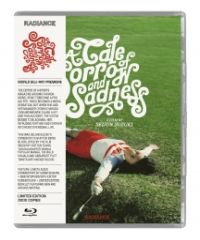 |
McCarthyism may have been notorious for ending careers thanks to its ardent blacklisting policy, but Japan was no stranger to excluding its filmmakers, either. Left-leaning politics might see you cast out, a la Tadashi Imai, but so could experimental arthouse filmmaking when it was considered an affront to Japanese moral values. Director Seijun Suzuki found this out the hard way. While working for the Nikkatsu studio, he decided to turn the standard yakuza tropes on their head for 1967’s Branded To Kill, and while now considered his masterpiece, it proved to be the straw that broke the studio’s back. Having grown tired of his seemingly outlandish and wayward filmmaking, they promptly terminated his contract. Furious, Suzuki took them to court - and won. But it led to him being blacklisted for the next decade, most of the seventies, which ironically feels like the ideal time for his innovative, art-led filmmaking. Ten years later, however, Suzuki returned with 1977’s A Tale of Sorrow and Sadness, a socially astute and darkly comedic tale of vapidity, greed, manipulation and golf. Starting out back in 1956, Suzuki spent the early part of his career churning out B-movies for Nikkatsu, predominantly in the yakuza genre. With this factory-line filmmaking, and its ensuant freedom, Suzuki began to sneak in some of his own budding hallmarks - strong colour, extreme jump cuts, all of which were to burst onto the screen in full force in 1963’ s Youth of the Beast. This marked the first real example of plot and convention making way for his visual and surrealist leanings, and from hereon in Suzuki became bolder, more inventive and more experimental - so much so that the studio warnings to revert back to the traditional came thick and fast. Tokyo Drifter in 1966 may have been the catalyst, but it was the following year’s Branded To Kill that pushed them over the edge.
Ten years adrift, and somewhat of a cult hero, in 1977, Shochiku studio (home of new wave) invited Suzuki back into the fold, where he began working with manga author Ikki Kajiwara on his psychological (and indeed psychedelic) tale of exploitation set in the world of sports journalism, A Tale of Sorrow and Sadness. The story begins when a renowned sports magazine needs to find itself a new star to market and in the absence of any other option decides to convert fashion model Reiko (played by Kajiwara’s mistress and amateur actress Yoko Shiraki) into a pro-golfer – naturally ensuring she remains firmly under their control. Reiko wins her first tournament (following strict tutelage) and this sets off a meteoric rise to fame as she becomes chat show host and media darling. But things soon go awry when the new star and her manager become involved in a hit and run and the female victim (played with relish by Kyoko Enami) proceeds to blackmail – and altogether invade the life of - Reiko leading to a bizarre series of events that dig into exploitation, media and celebrity.
The film was not well-received at the time, but watched with fifty years hindsight, it’s clear that A Tale of Sorrow and Sadness works on a series of still highly pertinent levels. Highlighting the pervasive influence of capitalism, consumerism, and media manipulation of would-be stars, Suzuki (in his own dreamlike way) probes the ripple effect of what can happen when people are propelled into the limelight - something which frequently ends in tragedy. Falling in between the surrealist arthousery of his Nikkatsu days and the subsequent historical Taishō trilogy, Suzuki’s directorial style is in full flow with his trademark jump-cuts, distinctive dialogue and pseudo-technicolour visuals - striking hues representing character arcs and an intentionally jarring but highly effective editing technique that contributes to the impact of Suzuki’s message.
And Suzuki’s visuals absolutely come alive in this beautiful print from Radiance. With standard high-quality digital transfer and uncompressed audio, this new Limited Edition also comes with improved subtitles. And in addition to audio commentary by critic, film historian and author Samm Deighan, there is a new interview with editor Kunihiko Ukai, which makes for captivating viewing as he gives her personal insight into the early days of Suzuki’s career through to the making of the film itself and his role.
A brave choice for a director who had spent a decade in the wilderness for his supposedly radical approach to filmmaking, A Tale of Sorrow and Sadness is a bamboozling world of colour, weirdness, and immorality. With Jasper Sharp of Midnight Eye calling it “a deranged hybrid of Clint Eastwood’s Play Misty for Me and Robert Aldrich’s Whatever Happened to Baby Jane”, this really is a film that should not be missed. Mad and wonderful.    Sarah Gregory Sarah Gregory
|







 (c) Musique Machine 2001 -2025. Twenty four years of true independence!! Mail Us at questions=at=musiquemachine=dot=com



