Loading


A heavyweight release here, on Human Ignorance, in more ways than one. This was originally released as three separate cassettes in a large, white, plastic case; however, in the interests of honesty, I should point out that my copy is actually the three tapes condensed onto two c90s, wrapped in the original artwork. Like all the Human Ignorance releases I’ve seen, the packaging is homemade, with a “scuzzy” aesthetic; but also made with clear thought and care. The same is true of the sounds and themes explored by those releases: those things in danger of becoming tired or mundane in other projects’ hands, receive a fresh, idiosyncratic treatment. The three acts sharing this release are: Wallkeeper, Blood Sacriifice and Dead Body Collection - that’s a lot of Harsh Noise Wall…

Nundata is a pretty prolific experimental/noise act from Serbia, a land that recently spawned quite a few noise projects like Dead Body Collection or Gigant. "Methicillin-resistant Staphylococcus Aureus" (phew!) is a full-length CDr released by Jay Watson's Placenta Recordings, based in Michigan U.S.A.

“They Live, We Sleep” sees this progressive HNW/ ANW horror project doing it’s sonic tribute to John Carpenter's 1988 sc-fi/ horror movie They Live. Carrion Black Pit is of course all the work of creative São Paulo, Brazil based noise maker Elias C- also known for the great Harsh Noise /Industrial/HNW/noised-up Sword-and-Sandal soundtrack project Sleep of Ages.

“???- Mystery” is a c20 tape that offers up two sides rapid ‘n’ layer shifting walled noise. Bad Algorithm is a one man project from Raleigh, NC USA. The project started off in early 2012, and to begin with it offered up a mixed HNW/ Harsh Noise sound, but over the projects last few releases it's become mainly focused on HNW.

If this set of 14 songs says something profound about Ireland, it’s not necessarily evident. But no matter: the political and cultural history of Ireland as told by the young in the early ‘80s has been canonized for decades by U2, the name-brand graduate from this scene. Instead, this list was curated from obscurity by Dublin DJ Darren McCreesh, and it unveils the sound of young working class adults trying to make a mark on the world in a vein very similar to everything post-punk coming out of the UK at the time—big names like Siouxsie, the Clash, Joy Division/New Order, and Public Image—all of which were undoubtedly being fed to them via tapes of John Peel on the radio and clippings from Paul Morley in the NME. The bands and artists here are men and women, bedroom artists, and theatrical performance groups, offering up straight up punk-pop, proto-goth, and early synth noodling as lost “classics” that immediately conjure up memories of similar but better music.
There seems to be a lot of this sort of stuff at the moment: a combination of the more expansive, wayward kosmische synth excursions, like, say, Tangerine Dream’s Zeit, with a sense of entropy best demonstrated by William Basinski’s Disintegration Loops, allied with eerie, buoyant looped samples a la Nurse With Wound’s Salt Marie Celeste and the distressed audio of James Leyland Kirby’s depressing releases. Too complex to be merely referred to as either ‘drone’ or ‘ambient’ music, a constant low to midrange grey rumble travels at a constant, smooth speed to cut a straight line through open space as the journeying listener receives varying impressions of ominous activities beyond the fog. You could call it ‘chasmic music’ as it almost always bears a sinking sensation like being lowered into the underworld while typically hinting at more ethereal, sinister or ritualistic mysteries obscured by the overwhelming darkness.

I’m not quite sure what the aggregate audience for music which falls into the “modern” classical and minimalist genres, but I assume this would include mainly more contemplative types or those in search of a respite from our increasingly Iphone/multimedia/socially mediated world. This new full length album on the relatively new offshoot of the Siren Wire Label entitled A Stream of Consciousness allows us to peer into a window of a peculiar subset of outsider classical; an appropriately quiet label releasing limited edition works on the CDr format.

“The Shaman’s Heart II” finds ethnic percussionist Byron Metcalf been joined by US ambient legend Steve Roach, to create a slowly morphing piece of shamanic tribal ethno ambience.

Veteran composer Simon Fisher Turner released his soundtrack to the film "The Great White Silence" as a 2 disk set last year on Soleilmoon Records. The film was actually created in 1924, the footage shot on an expedition to the South Pole. Turner attempts to enhance the film's inevitable air of mystery with quiet, minimalist music. Each disk contains a single track, nearly 50 minutes in length.
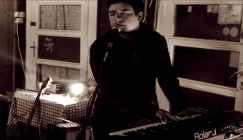
What started out as a one man project (of Dimo Dimovs invention) has bloomed into a somewhat full-blown band. Now Dimov (member of Svarrogh, Fahl and Strumpercht) is joined by Marcel P. (of Sagittarius and Allerseelen) and contributing vocalist Gerhard Hallstatt (Allerseelen) on a few songs.
“De Martyrs A Bourreaux” is a post-apocalyptic themed slice of dark ambience that’s tipped with often jarring nightmarish sound elements, creepy noise matter, and subtle industrial textures.
I must admit, that I’ve often looked at my dad’s records and felt envious; he lived through a time where albums often came with a lot of words on the back cover. I like this idea. I used to get the bus home from record fairs and pore over every detail I could glean from the artwork and packaging. So my dad’s old records - with wordy texts operating as introductions, guides and summaries - represented some lost golden age for me. (In fairness, there are any amount of very good reasons why there really shouldn’t be such texts…) I mention this, because the simple packaging for “Transparency (Performance)” - a printed card wallet - devotes its back cover to a mini-essay; serving as a concise introduction, and a more open guide/summary.
Tongue Knax is a relatively new and mysterious noise project hailing from Japan, supposedly headed by a guy called Lily Vice. With a number of releases that can be counted on a single hand and a clear obsession with early Mauthausen Orchestra-like sounds, this is a very unusual act and a very welcome breath of fresh air, so to speak.

On the evidence of the title choices, Bergen’s prolific electro-acoustic experimentalist Andreas Brandal has chosen the life and work of artist Marcel Duchamp as the theme for this album, recorded during the first half of last year.
This two way split brings together two lengthy submersions in creative walled noise by these two American projects. We have a track from Scant( aka Matt Boettke of Sex Complex), and a track from always rewarding & inventive Richmond, Virginia based Ritual Stance.

Void Sacrifice is a mainly HNW based fanzine, and this first issue was published in early 2012 in a edition of a hundred copies. The zines put togeather by Richmond, Virginia based Evan Craig- whose behind the great ‘n’ inventive HNW project Ritual Stance, & also runs HNW/ power electronics label Void Seance.
Adolar, an album-length audio component of the ‘Luftblicke’ in October 2011 in Graz (Austria), marks the entrance of Austrian Harald Guenter Kainer onto the contemporary academic drone scene. Structured around data specifying distances between Earth and various stars, Adolar is an experiment in contrasting sonic representations of distance. At the exhibition, loops of varying length colluded in various combinations to assist the listener’s attention toward contemplation of these vast spans of emptiness which lie between heavenly bodies. The listener’s movement between rooms was intended to bolster this affect and likely was intended to highlight the ephemeral qualities of the random and unique sound-events.
“Remember” presents the listener with just under fifty minutes worth of grim ‘n’ pummelling walled noise from this relatively new Dutch project.

“A Face of Evil” finds this German HNW/ harsh noise project offering up a dense ‘n’ brutalizing lesson in rapid & intense walled noise. This CDR release offers up a single slice of just under twenty minutes worth of HNW battering.

After two and a half decades of concert-going, Múm remains one of two shows from which I’ve ever walked out. They were touring the U.S. on the heels of their commercial peak, Finally We Are No One, at the humid heights of summer, and the small club at which they were performing was uncomfortably packed and may have had broken air conditioning. I have no qualms about sweating at shows, but usually it’s because the band have generated a fervid frenzy amongst its crowd; in this case Múm were listless, precious, and deliberate, trying to recreate songs that all seemed to have “swimming pool” in the title while being completely unaware of the horrible irony. Midway into the show, around midnight, a friend of mine mentioned frozen grapes and cold drinks back at her apartment, and the Múm live experience—intertwined with my fandom—became history.

“Clockwork Angels” is the 20th album of this Canadian prog rock bands forty year career. And it finds the project in fine punchy yet creative form bounding their early hard hitting blues rock sound with melodic sensibilities, thick almost metallic riff craft, dips into more progressive territory, and a dense yet detailed production.

“Faunscan” finds this one man Missouri based multi genre project focusing in more on the wonky ‘n’ aged IDM/ electronica side of his sound.
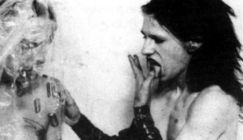
Rozz Williams is best known as the lead singer/ song writer behind the original/ classic line up of Death Rock pioneers Christian Death. But he had a more edgy/experimental side too, and this came out under the project banner of Premature Ejaculation. 6 offers up a collection of 16 tracks that fall somewhere early industrial, tape loop based compositions, and grim/noisey avant garde.
"The Unholy Bow" is a small 45 page book (or 'zine') created by Terence Hannum of atmospheric black metal band Locrian. I'm a fan of Locrian's music and "The Crystal World" was one of my favorite albums of last year. This book, one of several by Hannum, is dedicated to the rhythmic 'headbang' movement practiced by metalheads worldwide whenever they hear good metal.