Loading

“This Is The Hell That You Created For Me” is a slice of building-then-receding walled noise from this highly prolific Serbian project.
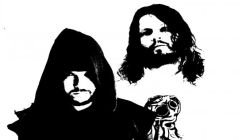
Arkhamin Kirjasto are a Finish band that offer up a brew of Lovecraft inspired hard rock & metal. Their sound mixes together all manner of metal traits like: death metal vocals, speed metal riffing, epic metal swagger, glam rock riffing struts, NWOBHM shredding, and trash punk punch-iness, to create a quirky & often tongue-in-cheek cross breed. “Torches Ablaze” is the projects first release, and it’s a quirky if little hit ‘n’ miss affair .

Looking for entertaining ways to spice up your little loved one’s birthday party or give your latest poetry evening that little je-ne-sais-quoi it is severely missing? Look no further! Hong Kong-based industrial label Assembly of Hatred has exactly what you need! Not only will kids glee in delight at the mere mention of the name The Vomit Arsonist, but the music on this, their latest (and only second proper) album will also prompt them to frantically bang their little blond heads against your kitchen walls until they start bleeding. Such indeed is the power of evocation of this otherwise innocent-looking piece of plastic.

Trapist is a 3 piece that combines the best elements of ambient post rock with some free jazz improvisation, meaning their rhythms have a bit more elasticity than the usual metric post rock repetitions. Their quieter moments recall Larsen, but overall music has a bit more grit, and is not as minimal. Their new album (and 3rd release) "The Golden Years" has 4 tracks, 5-15 minutes in length, all glowing with the comforting warmth of the campfire. The cover pictures several tents in serene woods, color-treated with a fitting golden hue.

Bombastic. Pretentious. Effective. Walking a line between avant garde sound experiment and spoken-word performance art, Last of the Dead Hot Lovers tells of the volatile relationship between a man and a woman in two acts.
Chaos Echoes brings together Kalevi Uibo and Ilmar Uibo (Bloody Sign), Etienne Testart (Children of Doom), and Stefan Thanneur (the middle sister on Full House). Chaos Echoes considers this the "core" line-up, but has no limitations of form in place (2 piece, 3 piece, 0 piece, you name it!). Members' previous (and current, in Etienne's case) bands are death and doom, so Chaos Echoes could go in a few directions. They stick closer to doom on this release and I think it fits their almost free form "psychedelia" a bit better.
The field of dark, horror soundtrack inspired ambient music is not an under-populated one. Kreng’s credentials in this regard have been sufficient to raise them above the mass of artists producing non-descript drone and schlock material, but will their particular take on the genre hold interest across this 5LP box-set?
Obscure Anachronism are an Austrian black metal band, and "Metanoia" is their second full length. As they mention in the booklet, "Metanoia" is inspired by Greek philosophic concepts, mainly focusing of letting material things behind and annihilating the perception of oneself. It sounds like stuff legendary harsh noise wall artist Vomir would be into, and it's certainly an interesting thematic - which can't be said for the vast majority of metal albums out there.
“Isolationizm” is four way split CDR that offers up six tracks of mainly guitar-less depressive/ambeint black metal that takes in elements of dark ambience, wonky soundtrack, and noise. The split brings together projects from Mexico, Russia, Belarus, and Brazil.
“Baser” is a two CDR set that offers up two 77 minute slices of brutally cascading & churning walled noise, which are both completely overwhelming & totally brutalizing in their attacks.

“Zombie” offers up just over an hours worth of dense, brutal & disorientating Walled noise. This La Crosse, Wisconsin based HNW project themes all of its work around cult horror movies, and the theme for this release is the Italian splatter zombie classic Zombie Flesh Eater, which was of course directed by infamous Italian gore master Lucio Fulci.

This tape is packaged in a rather extravagant, many-panelled inlay; printed in artful black and white and listing all the lyrics. This, plus the printed cassette, adds up to a very professional release; and something which Hey Mother Death presumably have very high hopes for. The tape has three tracks, all leaning towards the shorter side of things and all quite similar.

For discerning fans of occult-tinged music who want something somewhat softer, this second endeavor from Mat McNerney (aka Kvohst) and his septet of Finnish musicians called the Death Magicians is a spellbinding concoction of ‘70s psychedelia and ‘90s neofolk gloom. It investigates the spirits of the forest—the temple referenced in the title—with pagan aplomb, while extolling wilderness preservation and the worship of nature. And while McNerney is primarily known for his string of black metal projects in the UK and Norway, as Hexvessel he strives for something considerably more gorgeous and palatable, albeit strange, mystical, and occasionally dark.

Over the past few years, Southern Lord has gone from releasing straight doom to releasing interesting hardcore records. This month, they released the fourth album by The Secret, Agnus Dei. The Secret play heavy, blackened grindcore, and they play it with fury. This Italian four piece has a really interesting sound.

“Trail By Intimacy(The Book Of Splendours)” is a four CD set that brings together eight three tracks of quirky ambience that darts with traces of mellow electronica & atmospheric 80’s beat scapes. This set was originally released back in 1984 as a four LP box set on Cocteau Records, and this new ltd edition sees the sets first release in CD form.

“Petites Amoureuses Ensevelies” finds the French master of walled noise offering up just over thirty five minutes of rewarding crisp ‘n’ crusty yet crude ‘n’ dense HNW. The albums title roughly translate to “Small buried love”, but don’t worry there’s nothing soppy, romantic or forlorn about the ‘wall’ on offer here- the track finds Vomir in normal brutal & uncompromising form.

“Uncertainty And Insecurity” presents the listener with two just over half-an-hour slices of agitated 'n' taut textured noise/ HNW from this Canadian based project.
“XIII” finds this progressive & creative British wall noise artist offering up a wonderful hypnotic & detailed mixture of HNW & ANW. Clive Henry is with out doubt one of the most rewarding & original wall noise artists working in the world wide scene today, and this new CDR is yet more proof of this.

“Brittanee Marie Drexel” offers up a very sparse & spaced-out slice of ANW. Missing Girls is the more minimal crackling ‘n’ static bound HNW/ANW project of Swedish based Karl T of Audrey Hepburn obsessed HNW project Skönhet, & the great HNW tape label HarshFuckedForLife Records

Five years after their truly magnificent – both musically and visually – Revolution of the Antichrist, Austria’s masters of industrial ambient soundscapes Stahlwerk 9 return to the fold with a new album simply titled The Grey Ghost, or more precisely The Grey Ghost 1856-1939, the dates, if a certain well-known online encyclopaedia currently looking for funds is to be believed, corresponding to the birth and death of that other illustrious Austrian, though not primarily for his musical endeavours, namely mister Sigmund Freud.

The piano and saxophone duo Albatrosh released "Yonkers" this year, an album with 8 original compositions around 5 minutes each, mostly in a melodic classic jazz style, with a few passages of looser improvisation peppered in for good measure. There are many abrupt chord changes, and the arrangements are often quite technical, but rarely dissonant and never abrasive.
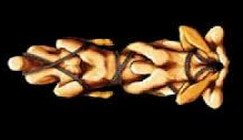
Tighten That Muscle Ring is the second album of erotic body music from the mysterious Harley Phoenix and Thee Majesty's Bryin Dall. It's combination of pelvic thrusting rhythms and samples of commanding sex talk plus (apparently real) orgasmic moans 'n' groans generally comes across as a (ahem) tongue-in-cheeks comedy album.

Eternity were founded in Thuringia, Germany, back in 1994. Their "Pestiferous Hymns - Rev. I-I-XXXIII" is their third full length if I'm not mistaken, and it's indeed devout to the simple and grim trademark sound of early 90s black metal.
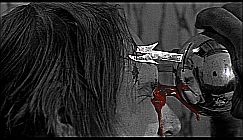
Burial Ground is a HWN project from La Crosse, Wisconsin, and it been active since 2011 releasing around 13 or so releases. Burial Ground’s take on wall-making is dense, brutal & totally unforgiving. All of the projects releases are based around Horror movies, and this four disc CDR Boxset tattles the Phantasm horror/ fantasy movie series.