Loading

Our old friends at Zoharum records are back with another lovely slab of dark electronica. This time from Kryptogen Rundfunk, a noise project that hails from St Petersburg, Russia. Artyom (M.M.) is the artist responsible, and he has been recording and performing under the Kryptogen Rundfunk moniker since 2002, during that time he has also played with various other bands including Hattifatner, Lunar Abyss and Govorit Radio Kosmos to name just a few. Tales from the Mirrored Space represents the project’s fifth full studio album, but Artyom has worked with a variety of other artists over the years on a number of split releases and collaborations that mean Kryptogen Rundfunk’s number of releases are far in excess of those five full length releases. As well as recording, Kryptogen Rundfunk have shared the stage with such luminaries of industrial music as Einsturzende Neubauten and Clock DVA.
A Nickel If Your Dick’s This Big(1971-1972) is the next in the series of Preserved edition release- normally that would mean we get a deluxe and bonus material laden reissue of a classic album from Avant pop collective The Residents…this two-disc set is a little different, as it takes us back to the start of the project and before The Residents, became The Residents. And fair warning to all those who have only dabbled in this most unique and one-off of projects, this is the collective at their most crude, awkward and at times decidedly grating- so really, unlike the rest of the great Preserved series, this is very much a for-fan/ those-wanting-to-hear-where-it-all-started release.

Hot on the heels of his Extinction EP this year on -OUS, Simon Grab pushes forth a thoughtful, noise-scented potpourri of sound with Posthuman Species. Held together with pulses and oscillations, Simon's latest melds unstructured overtones with timed, propulsive sounds to create something that is both free but also grounded. Packed with many layers that surface upon repeated listens, Posthuman Species is a cleverly dense, yet fairly minimal slice of electronic experimentation.
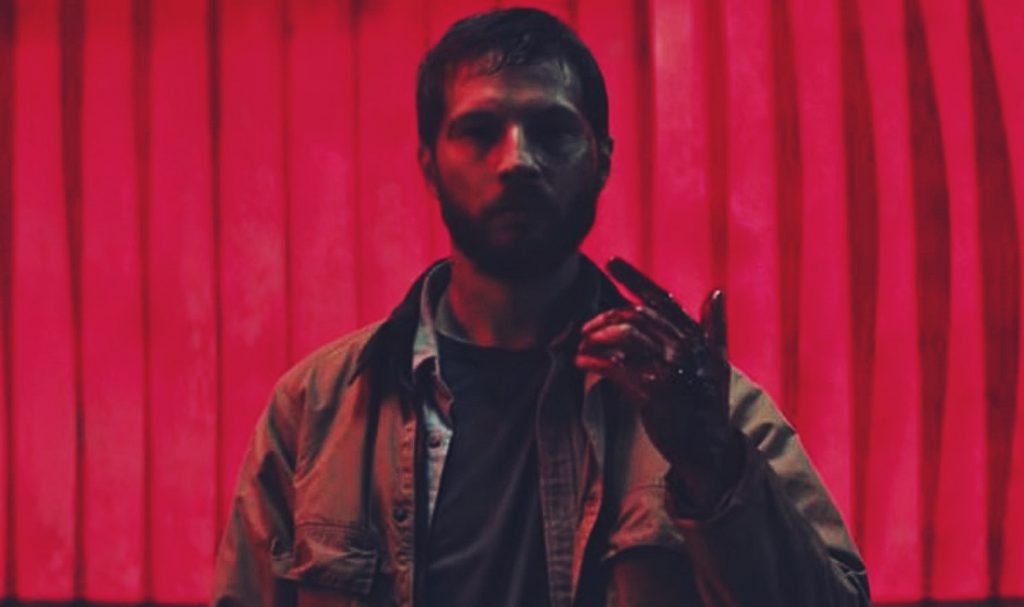
Upgrade is an as tight-a-drum sci-fi thriller ribbed with suspenseful twists ‘n’ turns, high-velocity at times brutal action scenes, and a rather neat/ fairly original twist on the whole revenge thing- all making for of the more satisfying and edge-of-your-seat Sci-fi films in recent years. Here from Second Sight is a recent deluxe version of the film- bringing together a hard case slip, forty-page booklet, poster, and a good selection of extras.

Church Of No Religion is a darkly heady, at times dizzying journey into layered & detailed electro-beats, brooding-to- prime evil synth tones, and buried female/male vocals. This eight-track album feels like ritual music for some darkly hedonistic 1980s/ early 1990's club- yes retro synth releases are extremely common these days, but NNHMN are adding something a little different and distinct to the genre. I certainly see this appealing to those who enjoy the more darkly tinged beats ‘n’ synth work of the likes of Coil, or more energetic & beat focused goth music.
Bones & Drones is a example of long-form eventful and layered ambient, with subtle hints of ethno-ambience, lulling water sounds, and allusive/mysterious harmonies. The release comes in the form of a CD/digital download, with the single forty five minute piece moving along in a slowly developing organic manner.
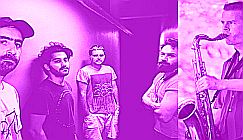
Kozmik Bazaar is collaboration between Turkish free jazz three piece Konstrukt and respected Chicago horn player Ken Vandermark. The six track LP/ digital download moves from decidedly seared & rapid free jazz/ hard bop work-outs; onto slight dips into more mellow moments, before switched up to more psychedelic fare. The vinyl version of the album came in an edition of 300 copies, and appeared on Berlin based Karlrecords, as part of their Parnassus Series- which features more jazz and modern composition focused fare.
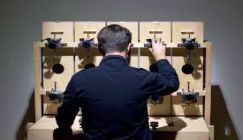
For me, the use of hand-made musical instruments and synthesizers, and/or the use of traditional musical instruments in an unconventional way, has always been the most experimental and extreme form of sonic creativity. Regardless of the musical genre - be it the classics of Musique Concrete to modern experimenters. So when received a copy Ventorgano for review, I was most keen to give it a play- as it finds Austrian artist Andreas Trobollowitsch utilizing his own home made electro-acoustic instrument.

Moodchangers severs up just over four hours of walled noise from this respected Serbian project. The release appeared in March of this year, as either a CDR boxset or digital download- both of these options offered four around hour-long ‘walls’, which as the release title suggests shift in mood and textures along their lengths.

Over the years there have been a vast amount of documentaries made about Charles Manson, his cult The Family, and of course the murders the cult carried out at the end of the ’60s, which put death to the summer of love. Manson: Music From An Unsound Mind- is a recent doc that covers a facet of the case that’s only really been glossed over in past docs- the more musical side of Mr Manson life- including his own songwriting, connections with The Beach Boys & the upper echelon of music industry in the 60’s, and the impact of the work of The Beatles.
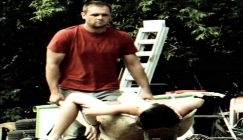
REEL stands as one of the more involving and creative found footage films of recent years- it also has a rather nasty & brutal string in its tail as towards the end we drop into gruelling intenseness that goes towards August Underground territory. The film features a believable & relatable lead character, flashes of unease and tension building, with touches of more arty & sad imagery- all driving towards the gut-punch ending.
From early on this year here’s a C40 split release highlighting the walled noise talents of Frenchman Julien Skrobek- the tape sees him offering up a track apiece from four of his different projects, and as a release, it certainly shows both his flair for creating different takes and atmospheres with-in the walled noise form.
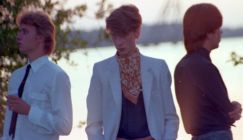
Svart Records once again hits the bins to dig up some synthy classics of Finnish disco with September's Cold War on the Rocks: Disco and Electronic Music From Finland 1980-1991. With varied styles spread over 20 tracks, this new compilation unearths some juicy bits from Finland's past, and opens up a new world to the uninitiated listener. Some right on line and some off the wall, Cold War on the Rocks provides a nice overview of a musically rich decade.
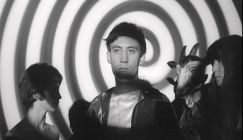
This rather lovely new Bluray/DVD set has just arrived from the bods at the BFI on their Flipside label, which focuses on largely underappreciated or forgotten material that has previously passed under the radar of other Bluray and DVD and labels. In this instance, we are treated to two classic witchcraft documentary films from the early 1970s that arrived on the scene at a time when the hippy dream was dying but alternative lifestyles and spiritual beliefs were still fuelling the counterculture. Both of our featured titles have been remastered in 2k and are officially released for home consumption for the first time ever.
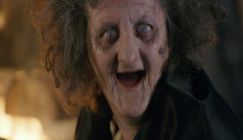
Beyond The Door III aka Amok Train stands as one of the more whacked-out, at times downright bizarre & ridiculous horror films of the late 1980s. The films a head-scratching blend of American teens caught in a creepy gothic European village, tacky satanic shenanigans, and run-away train action- with moments of head & limb ripping gore, unpredictable at times nonsensical plot, and the odd more chilling/ eerier moments.Here from Vinegar Syndrome is another truly nutzoid slice of 1980’s horror joy-the duel Blu Ray & DVD release features the companies trademark classy scan, and a few extras.
The Contact Mic Recording is the latest slice of minimal & un-themed walled noise from Stockholm's Rien. This recent release comes in the form of an art edition CDR, that takes in a forty-one-minute single track worth of extremely sparse textured noise.
Misanthropology Studies Vol. I is an excise in seared, crude and industrial edged walled noise. This CDR release is from Croatian project Placenta Lyposuction, and it severs up a hours worth of walled noise matter- all presented in a lo-fi bit of arty packing made from a DVD case, acrylic paint soaked paper and cotton wall, and metal cut disc- which nods towards the industrial-tinged rough-ness of the wall with-in. This release came in an edition of twenty five copies, and as of this review, the label still has some left.
Here we have a fascinating and beautiful niche oddity, a various artists compilation of tracks from Harmönia , a Finnish electronic music label. In case that isn't specific enough, this double album is apparently an ode to an obscure subgenre of funky dance music called 'Skwee'. Curiously, this compilation is not actually released by Harmönia itself, but Svart Records, a label which seeks to resurrect historic electronic releases of Finland.
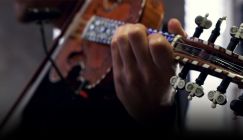
Salika, Molika is a playful and creative mix of earthy folk melodies, detailed & layered percussion, and nostalgic- to- quirky sampling and electronics. The seven-track album brings together the talents of always worthy accordionist Frode Halti, with a trio of talented players led up by award-winning Hardanger player Erlend Apneseth.
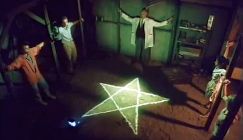
From the late 1980s, Nightwish is a decidedly hit & miss affair that sits somewhere between horror & sci-fi. The film brings together some interesting concept/ ideas, splashes of neat & creative gore, with often bland dialogue-heavy moments & a decidedly convoluted plot where you don’t know what will be thrown at you next. From Unearthed classic line here we have a Blu Ray reissue of this lesser-seen picture- featuring a new print of the film, as well as a commentary track.
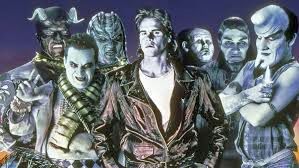
The 1990s are often thought of the decade horror cinema forgot- as the cinematic output in this period was very uneven and mostly decidedly lacklustre. One of the few films of this decade that stands out for both it’s scope, ideas & reach is Nightbreed- as it tried to blend/ bring together creature feature, horror fantasy, and good old fashioned psycho killer subgenres- and while none of the different versions of the film are wholly satisfying- there’s certainly much to praise & celebrate what there is, and what could have been. Here from Arrow Video is a double Blu Ray release of the film- bringing together the original theatrical cut of the film, and the new directors cut which offers up forty five minutes of lesser/ never seen footage, added to this the set features a host of extras- making this set primed perfectly to delve into the
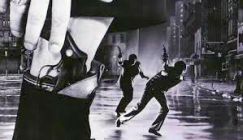
During the 1970’s one of the key and highly popular variety of action movies/ thrillers were the 'tough cop stretching & break the rules' capers- with key films in this decade been the first two Dirty Harry film, The French Connection, and Serpico. Here from Powerhouse is a recent Blu ray release of one of the lesser-known 70’s film from this genre, Badge 373 finds Robert Duvall, as a suspended NYC cop trying to solve the murder of his partner. And while the film can be a bit plodding and slow in places, rife with both sexism and racism - it does have a certain amount of gritty and sleazy charm, and one or two neat enough action set-ups making it worth checking out for fans of 1970’s genre pictures.
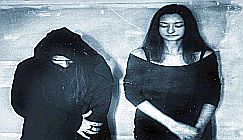
Of all the sub-genres of doom I’d say Funeral Doom, is, perhaps, the most interesting and appealing of the Doom metal styles. I first became acquainted with Funeral doom back in 1994, when I heard Epistomological Despondency from british project Esoteric, and this made an indelible impression on me. Since then, I’ve tired to follow the development/releases with-in Funeral Doom genre, which over the years has expanded and gained a lot of it's own sub-genres.
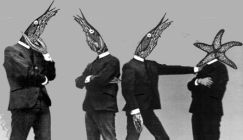
Not Available is the next in the Preserved edition series from Cherry Red and MVD audio- which sees ultimate editions of classic Residents albums. This time around we get a double CD reissue that takes in a newly remastered album, a disc full of unreleased material and a neat inlay booklet- all presented in a mini gatefold. Originally released in 1978, though claimed to have been recorded four years early, Not Available was the projects stab at creating their own surreal & wacky take on the musical form- bringing together elements of bizarre music hall/ light opera, with early Electronica and off-kilter jazz-ness. And like a few of The Residents albums, this really sounds unique, & unlike anything project had released before or since.