Loading


Check the water is a double cd ,that takes in the last ten years of the leaf label. Just about every track has something to offer and there’s a nice shift in styles too. Like all good label compilations, it makes you want to go and check of the full length albums, of tracks you like.
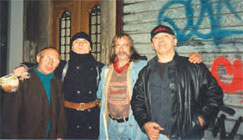
Institut are a power electronics act fronted by Lirim Cajani, they have released several CDs and singles on the Swedish Cold Meat Industry label, this is their latest offering or audio spite.
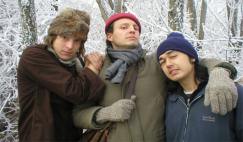
I found out about 31Knots with their 2003 album It was high time to escape. Back then, they put some welcome energy and originality in the canonical math-rock formula, irrigating it with pop sensibilities and Yes-lite pomp. In 2004, they released an ep that saw them experiment with electronic elements and move even further in pop directions.
Just over a year after Roger Doyle released the first part of Passades, the promised second and concluding part arrives with not a little anticipation from yours truly. The slow motion grandeur of the first instalment was a mouth watering blend of electro-acoustics and computer manipulations that when listened to, seems to slow and stretch time allowing fresh, wild tones and textures to flow from the speakers. The second part follows along similar lines with some minor stylistic and materialistic shifts.
Especially Likely Sloth Try to sound odd, quirky and off the wall.But sadly most of the time they sound annoyingly child like. Think of a young relative Messing around with presets on a keyboard. That said this compilation of older material is more promising then their full length put out a few years back.
I’m at a disadvantage or advantage with this release, depending on how you look at it. As I’ve only heard one of the original tracks. But if that tracks anything to go by, then the other tracks here are easily stand alone tracks in their own right.
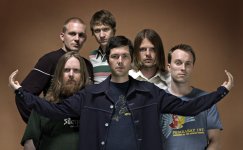
Rotoscope’s Andreas Mjøs once referred to Kåre João as “the star”. I have no idea what his exact fame status is in Norway, but after his 2002 Sideman album, he had a place of choice in my personal handbook of good music. Three years later, he is back with a new CD. Things have changed but he keeps on delivering the goods.
There are things about music that are completely non-musical that give one a sense of trepidation when approaching something new. In contemporary music there’s nothing that puts me off a new artist more than an inflated portentous introduction. Keith Berry is a man in possession of such an introduction.

And soon coffin sings is the fifth release by Aranos in the last 18 months. Such prolific output leads to the question of whether he has been sacrificing quality control in favour of quantity. Aranos is for those unfamiliar with his work a classical and folk violinist, who has worked extensively with Steven Stapleton of Nurse with wound and others associated with that group.

What follows will be a layman's view on Tujiko Noriko, as normally François would be raving about her, like he already did a couple of times (and also Takamasa's Indigo Rose gets that 'treatment'). For that reason I figured it would be nice to hear someone else's opinion, even though I'm not familiar with her work.
The original Hypnagogue CD was released in 2003 through World Serpent in a fairly limited pressing. With the fall of that distributor it has been out of print (with most of Current 93 other work) ever since.
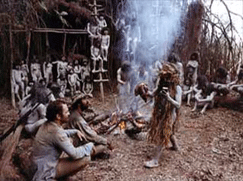
This is a welcome reissue of a classic horror soundtrack, from possibly one of the most notorious films of all time Cannibal Holocaust. When it was initially released, it was band in many countries and it still today remains band or censored in many places.
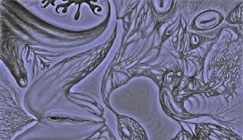
The drone works series is conducted by the Twenty Hertz label and has featured contributions by artists such as Colin Potter, Andrew Liles, Darren Tate and Bass Communion. For the tenth instalment San Francisco sound artist Irr.App.(Ext) has produced a glacial twenty minute piece that cuts like an icebreaker yet sooths like a field of feathers.
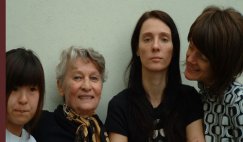
New York, April 2001. At Kaffe Matthews’ request, o-blaat, Ikue Mori, Zeena Parkins and Marina Rosenfeld join her for the first Lappetites gig. More than four years later surfaces the first CD. In the meantime, the line-up changed radically: Matthews got Eliane radigue, Antye Greie and Ryoko Kuwajima to contribute on Before the libretto. And next releases or concerts could see an entirely different group of people take the stage / record the music.
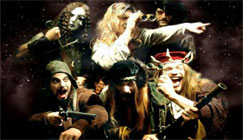
Three years is a long time in music and three years for Arcturus seems to have been long enough for some pretty fundamental changes to occur. Most notably being the departure of star man Kris "Garm" Rygg and the re-emergence of the band in the live arena. Here they present their long awaited new album with the question being which direction will they turn without the G. man at the helm.
Murcof’s Remembranza shudders through out with cinematic beat scapes. Which are both lush and hypnotic. It’s a wonderful and continually reward album, which will certainly make my best of the year list.

Last years Avalon Sutra was he said to be Harold Budds last studio album, whether he holds to his word or not only time will tell but in the meantime we have the release of a live recording of a concert he performed in Italy in 2003 with Eraldo Bernocchi. I haven’t heard anything by Bernocchi before but he seems to dabble in vaguely ambient electronica and soundscapes. Over the course of seven untitled pieces the two men meander through a delicate rose garden of piano improvisation and electronic texturing.

German Patrick Zimmer is Finn all by himself. He does some kind of spacey pop music that I think I’ve heard before.
The Church of Grob wishes to invite you to a mass for mad people as performed by Steamboat Switzerland. Please do not keep quiet.
Khanate return with what is publicised as a mini album but with two tracks clocking in at forty-five minutes it’s hardly a short sharp shock of a release. The album continues pretty much where Things Viral left off. Minimal, tortured and bizarre arrangements of deathly doom metal and subtle electronic manipulations. In fact the two tracks, which seem to follow the story of a serial killers capture, killing and "release" of a victim, seem even slower and more tortured than on the last album (if you can imagine that).

When presented with the equation strings + feedback + staubgold, one might think of some of Ekkehard Ehlers’ works. Not this time though: Strings + Feedback is the work of Andrew Pekler.
Two years ago, Taylor Deupree and Kenneth Kirschner released an album called Post_Piano, a superb encounter between piano and minimal electronic music. This summer, they released the follow-up, and it’s equally nice.
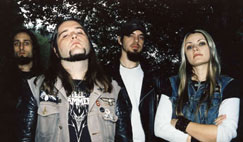
An earlier incarnation of Electric Wizard rose to fame on the crest created by their stoner rock masterpiece Dopethrone. The band could not be contained, however, and guitarist/vocalist Jus Osborn was forced to reform the band after its premature demise. Osborn recruited Justin Greaves on drums, Rob Al-Issa on bass, and New York's quite lovely Liz Buckingham on guitar, and added the article "The" to the band name in order to make a distinction with the previous line-up. The reinvigorated Wizard gathered in July 2003 to record We Live, which may be considered the debut album of an altogether new outfit.
Sphere was a very pleasant surprise (not sure if Pleasant is the right word). I’d always been curious about Merzbow’s work, but firstly I didn’t know where to start. He must be one of the most prolific artist’s around seemly popping out a new album every few months.