Loading


Here from Cincinnati, Ohio’s Whore’s Breath are two weather-themed examples of the wall noise form. Each runs around the twenty-six-minute mark, making for a just over fifty-two-minute full-length release.

Here’s a three-way wall noise split, taking in three twenty-minute walls- each themed around each artist's favourite Vtubers. All of the projects are from the USA, with a fair variety between each of the tracks
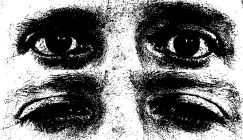
Nightsweater is seemingly the debut release from this Oregon-based wall of noise project. It’s a twenty-minute ‘wall’ with a decidedly soothing clutter & mellowly juddering quality to its crumbling ‘n’ crusty unfold.
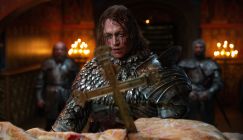
Dracula (aka Dracula: A Love Tale) is a 2025 film directed and written by Luc Besson -Subway (1985), La Femme Nikita (1990), and The Transporter( 2002). It stars Caleb Landry Jones, Christoph Waltz, Zoë Bleu, and Matilda De Angelis.
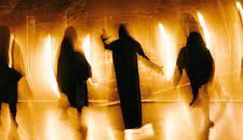
Taking their time and doing it right, Portugal's The Ominous Circle return with Cloven Tongues of Fire, the follow-up to their 2017 debut, Appalling Ascension. Dark and moody, Tongues revels in atmosphere, allowing the mid-paced death to expand out in different tempo directions as needed to punctuate the thick, black, dissonance that fills the speakers. Carried on the backs of five long tracks (with an intro and interlude as well), Cloven Tongues of Fire skillfully continues death metal's Gorgutsian trend of extended, sonically saturated pieces soaked in dissonance and well timed chaos to bring about an unsettling and uncompromising atmosphere.
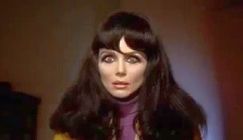
A Hyena In The Safe (Una Iena In Cassaforte) is a crime mystery/ crossbred with glamorously turned-out criminals, disturbingly heady breakdowns/ freakouts, and lots of double crossing/ backstabbing. The late 60s Italian film regards a group of six robbers meeting at a mansion- each with their own key- to open a safe full of diamonds, but one by one they get killed off. Here from Celluloid Films is a Blu-ray release of the film, taking in a new HD print, a commentary track, and a few other extras.
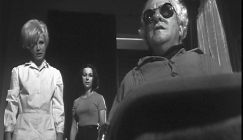
From the mid-1960s, The Diabolical Dr. Z blended mad doctor horror, revenge thriller, and low-key sci-fi with a largely grim tone, which is informed by both gothic horror and noir genres. The film is one of the earlier releases from Infamous euro-cult director Jess Franco, and it’s a monochrome affair, being a lot more subtle compared to his later work, though it has a very tangible/dread-filled atmosphere. Here from Eureka is a new Blu-ray release of the film, taking a 2k scan, a new commentary track, and a selection of new/ old extras.
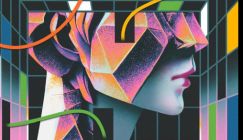
So Unreal is a 2023 documentary film from writer/director Amanda Kramer (Paris Window, Give Me Pity! and By Design) that looks at technological advancements through the lens of sci-fi cinema in the 1980s and 1990s. Narrated by Blondie legend, Debbie Harry (Videodrome, Hairspray and Tales from the Darkside: The Movie) it takes a look at where filmmakers' anxieties and neuroses lay in the 1980s and 90s as these technological developments became ever more chillingly real.
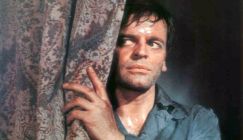
Here from Film Masters is a double-bill of two stateside versions of Euro horror films featuring Klaus Kinski. There’s Creature With The Blue Hand- a late 60’s horror focused Krimi. And Web Of The Spider, an early 70’s gothic ghost story where Kinski plays Edgar Allan Poe. The dual Blu Ray takes in HD prints of each film, as well as a commentary track for each picture. Also included is an alternative version of the first film, new featurettes, and a few archive extras.
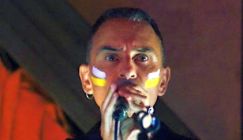
Ohad Fishof is an Israeli experimental musician and composer with many previous works, who often integrates dance and visual components into his work. Witchcraft and Gardening is his new LP on Solid Coated, and according to their website, his first solo work since 2019. It is a colourful multigenre recording that spans from experimental jazz to vocoder-laden synth pop, apparently with a majority of instruments played by Ohad himself, though there are a couple of guest credits.
La Serenissima is a two-CD set bringing together organ and harpsichord pieces composed by Richard Rijnvos. He’s a radical Dutch composer whose work is often concerned with stacking melodic patterns. Or utilising non-musical elements such as magic squares and chessboards to create his work. Most of his compositions are themed around locations, as is this collection, which takes its title from a nickname for the historical republic of Venice.
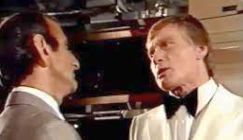
First published in the year 1979, The Tuxedo Warrior looks at the early bouncer career of Cliff Twemlow. Who later went on to become a key figure in micro-budgeted/ often SOV action/horror/sci-fi cinema of the UK, which this year has been celebrated by the excellent InterVision/ Severin Blu Ray Boxset Bloody Legend- which brought together a doc about the great man, eleven of his features and much more. Here from Severin/ Encyclopocalypse Publications is a reprint of the book.
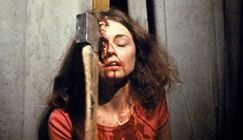
The All-Night Video Guide: Slashers 70’s & 80’s is a glorious dive back into the golden age of slash ‘n’ stalk films. Instead of an in-depth/ definitive guide to the genre/ period, this is much more of a personal look at some of the favourite films of writer Robc. And it’s all the better for it, as it’s a wonderful, honest, down-to-earth, sometimes informative book, which feels like you're chatting in a bar with a buddy about films, instead of a stuffy study of the genre.
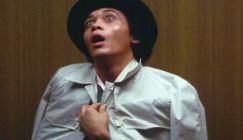
When visionary producer Haruki Kadokawa inherited his father’s publishing business in the mid-seventies, he promptly set about combining his two great interests - books and filmmaking – and transforming the Japanese film industry. In a bid to compete with the blockbusters that were arriving from the US (and which were very popular), he started to introduce 1970s Japanese audiences to the home-grown version. First up in 1976 was the instantly popular murderous epic The Inugami Family, followed swiftly a year later by the masterful thriller Proof of the Man. Set in New York and Tokyo, it boasted a stellar cast of George Kennedy, Robert Earl Jones (James’ father) Ozu favourite Mariko Okada and Kurosawa muse, Toshiro Mifune and went on to become Japan’s second highest-grossing film of all time (for a while anyway).
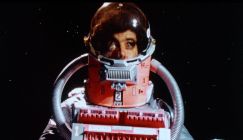
Appearing four years before his slasher genre-defining classic Halloween, Dark Star was the first feature-length film directed by John Carpenter. The film is a low-budget slice of Sci-fi regarding a spaceship manned by bearded, long-haired crewmen, who spend their days in deep space blowing up unstable planets. It’s a low-key parody/send-up of the genre, blending bickering/ bored crewmates, bombs that talk back, a red ball with claws pet alien, a ship captain frozen in ice, and the odd subtle chuckle. Here from Fabulous Films is a dual UHD/Blu-ray release of the film. It features two cuts of the picture, a selection of new and archive extras (including a feature-length documentary), along with repro stills and posters, and a limited edition online exclusive clamshell/o-card package with a Dark Star patch.
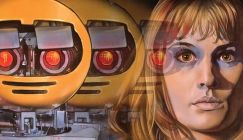
Deadly Friend was the seventh film directed by horror icon Wes Craven (Last House On The Left, Nightmare On Elm Street, Scream). And the mid-80s film certainly stands as his most weird and tonally unbalancing creation, as it shifts from cute robot family movie to teenage abuse drama, to mad doctor meets supernatural slasher blend. Here from Arrow Video is a recent Blu-ray release- taking in a new commentary track, and a selection of new/ archive extras.
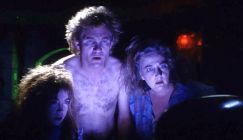
Shelf Life is the previously unreleased final film from director Paul Bartel (Death Race 2000, Eating Raoul and Lust in the Dust). Filmed in 1993, Bartel’s final film is a dark comedy with a fairly original premise that sets it apart from most other comedies of the time. Shelf Life stars O-Lan Jones (Mars Attacks, Edward Scissorhands and Beethoven), Andrea Stein (Hard to Kill, Trouble in Mind and Lois and Clark), Jim Turner (The Lost Boys, Kicking and Screaming and Joe’s Apartment), Paul Bartel (The Usual Suspects, Piranha and Escape from LA) and Shelby Lindley (Noragami, Puella Magi Madoka Magica and K-On!).
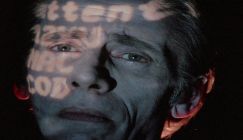
Bringing works of William S. Burroughs to the screen alongside an experimental soundtrack from some of the era's biggest names in industrial music, 1984's Decoder stands as a cyberpunk cult classic. With a number of songs by Genesis P-Orridge & Dave Ball, as well as FM Einheit, Einstürzende Neubauten, Soft Cell, and The The, its soundtrack is a testament to a fascinating piece of cinema nestled in a distinct and equally fascinating place and time. Filmed in Hamburg and Berlin by Klaus Maeck and Muscha, Decoder uses current industrial music as a revolution, sparking subterfuge, with the hunter trying to suppress the dissent. Available on a standalone CD for the first time in 33 years (there was a DVD/CD release in 2010), Decoder can now easily be heard by the masses without turning to auctions or haggling with secondhand resellers.

Vermilion Hours is a collaboration between French pianist Melaine Daliber and British soundscaper David Sylvian. The CD or vinyl album takes in two long slices of piano minimalism/ low-key simmering ambience, with two shorter versions of the same tracks topping off the release.

For Volin and Electronics Volume II is a CD release collecting together nine tracks where violin and electronica wonderfully meet. Irish violinist Darragh Morgan is a supremely talented & versatile player, who here adds his deft/ at times detailed string work to the work of nine different composers.

The instrumentation on Jon Porras' Achlys is hard to pick out, and perhaps that is intentional. Whether guitars or soft synths, the sound sources on this ambient work are kind of all background, with little fury or pathos--very few lead lines or licks. That is the point of this kind of music, at least according to its chief architect, Brian Eno. The lack of counter point and inherent conflict was certainly welcome then, and maybe still is, too. Much on Achlys sounds like a refinement of Eno's early ambient works, specifically Ambient 1 (Music for Airports), the soundtrack to ambivalence. The transitioning and mixing of that seminal work are revived in Porras' hands, smoothing shifts between tracks, eight in all.
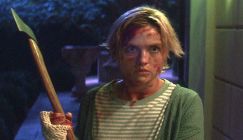
Mercedes Bryce Morgan’s third film is a fascinating mash of genres that keeps its audience guessing. On the face of it, the 2024 picture is a punchy entry in the brewing Airbnb horror subgenre popularised by films like 2020’s The Rental and 2022’s Barbarian. Horror fans, however, may be surprised at how well they take to an opening hour of mystery that unravels as an awkward romantic drama before things take a dramatic turn for the bloody.

Foutu is a recent four-track album from Bordeaux-based Raté . It’s another sonic journey into hope-numbing/nihilistically battering walled noise from the project. Each track comes in at just shy of fifteen minutes, and each is as unforgiving/ unrelenting as the other.
Incessant severs up an hour and seven minutes of wall noise head-roasting from this Hungarian project. The track blends thick roiling lows with jittering ‘n’ hissing mids, for a total sonic engulfment.