
Sana / Sana: Let Me Hear — Sana / Sana: Let Me Hear ( Blu Ray boxset)
J-pop and J-horror combine in Takashi Shimizu’s return to his horror roots. Having shot to the top table of the genre by masterminding the menace-heavy Ju-On franchise in Japan and the United States, this time, the director spins out the horror from an old cassette tape, which haunts anyone who hears it with a mysterious melody before they vanish.
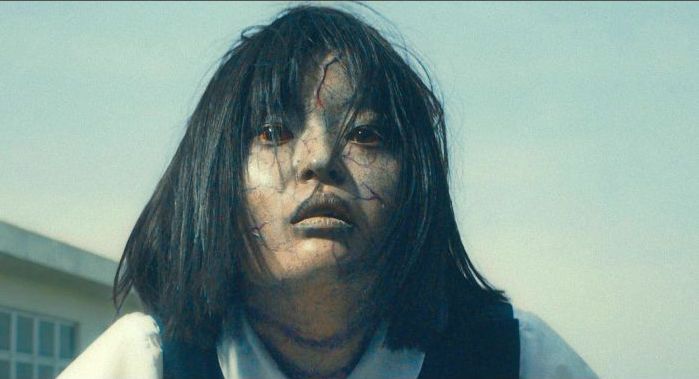
In 2023's Sana, the disappearance of a pop star after listening to the strange tape prompts the band’s manager to bring in a detective. But as the slightly frivolous detective Gonda interviews the remaining band members, the disappearances pile up. The group and detective slowly piece together the story behind the tape labelled “everybody’s song” (the Japanese name for the film) and uncover the dark truth behind the mysterious humming and visions of a schoolgirl that seem to precede a disappearance.
The fabric of Sana, a horror very much about sound, is set apart by its heavy emphasis on J-pop. That’s inevitably going to leave it a little dated in future, but there’s a real strength in using members from the Tokyo group Generations From Exile as the fictional band who accidentally stumble into this chilling mystery.
Sana feels a little underpowered compared to Shimizu’s previous work, but he demonstrates his ability to stretch out a mystery with a masterful use of space and time. A chilling scene that sees the band, studio staff and detective listen to the tape backwards and hear a chilling message from beyond the grave brilliantly uses the space between recording and production for both tension and a jump scare. From the halfway point, investigations into the mysterious Sana, a schoolgirl linked to the death of another girl 30 years before, who seems to be the voice on the tape, lead to her childhood home and a disconcerting, haunting time loop.
Shimizu is very happy to frequently replay moments throughout Sana, perhaps an overt reference to the rewind button on the 90s Sony cassette player, often around the titular character’s neck. While it continually risks being too obscure, and there’s no doubt that the truth behind Sana’s fate feels a little contrived, no matter how haunting the imagery, Shimizu remains an expert at conjuring a horror atmosphere. He’s clearly enjoying working with the fabric of a film that’s often softly lit and even more softly focussed.
Shimizu’s work is often elliptical, but this really feels like he’s trying to stretch the limits of how much his audience is ready to piece together the parts of this mystery, rather wryly using elements familiar from the turn-of-the-century Japanese horror he helped pioneer. Again, there’s probably no mistake that Sana’s childhood falls in the decade from just before his breakthrough as a filmmaker.
The distinctly dreamy aspect that builds up during Sana’s second half is further developed in its sequel, Sana: Let Me Hear, released a year later in 2024. This time, the mystery is set in motion by a traffic accident that sends a young man into a coma and leaves his school teacher girlfriend looking for answers at the school where, three decades earlier, a girl tragically died.
Moving the cursed story of Sana into high school classrooms, the sequel delves deeper into the antagonist’s history. But oddly, in exploring Sana, an antagonist intriguingly defined not as a spirit driven by malevolence, but by her hopes and dreams when alive (and on an eternal mission to capture the final sounds of souls), it wanders into strangely familiar territory.
With the dream-like sequences, the merging of present and past, the involvement of successive generations, and the forming of some kind of team to oppose the stalking entity in a school setting, it’s hard to believe that the A Nightmare on Elm Street franchise wasn’t at the back of Shimizu’s mind. To ram home this is a J-Horror take on that oneiric horror, there’s an explanatory scene in a car junk yard that recalls some pivotal moments of the third and fourth films of the American franchise.
Leaving the J-Pop connection behind (apart from one cameo), 2024's Sana: Let Me Hear feels more timeless than the first film. But in expanding on the pivotal moments of the mystery with much of the same cast (a benefit of shooting these close together), it also feels more like a companion piece. Perhaps, even, an experiment in exploring the same horror through a slightly different prism.
In full swing, the sequel draws on some remarkable and unsettling images. The sets of feet walking down a school corridor, a jump-scare window appearance, and a blood-soaked, foaming schoolgirl automaton in a claw machine stay in the memory. Although nothing quite comes close to two scenes from the first film that show a rehearsal from two perspectives, the second with an unexpected extra person.
While Sana ends on a surprisingly upbeat note, not least a full song-and-dance routine from its central group, its sequel does the opposite. A more melancholy film, it’s pretty much the flip-side to the first: not giving us hope but a creeping, sad dawning realisation (although there is some good news for the film’s victims hidden in the credits).
In all, this is a nice presentation of the recent horror double-bill, which reflects its interesting place in Shimizu’s filmography. Arrow presents both films on 1080p Blu-rays, with a fine, if compact, stack of special features in its startling packaging (featuring new artwork by Tom Fournier). The films may not come with commentary tracks, but include an interview with Shimizu and his assistant director, also horror consultant, Nao Kawamatsu. Both Sana and Sana: Let Me Hear received making of featurettes, the latter of which includes previously unseen scenes, while Sana has a separate archive of an alternate ending and previously unreleased scenes.
Perhaps most interesting is the content that places Sana and its sequel in the continuum of J-Horror. Then and Now is a new retrospective on the hugely influential subgenre by critic and Japanese cinema expert Amber T. Quite probably, then, this is a set fans of J-Horror will want in their collection.