
Hammer Volume Seven: Ships & Giggles — Hammer Volume Seven( Blu Ray Boxset)
The seventh in Powerhouse/ Indicators series of Hammer boxsets looks at the lesser-known side of the legendary studio. The focus of the four-film set is comedy, with the box getting an amusing punny subtitle of Ships & Giggles. We move from a mix of bumbling comedy, sci-fi, and crime caper. Onto a WWII set on island service comedy, through to a lost in France comedy with Bob Monkhouse and Leslie Phillips. Finishing off with a naval comedy drama regarding a marriage. Each film gets an HD or 4k scan, with a good selection of extras- mixing of new & old things.
First out of the bag, we have 1959’s The Ugly Duckling- which has a rather misleading title. As you'd expect from it, maybe a straight romantic comedy- and while there are threads of romance in the film, it’s much more than that. It mixes comedy, sci- fi, and crime caper film, with light touches of noir. Retelling the Doctor Jekyll & Mr Hyde story in the 50’s, with the backdrop of a musical hall and a small-town pharmacist.
It was helmed by the wonderful named Lance Comfort- the Harrow-born cameraman turned director had thirty-nine features to his name. Including the likes of war drama Squadron Leader X (1943), crime thriller Pit of Darkness (1961), and vampire horror Devils Of Darkness (1965).
The film centres around Henry Jeckle- played by the wonderful Bernard Bresslaw (Carry On films). He’s somewhat of a likeable, if slow on the uptake & bumbling younger brother of the quaffed-haired & moustached Victor (John Pertwee), who is both the conductor for a big band and the owner of a local pharmacist.
Living with the pair above the shop is the pair's older sister Henrietta (Maudie Edwards), who is somewhat of an old maid and is keen to get married to the rather full of himself/ pompous Reginald (Reginald Beckwith). When we first meet the three, they’ve just got back from a dance/ music hall where Henry has rather embarrassed everyone, getting tangled up with his dance partner and falling over.
Henry seemingly only has one friend in the world/ someone who understands him Tom Boy Snout (Jean Muir) who is always trying to jolly on & support Henry. One day just after shes left, Henry blows up the basement lab- finding the formula for his great-grand dads potion- but instead of bringing out the dark/ psychotic side of man, it brings out the more carefree/ unafraid/ daring side.
So, Henry makes up a portion of the formula- to transform into the sleek, suave & confident Teddy Hyde- who, after putting the other dancers to shame on the dance floor, gets involved with the crook who runs the place- who is planning a diamond heist.
Bresslaw is truly wonderful here, playing the duo personalities- as Henry, he is awkward, highly bumbling, and unaware, with a baby-like single curl and an ill-fitting/ several sizes too small suit. As Teddy, he’s perfectly presented- with neatly brille-creamed & a pencil moustache- he can dance up a storm, handle himself in a fight, and most importantly, later on in the plot can be cool under pressure. Also good as his supportive brother Pertwee. There are a few other recognisable faces; we have Michael Ripper as a henchman, and Richard Wattis as the local inspector- a role he’s played often.
The Ugly Duckling is an entertaining crossbred- that’s well acted, with an engaging enough plot, and a mix of light laughs, action/ suspense, and a big band grooving score.
Extras-wise on this disc, we get the following new extras. From Virtue to Vice (14.57): film historian Robert Shail on the career of director Lance Comfort. He talks about how the director could be seen as an auteur. He started as a jobbing director, first making medical training films, going on to helm drama and melodrama with noir touches. Before moving on to make a lot of B-movies, which often focused on noir. He then moves on to discuss the film to hand, going from touching on the original title of the film, and John Pertwee’s role in the film/ how he nearly steals it, almost steals the film. A Tricky Beast (12.09): film historian Kevin Lyons discusses the picture. Infamously Fun (6.48): author Stephen Laws introduces the film. Moving from talking about seeing it as a child, being scared by the transformation sequence, to a personal encounter he had with Mr Bresslaw.
On the archive side, we have Dancing the Cha-Cha-Cha (21.03) from 2019- actors Jess Conrad and Geremy Phillips, and choreographer Lionel Blair look back fondly at The Ugly Duckling’s musical sequences. The BEHP Interview with Len Harris (84.00): a 1991 audio recording with the camera operator in conversation with Alan Lawson and Manny Yospa. Up in the Air (55.29): 1969 feature-length Children’s Film Foundation production starring Jon Pertwee. Image gallery. New and improved English subtitles for the deaf and hard of hearing.
The finished version comes with a forty-page booklet with a new essay by Josephine Botting, notes on the soundtrack by David Huckvale, an archival article on the film’s production, extracts from the original publicity manual, an overview of contemporary critical responses, new writing on Up in the Air, and film credits.
Next, we have Don't Panic Chaps, also from 1959. It’s a WWII-set service comedy, about a small well-meaning/ if bumbling unit who are sent to a seemingly uninhabited island.
Leicester-born George Pollock directed the black-and-white shot film. He had sixteen features to his name. These went from Rooney(1958), a comedy about Irish rubbish collectors who become a part-time sports star. Comedy crime thriller Kill Or Cure (1961), and a take on the classic Agatha Christie’s proto-slasher Ten Little Indians (1965). He also had thirty-nine assistant director credits, including a few classics like Brief Encounter (1945).
The film focuses on moustached Lieutenant Brown (Thorley Walters) and his unit of three men, who are sent to a seemingly uninhabited Adriatic island in preparation for an Allied invasion of Italy.
Brown himself is keen to do his job well, though is often awkward/ out of his depth. His unit consists of the rather bumbling, often saying/ doing the wrong thing Finch (George Cole). Looking for an easy life/ likes reading smutty mags, Ackroyd ( Harry Fowler). And the rather stern/ focused on the job/ second in command Bolter ( Percy Herbert).
When they set down on the island, they start trying to find food & water, before realising they are not quite alone as they first thought. As the film unfolds, they encounter an Italian damsel in distress, uncover pterodactyl bones, and have a Roman toga party.
There’s a key supporting role from Dennis Price as another Lieutenant, and a few other memorable enough supporting actors.
It certainly started rather reminding me of Dad’s Army, but as it goes on there’s a slightly more provocative move towards lightly smutty comedy. Don't Panic Chaps is an entertaining/ eventful, if not mind-blowing, forces comedy.
For this film we have the following new extras: Frightfully Funny (30.00). Here, the always informative and entertaining historian and author Jonathan Rigby discusses all the films on the boxset. First, he gives us a bit of an introduction to comedy made by Hammer- we find out that the studio made a total of twenty comedies; the first of these was 1935’s The Public Life of Henry the Ninth. He talks about each film featured on the set in a good amount of detail- with some fascinating facts, his own thoughts on each, etc. This really is an excellent featurette. Differences Behind Us (8.15) with author Stephen Laws. He starts off talking about how much the film is a real-time capsule; we get a potted history of the service comedy genre, which was popular. And he discusses each member of the cast.
On the archive side of things, we have No Naughtiness (18.07): from 2019 Michael Corston reflects on a career writing comedy plays for radio with collaborator Ronald Holroyd. Theatrical trailer. Image galleries: promotional material and publicity manual.
The finished release takes in a thirty-six-page booklet with a new essay by Melanie Williams, notes on the soundtrack by David Huckvale, extracts from the original publicity manual, an overview of contemporary critical responses, and film credits.
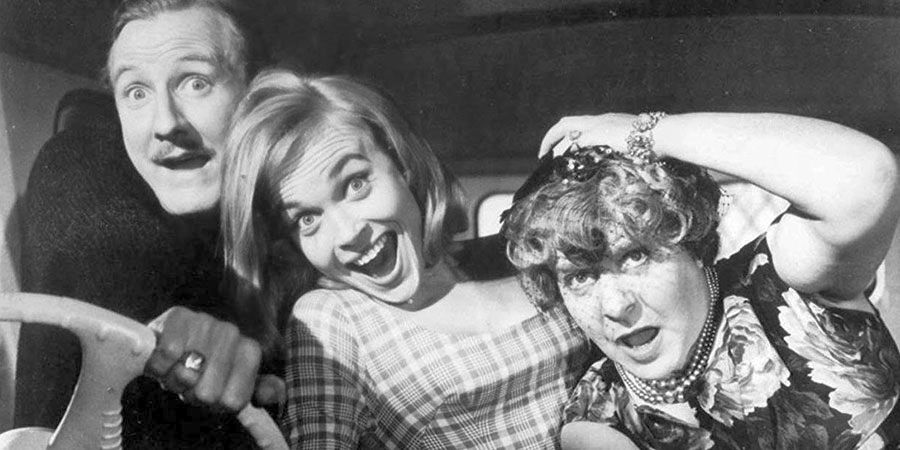
Film number three is A Weekend With Lulu, and with its title and release date of 1961, you may be thinking it has something to do with Scottish singer of the same name. But no, it doesn’t; the Lulu of the title is not a human/ female- it’s a rather cheap caravan. The film focuses on buddies Fred (Bob Monkhouse) & Tim (Leslie Phillips) who plan to take Tim's girlfriend to the coast for a few days…but end up with her bossy mother & yapping dog coming along, and theyl and up going a bit further than the British coast.
The film was helmed by the wonderful named John Paddy Carstairs- between the early 1930’s and early 1960s, he had thirty-seven features to his name. These included the likes of crime comedy Double Exposure (1937), comedy musical featuring George Formby Spare A Copper (1940), window cleaning comedy featuring Norman Wisdom Up In The World (1956), and East Germany-set mystery drama The Devil’s Age (1962).
The film opens rather wrong-footing the viewer, as we see a sleek sun-glassed man, taking/ stealing a briefcase as upbeat/ edgy jazz plays, making you think you're watching a spy film.
But fairly soon we settle down into 50’s/ 60’s Brit comedy territory- we meet Fred (Monkhouse) a rather young Del Boy like character with a big curly hair quiff, and enough banter to sink a ship. His buddy Tim (Phillips) is somewhat more awkward- he’s in love with hairdresser Deirdre (Shirley Eaton) and rents the caravan (Lulu) from Fred.
The pair's idea is that Fred will drive the pair down to the coast for a short break- he’s got an ice cream van which he’s using to pull the caravan- so clearly wants to sell his wares when they get to the coast.
They roll up at the hairdressing salon- to find out Deirdre is not on her own, she’s joined by her domineering mother Florence- played by great British character actress Irene Handl- who has played many a great battleaxe. She is joined by her small & yappy dog named Gaylord.
As the journey unfolds, things go very much askew- they get lost in a rainstorm, park up for the night- they think they are on the edge of some woods, awaking to find they are on a train making their way into France.
Along the way they meet busybody train-guards, get chased by a bumbling police officer & focused trilby-hatted inspector. Meet a touchy-feely Count, get tired up in the Tour De France, meet a madame, get involved in a town bet.
We get a few familiar faces too from the Carry-On films- there’s a far too brief appearance of Kenneth Connor as a fussy/quirky café customer. And a bereted Sid James as a British bar owner in a French village.
The whole thing nicely romps along- yes, at points it becomes rather ridiculous with moments of all-out farce. The film features a nicely jaunting/ jingle-jangly bar room piano score, with one particular tuneful/ toe tap cue.
A Weekend With Lulu was an entertaining/eventful British comedy- it was great to see Monkhouse & Phillips sharing the screen, and they work well off each other. With a good supporting cast too.
The only new extra on this disc is A Comedy Vehicle (5.42). Author Stephen Laws moves from touching on the career of prolific director John Paddy Carstairs to talking about Bob Monkhouse's love of Horror. He chats about key and small role actors, and the film in general.
On the archive side, there’s the following: A Few Weeks on Lulu (30.57) from 2019 interviews with camera operator Brian West, second assistant director Michael Klaw, assistant sound editor Geoff R Brown, and production secretary Jill Langley recall the production. Leslie Phillips Asks… (4.20): a 1960 charity appeal film for the RNIB. Image galleries: promotional material and publicity manual.
The disc comes with forty-page booklet with a new essay by David Cottis, notes on the soundtrack by David Huckvale, extracts from the original publicity manual, an overview of contemporary critical responses, and film credits.
Finally, we have 1961’s Watch It, Sailor! - which stands as one of the more misleading/ surprisingly genre mixed films of the collection. With its title/ comic illustration credits/ theme song, you’d imagine this is a set-at-sea saucy comedy, but no, it’s largely set in a terrace house, focusing on the on/ off wedding between a sailor and his sweetheart. The film mixes comedy, less conventional kitchen drama, and romantic drama.
It was directed by Berlin-born Wolf Rilla. Between the early fifties and mid-seventies, he had eleven features to his name. These go from death penalty-focused crime mystery Noose for a Lady (1953), kitchen sink drama Strange Affection (1957), creepy kid horror of Village Of The Dammed (1960), sex comedy Naughty Wives (1973).
After the already mentioned bright, buoyant, and decidedly nautical credits, we drop down in a daytime pub, where we meet the intended sailor Albert- an early role by Oz acting legend John Meillon (Crocodile Dundee, The Cars That Ate Paris), and his best mate/ best man, Carnoustie Bligh (Graham Stark) who are having a few drinks to calm their nerves. With your classic posh drunk (Bobby Howes) trying to put the pair off going to the church.
We then switch to see the Alberts sweetheart/ intended, Shirley (Vera Day) making her way to the church. Inside, we find Frankie Howard pumping his (church) organ to amusing comic effect.
Anyway, I’ll draw a line here on the plot line- but there are all manner car issues, back & forth from the church, surprising reveals via telegram, noisy neighbours, and the appearance of a bearded/ self-important navy officer played by Dennis Price.
Our romantic lead does well enough with what they are given, and most of the supporting cast are good too. But I think the highlight here is the mother-in-law in hell Marjorie (Emma Hornett), who is constantly belittling and shouting down everyone- including the two lovers, her doesn’t say much/ pipe smoking/ ferret keeping husband, and her doolally sister played by Irene Handl.
Watch It, Sailor! was a real unexpected finish to the set- sure it’s not perfect, but the blending of comedy and drama is done well- with a decent cast who can do both funny & more serious.
Again, only one new thing on this disc Getting Spliced (5.41): with author Stephen Laws. He moves from talking about how before this the film director Wolf Rilla made The Village Of The Dammed- which was big hit. He talks about the cast, etc.
On the archive side there’s: Happy About It (34.11), which a 2016 interview with lead actress Vera Day. It covers her whole career and reveals how she fell into acting by chance. She first got approached at a train station by famous hairstylist Vidal Sassoon, who asked her to do some photos for him, this led to a small role in the play Wish You Were Here- which led to film work. She ended up sharing the screen with the likes of Diana Dors, Marilyn Monroe, Boris Karloff, and Sid James. All in all, a most interesting interview. Otherwise there’s a BEHP Interview with Alfred Cox (81.00): a 1992 audio recording with the editor in conversation with Alan Lawson and Syd Wilson. The BEHP Interview with Tilly Day (81.00): a 1988 audio recording with the film’s continuity supervisor in conversation with Sidney Cole and Alan Lawson. David Benson on Frankie Howerd (20.00): a 2002 audio recording of a presentation given by the actor, comedian, and author of To Be Frank, recorded at BFI Southbank, London. Image galleries: promotional material and publicity manual.
The disc is finished off with a thirty -page booklet with a new essay by Mark Fryers, notes on the soundtrack by David Huckvale, extracts from the original publicity manual, an overview of contemporary critical responses, and film credits.
Hammer Volume Seven: Ships & Giggles is certainly up to the standards of the other boxsets in this series, and it truly was fascinating to see/ learn about a different side of this iconic studio. All the prints look great, and we get a good selection of extras- it was a pity there were no commentary tracks at all, and on a few discs the new extras are very thin on the ground. Though that said, we do get a decent-sized booklet for each film.