
Danza Macabra Vol. Four: The Italian Gothic Collection — Danza Macabra Vol. Four( Blu Ray boxset)
Here we have the fourth in Severin’s celebrated Danza Macabra boxset series, which focuses on European gothic horror cinema- mixing the known with the more obscure pictures.For this set, we return to Italy again- with five films dating from between the mid-sixties and early seventies. Each of the featured pictures is given a sparkling new scan, as well as a hefty selection of largely all-new extras.
As with all of the sets in this series, it comes presented in a box with a removable lid- which utilises blends of artwork from each of the pictures in the set. Each film gets its own Blu-ray case. Adding an element of difference/ collectability to the two variations of the set, the Blu-ray box is blue-coloured, and the UHD is red coloured
First up, we have 1965’s Terror-Creatures From The Grave (5 Tombe Per Un Medium, Coffin Of Terror). This was directed by San Severo, Italy’s Massimo Pupillo. He had six other features to his name, taking in the likes of documentary Teddy, l'orsacchiotto Vagabond (1961), gothic horror Lady Morgan's Vengeance (1965), and spaghetti western Django Kills Softly (1967).
The release features two versions of the film, the original Italian version 5 Tombe Per un Medium, which runs at one and a half hours, and the US version, Terror-Creatures From The Grave, which runs at one hour and twenty-five minutes. Both versions have slightly different layouts, but basically the main part of it’s the same.
Basically, lawyer Albert Kovac (Walter Brandi) receives a letter from the owner of a large country estate. He arrives to find out the owner has been dead for a year, but the letter is seemingly in his hand, with his wax stamp.
Living at the house now is his rather deadpan/ glum second wife, Cleo Hauff (Barbara Steele), and her twentysomething stepdaughter, Corinne (Mirella Maravidi), who is seemingly unbalanced as she keeps seeing her father, but no one else does.
The estate/ house has a dark history- basically, plague victims were buried in the grounds.
Albert joins up with the moustached and balding Dr. Nemek (Alfredo Rizzo) to try and figure out what’s going on- first focusing on the letter, then the five witnesses who apparently signed the death certificate & are now dying.
As you’d expect, Steele is great at the slight aloof/ creepy ex-wife. Brandi is ok as our hero, though is maybe a little one-dimensional. And Maravidi is great as a real drama queen.
The film certainly has some neat ideas- there’s a long glass box featuring a line of severed plague victim arms, and an old wax cylinder featuring creepy recordings regarding the plague. We get some decent/ if cliched moments of gothic creepiness/ unease, and the mystery of the whole thing keeps you watching.
On the less positive side, the pacing is rather slow in places, and to be honest, they bring too many characters/ names into play- meaning at points you're unsure where you are. Terror-Creatures from the Grave was a fine enough example of Italian gothic horror, though it most certainly felt plodding in places.
The release takes in two Blu-rays, and on the first, we have the film and commentary track. And on the second disc, we get a good selection of largely new extras.
So, on the first disc we have a commentary track from Rod Barnett of NaschyCast and The Bloody Pit, and Dr. Adrian Smith, Co-Author Of Norman J. Warren: Gentleman of Terror. This is a well-researched and nicely chatty affair. They open by talking about how the film had so many different titles, versions, and controversies. They chat about the many titles- deciding which one they liked best- before talking about the version of the film they enjoy most. They discuss the film's main house location, which is five hundred years old, and is located near Leonardo da Vinci–Fiumicino Airport and has been used in many cult films over the years. We get in-depth bios of actors, and comment on the eerie use of the sound of creaking cartwheels. Later on, they quote from an interview with Barbra Steel, and how it is she bemoans that she has never given a really powerful role. They touch on her film work in the 1970’s, before moving to talk about how she works as a producer on TV series in the US. We find out that Ms Steel's own voice was never used in her Italian Gothic work. They point out and discuss the career of Luciano Pigozzi, who plays Kurt the gardener in the film- he’s known as The Italian Peter Lorre, having one hundred and seventeen credits to his name. All in all, a great track.
On the second disc, we have the following new extras. Grave Secrets (26.16) a featurette with English subs- featuring interviews with director Massimo Pupillo, Actor Riccardo Garrone, and Film Historian Fabio Melelli. Selected Scene commentary with actress Barbara Steele and Barbara Steele archivist Russ Lanier (26.23). She moves from talking about being fond of the film's camera operator, whom she worked with on three or four pictures. Comments on the leading man and gets quite agitated when Lanier reads out quotes from others on the production, who said she was stand-offish and difficult. Grave Influence (14.38) video essay by Matt Rogerson, author Of The Vatican Versus Horror Movies. The Original Boutique Video Label (9.28), which finds Film Critic Alan Jones discussing the 80’s VHS label Vampix, which he worked for. They released a fair few notable Euro horror/ cult titles- such as Terror-Creatures From The Grave. This was a most fascinating interview, as along with Jones’s remembrance of the time, he shows us some of the original VHS put out by the company. Finally, there are both Italian & U.S trailers.
The second film in the set is 1971’s Night Of The Damned (La Notte Dei Dannati)- which starts as creepily moody, if slight, gothic horror, before later on shifting into erotic horror and police mystery.
It was directed by the wonderfully named Filippo Walter Ratti. Between the early 50’s and late 70’s, the Rome-born director had seventeen credits to his name. These went from The Black Mask (1952), which looks like a Zorro knock-off, witty comedy Vacanze Alla Baia D'argento (1961), ski slopes set drama Vacanze Sulla Neve (1966), sleazy mock-doc Mondo Erotico (1973), and gothic giallo Crazy Desires of a Murderer (1977).
The film opens in the orange sofa and large curtained windows of the apartment of our two leads, Jean Duprey (Pierre Brice), a pipe-smoking, sometimes polar neck-wearing journalist, and his blond-haired wife Danielle (Patrizia Viotti).
They’ve just got a rather cryptic & clue-laden letter through from Jean’s old aristocratic buddy Guillaume. So, they decide to off-the-cuff drive up to his off-the-main-road castle and check in on him. When arriving, they are met by his rather sullen/ witchy haired wife Rita (Patrizia Viotti)- who says her husband is rather unwell.
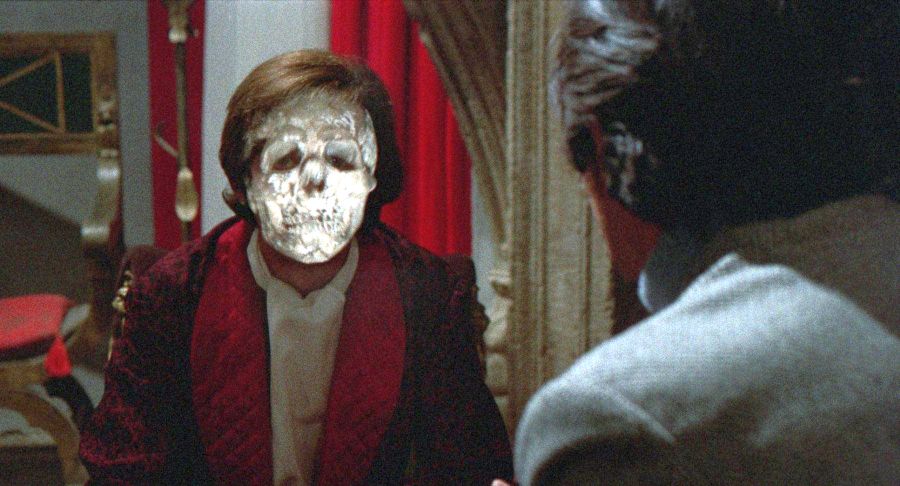
They get to meet the pale and thick blond-haired Guillaume (Mario Carra), who, yes, seems unwell, but something else seems amiss- which doesn’t really seem to be helped by Rita, or a silent/pale/ rather creepy doctor who appears ever so often.
The first thirty or so minutes we’re in prime gothic territory- with weird/ at points sack-masked processions moving through cobwebbed catacombs, darting candlelight, wind/ storms coming from nowhere, skulls, throwbacks to the past witch burnings, etc
Then, added into the mix, we get erotic woman-on-woman horror, and police mystery. As nude female corpses turn up, drained of their blood, with deep claw-like marks down their breasts.
The film features a rewarding/varied score that moves between standard gothic string/harpsichord cues, primal ritual-focused fare, and sleazier jazzy scoring.
Cast-wise, Brice is good as the rather smug/ loves himself journalist; Viotti as his wife Danielle is initially fine, though later shows she’s not a very believable scream queen. Carra is effective as his glum/ melodramatic friend.
Night Of The Damned was most entertaining as it shifts/ blends elements of gothic horror, erotic horror, and police mystery. There’re some great set pieces, genuine moments of unease, and a fair bit of flesh-bound sleaze too.
Extras-wise for this disc, we get a commentary track from Rod Barnett and Troy Guinn, Film Historians/Co-Hosts Of NaschyCast. They start off by commenting on the moody & eerie female vocal-led score, which certainly gets you ready for Euro horror. We find out it’s reused/ recycled from the 1969 film Fangs Of The Living Dead. They touch on how our lead couple have somewhat of a Holmes & Watson-like relationship. We get a bio of the film's director, with each of the pair selecting a notable/interesting film to touch on. They discuss the few titles the picture had; it was apparently filmed under the title of The Castle Of Saint Lambert. They talk about how the film features many suits of armour in its set dressing, as well as other key gothic visual tropes that appear. We get discussion about how the film mixes Gothic horror with other subgenres. And of course, much more- it’s a nicely relaxed, at times humour-touched track- which is well researched & informed.
Otherwise, on the new side we have: In The Castle Of Saint Lambert (16.54) which finds Italian genre Historian Fabio Melelli introducing/ discussing the film. The Desired And The Damned (18.40), which is a visual essay from Matt Rogerson, Author Of The Vatican Versus Horror Movies. He goes from talking about the portrayal of witchcraft in Italian horror/ gerne pictures, to giving a potted history of witchcraft in the country and its impact. Before homing in on key pictures, including, of course, the film to hand. On the archive side there's: Satanic Orgy Outtakes (14.18), and trailer
Film number three is 1973’s The Devil's Wedding Night (aka Il Plenilunio Delle Vergini,The Devil's Crypt, Full Moon of the Virgins). It’s a gothic soup of a mystical red jewelled ring, vampires, and black magic- with a very camp tone that often drifts into parody.
It was directed by San Sperate, Sardinia-born Luigi Batzella. This editor/ actor turned director had fifteen features to his name. These went from spaghetti western/ black comedy Paid in Blood (1971), sleazy horror Nude For Satan (1974), bad taste/ pubic hair munching Nazisploitation The Beast in Heat (1977).
After the unknown woman runs through the woods, pre-credits and inversed/tripped-out credits. We meet our two lead characters- bespeckled/tousled-haired Franz Schiller, and his creased-back hair/ gambling/ boozing it up brother Karl- both played by Mark Damon.
After reading up about a mystical red diamond ring, Franz has decided he’s going to look for it. It’s meant to be located in Transylvania- more specifically, Castle Dracula. Karl promises to chase up his brother if he feels anything is wrong.
Anyway, in classic Gothic vampire form, Franz heads for the village pub near the castle- getting the expected "don’t go there " responses from the locals. He totally ignores this, as he’s brought a fed-off-all-evil amulet, and as he declares the innkeeper's daughter, he’s not a virgin.
After some horse-riding footage, with a very western galloping-like musical cue, he makes it to the castle. First meeting the Montone/zombie-like maid of the lady of the castle, then the lady herself…. but there’s an issue…he’s forgotten his amulet.
As the film unfolds, we get some male-on-female, then female-on-female softcore action, with bright red blood poured over. There are a few black magic ceremonies- with more nudity and hooded figures. We get a tubby male/bald vampire, and mystic red ring magic- including some unintentionally amusing/ bad acting possessed by the ring scenes.
Yes, The Devil's Wedding Night does very much play up to the gothic tropes & campiness, but it’s a largely entertaining/ engaging ride- with a neat twist in the tail ending.
On this disc we get the following extras: Commentary with Martyn Conterio, Author Of Black Sunday, and Kat Ellinger, Author Of Daughters Of Darkness. The pair start by discussing how it was originally planned to have the film’s pre-credits to have been a satanic orgy- but instead, of course, they decided to go with the chasing slasher-like footage. They talk about how the films crazy/ inverted credits suggest a wilder ride of film, when in reality it’s a quaint Gothic nod towards Hammer's horror films. They discuss how it surprising/ brave to release this type of film in 1973, as it was the height of the giallo. They touch on the picture's very wacky plotting- and all the elements like Amulet that make it up. They talk about how the picture's structure is very much based on the first four or five chapters from Bram Stoker’s Dracula. They point out and discuss key films. Later on, they dispel the lies behind Countess Batory, discuss different types of Gothic cinema and more.
Otherwise, we have: Countess Rosalba (12.56) Interview with star Rosalba Neri. The Wedding Guest (4.07) Interview with cinematographer Aristide Massaccesi (aka Joe D’Ama). The Wedding Tale (12.53) Interview with producer Franco Gaudenzi. An Open Letter To Rosalba Neri's Tits (11.15) a decidedly playful video essay by Dr. Alexandra Heller-Nicholas, Author Of 1000 Women In Horror, 1895-2018. As she talks about how/ why the film is one of her most watched. Discussing its themes/ meanings, as well as course as Ms Nier’s boobs. And lastly, Italian & U.S. Trailers.
The final film in the set is 1973’s Baba Yaga, which is a decidedly trippy and groovy take on the gothic horror form. It’s based on the long-running Italian comic series Valentina, which was first published in 1965, going on until 1996.
It was directed/co-written by Turin-born Corrado Farina. He had a total of fifteen credits to his name- thirteen of these were shorts, and two features; the other was dystopian vampiric sci-fi They Have Changed Their Face (1971).
The film's credits bring together art from the Valentina comic, motorcyclists riding across a nighttime city, and a woman longing on a sofa- all topped off with upbeat strutting bass-bound score.
The picture centres on black bob-haired arty photographer Valentina Rosselli (Isabelle De Funès) who, while walking back home one night, almost gets knocked down by a car. Inside is gaunt, blond-haired, white powder-faced and dressed all in black Baba Yaga (Carroll Baker)- who insists she give Valentina a ride, and just before she leaves the car- Baba pulls back her dress to snatch a suspender from her tights.
Also key in the film is the bearded, arty film director Arno Treves (George Eastman)- who is in a casual sexual relationship with Valentina.
As the film unfolds, Baba witchy power over Valentina grows. In time, the photographer visits the witch's large, cluttered and murky house. Among the oddness found within is a seemingly bottomless hole in the floor, and a female doll dressed in an S& M outfit.
We get trendy/ edgy photo shoots. Cut -up/ sexy photo art, moments of trippy-ness & turned-on-ness, a few murders, and a decent feeling of heady gothic unease/disquiet. The film runs at just under the hour-and-a-half mark- it’s largely engaging, though at times the pacing isn’t great, meaning it feels more like two hours. All in all, Baba Yaga is an intriguing collusion between groovy sixties, gothic horror, creepy witchy-ness, and S&M unease.
This film gets three discs- two Blu-rays and one CD, featuring a compilation of the film's composer work. The first disc takes in the picture, and a decent selection of extras. The second disc features more extras, and a selection of short films by the director.
So, extras-wise, on the first disc are all new. First up is a commentary track from Emma Westwood, editor of Bride Of Frankenstein, and film scholar Sally Christie- this is a nicely chatty, informative, and largely interesting observation-lined affair. They begin with a brief chat about the history of comics, how they are weaved into/ used in the film, and the Italian adult-focused variation. They talk about Slavic legends regarding the shape shifting/ children’s bone grinding Baba Yaga. We find out Carroll Baker was just thirty-seven when she played the witch, though they managed well enough to age her. They point out the rundown/ rubbish strewn/ car wreaked lined streets of Milan. They comment on the use of the doll in the film and discuss the art design of the pictures in different locations. Later on, they touch on the career of director Corrado Farina- how he found filmmaking difficult, and what he went on to after filmmaking. They talk about the meshing of Satanism, witches, and feminism in this film & others. All in all, it’s well worth a play-through track.
Otherwise, on the first disc are the following extras. Farina And Valentina (21.42) Interview with director Corrado Farina. Valentina, Baba Yaga, and Dad (44.34) Interview with film critic Alberto Farina, Son Of director Corrado Farina. The Milan Witch Project ( 10.43) Interview with actor Luigi Montefiori. A Filmmaking Friendship (23.47) Interview with Editor/Co-Screenwriter Giulio Berruti, and a trailer.
On the second disc, we find the following: The Gaze Bewitched ( 13.26) video essay by Dr Alexandra Heller-Nicholas, Author Of The Cinema Coven: Witches, Witchcraft And Women's Filmmaking. Short Village Magazine Interview with Corrado Farina and Alberto Farina(31.26) an archive episode of an Italian TV art show. Alternate/Extended Scenes (9:50). Photo Gallery. Comic Book Comparisons with takes in twelve pages. As well as a selection of short films from director Corrado Farina: Freud In Colour (1970), Science Fiction Is Us (1970), It Was Called Earth (1963).
The final disc in the set is entitled Quattro Di Umiliani. This twenty-track compilation brings together four scores by Florence-born Piero Umiliani, and as you'd expect, it’s a decidedly varied compilation. We open with tracks from Baba Yaga- we have “Open Space” which mixes a grooving bass guitar line, tight jazzy drums, subdued guitar struts, and a weaving organ line. And “Slogan” which brings together layers of lumbering horn pump, darting/dramatic string lines, skittering drum patterns, and baying synth wails. Next we get six cues from his score for 1966’s spy thriller Jerry Land - Cacciatore di spie ( Man on the Spying Trapeze). These go from sassy horn, grooving guitar lines, and smooth string swoon of “Jerry Land - Cacciatore di spie seq 3”. On to dramatic horn swoon, galloping percussion, and simmering string tones of “Jerry Land - Cacciatore di spie seq 17”. After this, we have six cues from 1965’s special agent caper Operazione Poker (Operation Poker). These go from joyful bounding bass line, jaunty harpsichord keys, and dramatic strings of “Operazione Poker- Seq 3”, onto easy listening grooving percussion/ vibes & more forlorn organ/ horn tones of “Operazione Poker- Seq 11”. The disc is finished off with five tracks from his score for 1967’s globe-trotting action/ thriller Il marchio di Kriminal. These go from the jiving & dramatic “Il marchio di Kriminal- Seq 1” with its mix of grooving organ, twanging guitar, wordless female vocals, and stabbing orchestration. To “Il marchio di Kriminal- Seq17” which moves from sombre oriental vibes & rising organ moodiness, onto bounding chase-like blends of taut percussion, horn swoons. I’ve never knowingly been aware of Piero Umiliani's work, and this CD makes a great introduction to it.
Danza Macabra 4 is another wonderful dive into the world of Italian gothic horror cinema. Each of the five films are well selected, offering up their own twists on the gothic form- sometimes playing it straight, other times blending in other genres/twists. All of the scans featured are crisp, clean, and vibrate. With each picture, we’re presented with a largely all-new selection of extras- which are both rewarding and interesting. So another stellar edition to this flagship boxset series from Severin.