
Won’t You Ragnarok with Me?
A Julian Cope Primmer
Erupting into the mainstream on February 19th 1981, The Teardrop Explodes’ debut ‘Top of the Pops’ television performance featuring their brassy, bouncy hit ‘Reward’ is to this day probably the moment from which most people recall Julian Cope. If your image of Julian remains that of an earnest young budding pop star sporting a fleece-collared flying jacket and a shaggy bowlcut of shoulder-length tresses, if you failed to maintain pace with his entry into the cosmos, if you dismissively describe him (as I’ve seen thereabouts) as “a Smash Hits pin-up”, you have one hell of a lot of catching up to do. Musique Machine have tasked me with leading their readers through the psychedelic jungle and beyond, here, and I have to say that Julian probably merits the ‘beginners’ guide to’ / ‘recommended records’ treatment more than just about any other artist in the music sphere, at least in terms of how public perception and the ‘reality’ (if such a word is appropriate in this extreme case) have a near-unbridgeable gulf.
Geographically, Julian is usually thought of as a key figure on the Liverpool post-punk nu-psych scene, but was born in Monmouthshire, raised in Tamworth, resided in Yatesbury, and has considerable Nottingham connections too. Let the confusion commence!
The masses all know and can hum along with ‘Reward’, and might vaguely recall ‘Treason (It’s Just a Story)’. If you remember ‘Passionate Friend’ you probably imagine yourself a step or two beyond. But true Cope-heads will tell you of Mick Goodby, Rabbi Joseph Gordan, Judge Barry Herzog, Brain Donor, The Modern Antiquarian, Fuck Off and Di, One Three One… and that’s merely the beginning. Cope holds determinedly against-the-grain viewpoints on fellow artists; Julian adores Van Halen and Kiss, and while he isn’t quite so enamoured with Miles Davis, or indeed ‘birth of the cool’ era jazz in general, he grooves to the out-there experimental Miles LPs that everyone else hates. He used to worship one particular 60s idol so much that he even put together a compilation for Zoo Records, ‘Fire Escape in the Sky: The Godlike Genius of Scott Walker’, though seems to have gradually fallen out of love with Mr Engel (while doing his own level best to pursue a not dissimilar path from pop to ultra avant-garde…) He’s written opinionated (he’s always right, by the way) tomes on Krautrock as spawned by overseas American servicemen the Monks and on insane Japanese mutant rock as spawned by clean-cut American surfarists The Ventures, he’s visited and documented hundreds of ancient monuments/barrows/stone circles and produced not one but two massive unwieldy and un-backpackable Ten Commandments-esque weighty volumes on this topic (dismissed by academics in the field but they’re not on the same plane whatsoever), he’s penned a novel about the 1990 World Cup and Sardinia populated by various alter egos - the aforementioned novelty hitmaker Goodby, lairy acid-popsters Brits Abroad, and the mighty Rock Section among them.
Keeping track of Cope’s recorded output, meanwhile, is a literal impossibility. I’m here to ‘explain’ (?) why.
We can’t even start at the start here, since Julian’s initial ‘band’ probably never existed. In the same way that many Fall fans seem to rate ‘This Nation’s Saving Grace’ (their most basic, least interesting album) as a career peak, I suspect based on title alone, then aging Liverpool post-punks eulogise The Crucial Three, an alleged mythical group formed in the city by aspiring godheads Julian Cope, Ian McCulloch, and Pete Wylie. As with ‘Saving Grace’, I suspect it’s the key phraseology (‘Crucial’ in this case) that attracts attention, the notion that this trio of ambitious kids ultimately fulfilled the game-changing status they had precociously bestowed upon themselves. The reality appears to be that they were more of a daft gang than a musical concern, a mere trifling idea - in itself a pretty punk/revolutionary thing to do, I guess. (Here’s three chords, let’s pretend to form a band). Other fledgling projects and fleeting combos died on the vine after a rehearsal or two or a disappointing gig - but the day the music was born, proper, would seem to be via A Shallow Madness.
Only two recordings from A Shallow Madness appear to survive, one being the familiar ‘Books’ (as later captured for posterity by both The Teardrop Explodes and Echo & the Bunnymen); find the ASM version on YouTube or on the CD compilation ‘Zoology’. The other, ‘Straight Rain’, features on the Viper label’s ‘Liverpool Cult Classics vol. 1’ disc from 2001 and is a vocals-free Fall-esque drum-heavy drone punctuated by the type of guitar slashes that would sometimes make their way on to early tracks by The Teardrop Explodes.
Bill Drummond and Dave Balfe had by this time founded the Zoo label, initially intending to release material by Drummond’s (now fabled and retrospectively star-studded) band Big in Japan, yet before long providing a home for emerging Merseyside talent, notably the Bunnymen and The Teardrop Explodes. Both groups were managed simultaneously by Bill, and rapidly ascended to the charts and, yes, ‘Top of the Pops’.
Naturally, as with seemingly every important act at the time, all of this was facilitated via the John Peel show on late night Radio One, and I doubt whether I have to elucidate further to anyone reading this. Indie classics ‘Sleeping Gas’ and ‘Bouncing Babies’ (the latter also the subject of a jaunty bit of fun by The Freshies, ‘I Can’t Get Bouncing Babies by The Teardrop Explodes’!) paved the way for Teardrops’ chart success and even a slot supporting Queen at a prestigious Milton Keynes outdoor show, plus two LPs within the group’s short lifespan (‘Kilimanjaro’ and ‘Wilder’), but tensions - seemingly mainly caused by Balfe, by now the band’s keyboardist - caused things to fall apart.
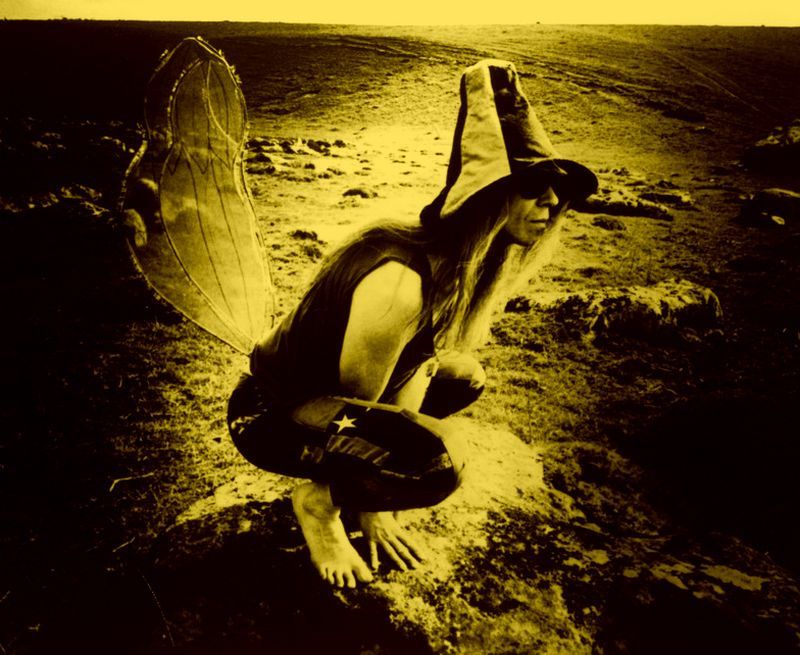
Julian immediately relaunched himself as a solo artist, and by the time of his second album ‘Fried’ it became evident that here was no ordinary performer, and that any assumptions fans had made from his perky TotP appearances were way off the mark. Even before you reached the music within the grooves, one casual glance at the record cover revealed all. “Namdam am I - I’m a Madman”, declared the inner bag slogan palindromically, while the main sleeve saw the album title painted on to a red toy truck on which a crawling naked Julian seemed disturbingly focused and intent. All the stranger since he was wearing a gigantic turtle shell on his back. The sounds within were no less, well, fried; none more so than hauntological opener ‘Reynard the Fox’, melding tales of the English countryside with an account of an actual incident where Cope had slashed open his own torso during a recent gig. The likes of ‘The Bloody Assizes’ and Odin-themed ‘O King of Chaos’ pointed towards at least a couple of Julian’s future directions, though there were to be divergent pathways…Double De Harrison took on organ, Minimoog, and clavinet duties for the ‘Saint Julian’ and ‘My Nation Underground’ LPs; a seismic moment, since De Harrison was a pseudonymous Cope. And far from the last, as hinted earlier.
If the eighties petered out in mild disappointment, Julian not only failing to lead the zeitgeist but seemingly struggling to keep up, then all was to change. His politicization came to the fore, via the 1990 Poll Tax protest march where he manifested as the massive-headed, domineering figure ‘Sqwubbsy’, and then on 1991 double vinyl eco/Mother Earth thang (a Cope-approved term, incidentally…) ‘Peggy Suicide’. This was an artist transformed and re-energized like few before or since. Not entirely a reinvention, as Julian had always presented as someone outside the mainstream, whether the mainstream noticed or not, but suddenly those get-your-face-in-front-of-the-TV-camera aims were ditched in favour of a new way of thinking. The signs were already in place at the turn of the decade, when he rebelled against his Island Records contract in order to self-release ‘Droolian’ and ‘Skellington’, a pair of hastily recorded lo-fi sets heralding, amongst other gems, ‘Out of My Mind on Dope and Speed’ and the aptly languid and sardonic Ian McCulloch co-write ‘Robert Mitchum’. But ‘Peggy Suicide’ came roaring out of the gate, revolutionary in every sense, and we hadn’t got a clue where Julian was going to lead us next. The singles released during this period were artefacts of beauty - ‘Safesurfer’ on a lovely pink-edged picture disc, ‘Easty Risin’’, ‘Heed: Of Penetration and the City Dweller’, ‘Fear Loves This Place’ all available as 12” pic discs in lavish centimetre-thick boxed packaging, ‘Fear Loves This Place’ also on CD as a double disc in a kind of pull-out carton contraption utilising a cardboard tab and sturdy plastic tray, ‘Love L.U.V.’ in garish flamingo hues with prominent ‘Peggy Suicide’ motif branding. The quality of the music matched the work of Island’s design team.
‘Jehovahkill’ and ‘Autogeddon’ continued where ‘Peggy’ left off, the former initially intended as an attempt at Krautrock styles, Island rejecting the sessions but permitting time for Cope and pals to hey, lay down a few more tracks (on which they went hard and heavy). Personal faves include the stunning ‘Upwards at 45 Degrees’, reminiscent of classic Teardrop Explodes’ B-side ‘Use Me’ in its acoustic intensity, ‘Don’t Call Me Mark Chapman’ namechecking Barry Manilow in a possible reference to CIA ‘torture by repetitive MOR’ techniques, and the live banter following ‘kar-ma-kanik’ during which Julian, resplendent in a pair of Daffy Duck shorts, reveals that the garment is “impregnated” if you know what he means, and that squares will later be sold off “to the real heads”.
Releases under the name Julian Cope continue to this day with some frequency, usually sold direct via his Head Heritage website - Julian has even commenced a highly welcome programme of ‘Cope’s Notes’, sumptuously packaged CDs accompanied by informative and hilariously anecdotal booklets, detailing certain varied corners of his musical, artistic, and archaeological (ancient monuments? Black Sabbath? Take your pick) journey. There are far too many albums to detail in this brief space, and for reasons that will become apparent, but do check out ‘Citizen Cain’d’, (especially for the Stooges-laced ‘I’m Living in the Room They Found Saddam In’), ’20 Mothers’ (if Julian’s interest in Scott Walker has supposedly waned, it definitely hadn’t at the time he recorded the dramatic anti-Cedric Brown/British Gas protest ‘Greedhead Detector’), and ‘England Expectorates’ (highlighted and concluded by jolly singalong ‘Cunts Can Fuck Off’). Among many other credited-solo outings, diversity abounds - ‘Avila in Albicella’ is a restful, repetitive sleep aid (of which a waggish commentator at the Steve Hoffmann forums archly stated “what's not to like about a 70 minute one-riff mellotron improv? Apart from ‘70 minute’, ‘one-riff’, ‘mellotron’ and ‘improv’…”), ‘Drunken Songs’ a collection of alcohol-themed ditties (including ‘Liver Big as Hartlepool’, that Spooneristic title surely a latter-day dig at former acquaintance Pete Wylie!), and ‘Self Civil War’ cites 17th century poet Rev. Roger Brearley in its sleeve notes, comparing modern Britain with the era of the Cavaliers and Roundheads. This isn’t Top of the Pops in 1981 anymore, Toto.
I stressed ‘releases under the name Julian Cope’ in the previous paragraph since here’s where the story gets messy. As also mentioned earlier, the notion that you might become a ‘Cope completist’ is a total non-starter… tracing/obtaining his myriad offerings has driven this writer crazy over the past four decades. The ‘One Three One’ novel alone spawned over half a dozen pseudonymous fake artists, some of whom issued genuine product. Cope got the band Urthona to masquerade as Sardinian hairies Atlantis?, while he himself performed as scallies Brits Abroad, one-hit wonder Mick Goodby (name lifted from the singer of a Tamworth heavy metal outfit once produced by Julian’s brother Joss) whose ‘Kick’ illegally samples and naggingly loops the opening of ‘Light My Fire’ as an aural aid to a ladies’ keep fit class, Rock Section (recording as Dayglo Maradona, in tandem with Andrew Weatherall - are you keeping tally? Rock was the book’s central character and occasional superstar, beautifully named presumably in tribute to Scott Asheton/Rock Action while possibly alluding to the mental health issues suffered by one of the Thirteenth Floor Elevators - Rock Section=Roky Sectioned, anyone?), and others. Certain acts devised for the project, e.g. The Kit Kat Rappers, Make Fuck, Forest of Dean, etc. are alleged to have recorded singles or albums that may or may not exist in our reality; and where physical media is evident, it is not always in the declared form (supposed 7” singles might instead turn up as tracks on a limited CD-r, for instance) and availability may be very scarce, though Bandcamp users may find a trawl through their pages productive.
It's worth giving Lord Yatesbury a mention here, one of Cope’s most likeable characters, and doubtless based on Radio One and Radio Two broadcasting legend Brian Matthew, offering decades of plummy received pronunciation while spinning some of the wildest platters that ever mattered. Julian seems to have had a lot of fun portraying the titled disc jockey during online sessions; Lord Y can also be experienced via a 2017 compilation CD linked to Cope’s annual ‘SydArthur Festival’ which commemorated Syd Barrett’s July 7th 2006 passing and the death of Arthur Lee on August 3rd in the same year by celebrating, across that four week period, the lives, creativity, and shared knowledge of psychedelia’s titans and shamen, everyone from Robert Graves (born July 24th) to Mick Jagger (who entered our world on July 26th), with Henry David Thoreau, George Clinton, Nico, and Percy Bysshe Shelley among the noted sorcerers who arrived or left us between those aforementioned summer boundaries.
Complicating things ever more, Julian has played as a member of many, many side projects. My favourite of which is self-proclaimed ‘Stuporgroup’ Brain Donor (name also styled as ‘Brain’d Owner’ or, in the title of one of their albums, ‘Drain’d Boner’). Imagine if Fred Flintstone and Barney Rubble formed a power trio with Bamm-Bamm on drums, crossing Van Halen with The Groundhogs and Blue Cheer and reducing that mixture to lumpen bare-bones riffage whilst tacking on the sound of a nuclear explosion at the end of their songs, just because. Teaming/teeming with members of Spiritualized, billed here as Doggen and Kevlar, Brain Donor mine the very essence of primal rock. Keeping the prehistoric beat, Kev, naturally, is credited with ‘concussion’ on utterly indispensable debut double LP ‘Love Peace & Fuck’. Look out for that luminous lime vision-searing cover! By the way, did I mention that they all sport Kiss/Zal Cleminson-style face paint? Of course they do.
Ambient, you say? Well, it’s the ‘Rite’ series you need - Cope and Donald Ross Skinner combined on the first of these meditative (occasionally straying into mellow funk or kraut drone) releases, along with fellow travellers, for numerous CDs packaged in ‘Modern Antiquarian’ livery. 1993’s ‘Rite’ came out on the Ma-Gog label, while ‘Rite²’ launched Head Heritage (catalogue number HH1), the Brain Donor boys came on board for ‘Rite Now’, with members of Dope (see below) congregating for one of the tracks on the belated ‘Rite at Ya’ which arrived twelve years after the fourth disc, ‘Rite Bastard’.
Additional adjacent forays worthy of exploration include the one-off L.A.M.F. - sort of Brain Donor if they hadn’t donated their brains; the simultaneously vital and laid-back Dope, who prolifically released eight albums, a scattering of singles, and at least one mp3 exclusive, in just over two years, including one notable record entitled ‘Dope (13)’, possibly in sly acknowledgment of the popular cataloguing/collecting/buy-and-sell music online site Discogs’ bracketed numbered listing of acts with the same name! I refer you with the highest recommendation to Dope’s essential 22-minute remix of Jerry Hitler’s roots classic ‘Too Much Religion’; Queen Elizabeth, synth-based and incorporating sometime Spiritualized/Coil/Hawkwind member Thighpaulsandra; Kabalist, a one-off krauty/occultist three-tracker involving Chris Olley of Six By Seven (Cope and Chris later changed their impromptu duo’s name to Fuck Me USA, though it seems no recordings were issued); and Black Sheep - an anarchist collective who roamed the country turning up in village squares to chant and bang lots of loud drums to the chagrin of the locals. Black Sheep put out a double vinyl LP ‘Kiss My Sweet Apocalypse’, with a heavily revised CD version, a rumoured second unreleased set to have been called ‘The Learned Bastard Takes Precedence Over the Ignorant High Priest’, an ‘At the BBC’ session recording, a film which partially ended up on YouTube, while just to (but of course) confuse matters, Cope himself brought out an album entitled ‘Black Sheep’, along with globally-renowned producer David Wrench hitching himself to the wagon and also releasing (barely) the ‘Black Sheep ep’! Copies of which probably only exist in single figures, as with more than a few releases on Cope’s underground labels Fuck Off and Di, Head Heritage, and Lord Yatesbury; meanwhile, Wrench again, and Christophe F. of Universal Panzies, each recorded separate full-length LPs with Black Sheep, and Cope was backed by the ensemble on the ‘Preaching Revolution’ ep. Still with me? Still with Julian?
If you’re reading this but are not aware of Julian’s ‘Head Heritage’ website, then you seriously need to check that out and trek through the reams of classic/psych/prog/stoner/post-punk/rock reviews (some by Cope, many by his fans, masses by The Seth Man with whom you certainly need to acquaint yourselves), Julian’s own monthly ‘Drudion’ columns which ran from 1997 up until 2014 and simply demand your attention, plus a selection of lively forums populated by true righteous right-on heads and generally friendly folk (one of whom recently sent me, overseas and free of charge, a copy of the achingly gorgeous and beyond-rare five-track ep on the Fuck Off and Di imprint by Cope protégé Acoustika), material and advice on activism and eco-concerns, and, it goes without saying, discussion of barrows, stone circles, and monoliths.
Never, ever forget what a truly cosmic record the chirpy, catchy, UK chart no. 6 smash hit ‘Reward’ was. But it’s far from the be all and end-all.
Now listen to:
To the Shores of Lake Placid – various artists (Zoo 1982)
Fried – Julian Cope (Island 1984)
Skellington – Julian Cope (CopeCo/Zippo 1990)
Peggy Suicide – Julian Cope (Island 1991)
20 Mothers – Julian Cope (Echo 1995)
Love Peace & Fuck – Brain Donor (Impresario 2001)
The Greatest Hit – The Teardrop Explodes (Mercury 2001)
A Giant – The Sons of TC-Lethbridge (Aegir Recording Company 2003)
Floored Genius 4 – Julian Cope (Brain Donor 2008)
Copendium: An Expedition into the Rock ‘N’ Roll Underwerld – various artists (Faber & Faber 2012)
Last Tango in Paris – Brits Abroad (Lord Yatesbury 2017)
Semi-Legal on the Edge of Culture – Dope (Zapata 2020)
E-Man Groovin’ – Julian Cope (Head Heritage 2026)
And read:
Krautrocksampler – Julian Cope (Head Heritage 1995)
The Modern Antiquarian – Julian Cope (HarperCollins 1998)
Head-On / Repossessed – Julian Cope (Element 1999)
The Megalithic European – Julian Cope (Element 2004)
Japrocksampler – Julian Cope (Bloomsbury 2008)
Copendium – Julian Cope (Faber & Faber 2013)
One Three One – Julian Cope (Faber & Faber 2014)
Revolutionary Spirit: A Post Punk Exorcism – Paul Simpson (Jawbone 2023)