
Musique Machine Top twenty Severin releases
Severin
2026 is the twentieth anniversary of Severin- one of the best-known and respected labels in cult/ b-movie circles. At M[m], we’ve been reviewing the label's output for around ten years now- racking up around one hundred and fifty of their releases covered on the site. So, we’ve decided to look back and select our top twenty releases to date!... These include releases from the sub-labels InterVision & Severin Kids, with indepth reviews for each!
Number 20:
Carnival Magic (Blu-ray) [Severin Kids — 2020]
Here we have the second release from Severin Kids sub-label, which sees the company release all manner of bizarre, quirky, at times very inappropriate family films- and this time it’s a doozy: 1983’s Carnival Magic, the (supposedly) children’s film from the king of wild ‘n’ wacky grindhouse fare Al Adamson. The film brings together a ladies' underwear-loving & mini-Elvis jumpsuit-wearing chimp, a talented-if-creepy died haired/wig wearing middle age magician, a boozing lion keeper, and rather mawkish-to-impropriate romances. On the extra front, we get a second Adamson family film, 1989's Lost, as well as a commentary track on the lead film, and a few extras.
I’d imagine if you're into grindhouse/ exploitation fare, you’ll know the name Al Adamson- between the early 1960s and the late 1980’s he directed over thirty films that dipped in & out of various exploitation genres- going from violent biker gang pictures, cheapy & bizarre takes of famous monster fare, campy gothic horror, blaxploitation, fighting & low-grade action film, & cheeky softcore. The films here are Adamsons final two films, where he attempted to tap into the family/ children’s film market, and like much of his output, the films have that distinctively hammy, quirky, and at times bizarre take on their chosen genre.
So moving onto the films themselves, and first up we have 1983’s Carnival Magic- it focuses on a small traveling fair/ circus that is going through financial issues due to dropping numbers coming in. One day, Markov(Don Stewart)- the company's middle-aged magician, reveals a secret from within his caravan: Alex, a talking chimp who back-talks, enjoys stealing ladies' underwear, and can drive cars. So it seems the company is saved, but unfortunately along comes a creepy, bearded & clunky European-accented Dr ., who becomes fascinated by the chimp, and does a bargain with a boozing lion tamer to get hold of Alex. Along with the films lengthy, we get a blend of fairly competent & clever magic performance, fair/ circus footage, awkward & often highly uncomfortable soapy drama & romance- including a very inappropriate relationship between barely age tomboy & the company's thirty-plus fair worker. We have tacky chimp & cops car chases, bloody lion attacks, chimp-knapping, bumbling fights, and more. The whole thing's soundtracked by a decidedly off-kilter at times badly placed soundtrack that moves from sentimental Liberace-like piano pomp and throbbing lo-fi synth scaping. By normal standards, this is a bad, bad & largely highly inappropriate family film, but it’s most certainly bad-movie gold- that will have you moving from awkward chuckles & campy enjoyment- with some truly great jaw-dropping & head-scratching moments. So you most certainly wouldn’t want to put this anywhere near a child audience - because I feel it will give them both nightmares, puzzlement, and more than a few questions.
The second film here, 1989’s Lost is much more run-of-the- mill family fare- though it feels more of the ’70s instead of the late ’80s in its tone/flow. It features very occasional Adamson quirks, like sudden jarring/ no-sensical cuts & a wonder, at points, off-tone score, but mostly it’s rather bland & dull. This follows the Morrison family- stepdad Jeff(Don Stewart), mother Penny ( Sandra Dee), and ten-year-old daughter Buddy?!(Shelia Newhouse) moving from the city to the isolated wilds of Utah. The three move into a rundown/ window-less cabin, and while they try & make the best of it, young Buddy misses the City & her real dad, who works in horse racing, so one day she & the family dog decide to run away. And what unfolds is a very predictable kid-lost-in-the-wilds story- Buddy is decidedly brat-like, and the rest of the family are painted so vaguely that you really don’t care. Don Stewart from Carnival Magic reappears as the stepdad, and certainly, his acting seems less bizarre & creepy here, but he just comes across as a run-of-the-mill screen dad. Sadly this was the final Adamson film to get completed, which makes it a rather sad/ bland last bow from this once tacky-yet-inventive B movie director- really only for Adamson diehards, and I think even those will find this a struggle.
Moving on to this Blu-ray- and prints for both films look good enough, though it’s clear a little more love & attention has been given to Carnival Magic- as the print seems clearer & cleaner, with good colour definition. Moving onto the extras, and first off we get a new commentary track from the film's producer Elvin Feltner- who was very hands-on, as he co-wrote the story/ script was based on, and he also filmed some of the more documentary-like footage of the fair in operation. The track moves from him talking about how the film came about & it’s costing, moving on to discuss the cast- many of whom were from daytime Soaps. Going on to discuss the Chimp, and how it got on well with lead star Don Stewart. He also talks about his wider career in exploitation film- all making for a most worthy track. Next we have A Boom To Science – an eleven-minute appreciation on the film from Zack Carlson, who was gifted the print the film came from, and Lars Nilsen from the Austin Film Appreciation Society- the pair talking about the story behind the print, the film itself, and other primate films/ tv shows of the ’70s/ 80’s- so again good stuff. We get twenty minutes' worth of outtakes from Carnival Magic- plus the original trailer & TV spot for the film. We also get a trailer for Lost, and around twenty minutes of silent footage from Adamson’s abandoned late 80’s family film The Happy Hobo- which is largely fun fair/ parade footage.
This really is a great second release from Severin Kids- with Carnival Magic being a wonderful bad & inappropriate slice of 1980s family fare, and a damn great slice of great bad movie-making!. Sure, Lost isn’t great, but it’s nice/ have it as part of this set- and of course the extras are most worthy.
Number 19:
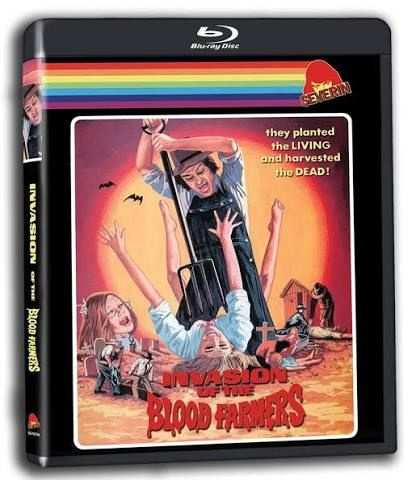
Invasion of the Blood Farmers (Blu-ray) [Severin — 2019]
A title like Invasion of the Blood Farmers literally screams low-budget cheesy schlock, and this 1972 film pretty much lives up to its promise. With its scattershot blend of Z-grade 1950s sci-fi camp, OTT 1960s gore & leering killers à la Hershel Gordon Lewis, and 1970s rural grimness- all wrapped up in often unbalancing at times dense orchestral stock music. This Blu-ray reissue features a bright & buoyant new scan, a new commentary track, and more.
Invasion of the Blood Farmers was the one & only feature directed by New Yorker Ed Adlum, who seemingly had a fairly wide & quirky career- going on from being an editor at Cashbox magazine to being a guitarist in the short-lived Castle Kings- who recorded two unsuccessful singles on Atlantic Records. He also was a reporter for Stars & Stripes newspaper when stationed with the US Army in Germany, as well as producing 1968 soft-score hippie flick Blonde On A Bum, and Co-write/ produce 1974’s low-budget Bigfoot-stalking teen film Shriek of the Mutilated. Ed also co-wrote Invasion of the Blood Farmers with Ed Kelleher, who in the late ’80s went on to write scripts for New York City-based 80’s horror schlock like Prime Evil & Lurkers, both by infamous female exploitation director Roberta Findlay.
The film is set in small-town rural upstate New York- and finds a group of people (and dogs) getting their blood sucked- then replaced with rapidly expanding red plasma. It turns out it’s been done by a group of modern days druids/ humanoid aliens- in order to try to resurrect a long time sleeping goddess & Satan himself. The heroes (?!) of the film are dithering young trainee pathologist Don Ducker, his girlfriend Jenny Aderson & her elderly father Roy- who plays the local Doctor/ mad-scientist-in-the-basement. And it certainly is a wonderfully silly & gonzo ride of B-movie fun.
The film's title comes from the two leering & lumbering farmers - who I think are meant to be humanoid aliens in disguise- who grab, then hit & knock out their prey before taking them back to a barn to drain the blood. Into this, we get an extremely camp, moustached, and big side-burned cult leader, sinister & sleazed older college professional, and black hooded henchmen.
Invasion of the Blood Farmers tone/ plot often sloppily veers from amusing scientist banter in the basement- with Don & Roy, and their rapidly growing tubes of pink plasma. Inane barroom interaction between the town’s folk, and the back-to-front- cap wearing drunken deputies. Decidedly sleazy, tinged stalk & hitting action from the creepy fake farmers, and their unsettling- at-times fetish tinged blood draining. OTT silliness & camp nastiness from the cult leader & his hooded henchman. The whole thing is made even more quirky & unbalancing by the often highly unneeded & un-mood setting addition of waltz-to- dramatic orchestral stock score, which sounds like it was originally used for either some joyful & grand dance sequence, or an epic battle in a film from the 40’s/’50s. All in all making for an enjoyable slice of Schlock heavy B movie/ lo- budget horror fun.
Moving on to this region-free Blu-ray release from Severin, and first, off we get a very clean & crisp new scan of the film, which really brings out the predominantly reds & greens of the film's palette to the fore- for a most bright & buoyant look. Next, we get a commentary track from Director Ed Adlum and Actress, and his then-wife, Ortrum Tippel- this is moderated by Kier-La Janisse. It's a very informative, honest & at times quite amusing track- as one of the film's main settings was the pair’s house- so they both talk fondly about the location, and Tippel mentions the various bits of furniture, knick-knacks & etc- many of which she still has. As most of the cast was made out of friends, neighbours & associates, this also leads to some interesting tales too. The pair also discuss the effects, blood, and one of the more fetish-bound death scenes that got the film an R rating back in the day. On the whole, it’s a most worthy track- and definitely worth checking out, even if you only have a passing interest in the film. Next we get three stand-alone interviews; each runs between twenty & nearing five minutes- the first & longest is with director Ed Adlum - this is most, most fascinating- as it sees him discussing key points in his career- going from his time in the rock ‘n’ roll band Castle Kings- discussing how they got signed, then unsigned to Atlantic Records. Moving on his time as editor of the Pinball/ gaming section of Cashbox. Then of course, his film work, and his relationship with exploitation director/ producer Michael Findlay. Going onto his formation of slot machine/ video game magazine RePlay- which he set up in the ’70s and is still published today. The next interview is with Jack Neubeck- who played one of the ‘Blood Farmers’ in the film- this has some amusing anecdotes about the shooting. Lastly, we get a very short interview with Cinematographer Frederick Elmes- who doesn't really say much. Lastly, we get an original trailer. So all told, a nicely done reissue with some neat extras.
Invasion of the Blood Farmers is a film I’ve been aware of for some years, but until now I had never seen. As with all exploitation/ B movie fare- you’re always curious if a film is going to live up to its title, and I’d say for the most part this does. So, if you’re a fan of trashy/ lo-budget fare that blends B-movie campiness, cheapy gore, and more than a bit of questionable acting, you’ll get a kick out of Invasion of the Blood Farmers
Number 18:
Franco Noir (Blu-ray) [Severin — 2021]
Franco Noir is a two-film Blu-ray that shows a very different and largely unseen side of the often sleaze bound euro-exploitation auteur Jess Franco. Featured on the disc are two black-and-white films from the 1960s, and as the disc's title suggests, they both sit squarely in the noir genre and are often moody and gritty examples of the genre. With none of the sleaze, or any of the more creative/ off-the cuff filmmaking- the director is known for. Instead, we get two well-made and formally scoped films, so not a release for those looking for the normal fleshy and off-kilterness uncle Jess’s known for. But if like me, you enjoy sampling every side of the director's work/ and or you’re a fan of noir- this is most certainly a must-have release. The release appears on Severin, with the disc being topped off with an interview/ feature with Franco expert Stephen Thrower.
The two films featured here are the wonderfully titled Death Whistles The Blues, and Rififi In The City. Both are presented on the single-region free Blu-ray, and each features a new HD transfer from the original negatives. Each of the Spanish-language films features nice, clear and crisp yellow subtitles.
So first off, we have 1964’s Death Whistles The Blues ( aka La muerte silba un blues, O77 opération sexy, Agent 077 opération Jamaïque)- this was a French-Spanish production. And what we have here is the past catching up with older and seemingly untouchable gangster noir. The film pre-credits feature two men in a truck travelling across a bridge to a checkpoint, the guards ask the pair to get out for a search. Both men declare there’s only fruit and veg in the back, but fairly soon they come across guns hidden under the fruit- both men run, with one being gunned down on the sandy riverside.
After the credits, we fast forward a few years to New Oreland’s, where we find Lina(Perla Cristal) watching a jazz show- she recognises jazz trumpeter Julius Smith (Manuel Alexandre) after he plays a familiar tune to her. She knew Smith from when she was married to her first husband, who was a gunrunner- this of course, makes her both a little nervous, through slightly pining for the past. She is now married to Paul (George Rollins), an older rich man, who's trying to keep his criminal past buried, as he basically rules and controls a Jamaican island. When Lina gets home to Paul, she tells him about seeing Smith- and fairly soon he ends up mowed down by a car, as from afar Paul try to stop his past from coming out.
Rollin is most effective as the at-first arrogant ex-gangster; when we first meet him, he’s asleep on a driving board above his own huge pool- seemingly not having a care in the world. This scene is most memorable as the wind is blowing the palm trees around him, and messes up his long, grey sleek back hair, as Lina arrives back. Cristal is also good as the falling-out-of-love moll. The film features a good selection of supporting cast, with Franco really picking some distinctive-looking actors to play roles. Memorable scenes include a tense late-night speeding car ride, a see-their-breath midnight fistfight, and a dramatic chase by the sea/ on the pier finale. The whole film is very moodily scoped with a great score, which I believe Franco had something to do with, and on one of the onstage scenes, we actually see him playing sax with the band. The plot/ flow of the film did feel somewhat muddled to begin with, but when we get into it flows better with some nicely tense and suspenseful scenes.
The second film on the disc is Rififi In The City ( aka Rififí en la ciudad)- this is from the year 1963 and once again is another Spanish French production. And what we have here man who goes missing, meet corruption noir- with a few Gallio and moodily arty touches blended in. I’d say this film does have more obvious Franco traits than the first film- as we get quite arty and elaborate female nightclub performances, and stark and haunting shots of sea and landscapes, with moody voiceovers.
The film is set in an unnamed South American country/ city. It kicks off with popular barman Juan(Serafín García Vázquez) going missing from his job at the Stardust nightclub, with both his love interest and colleagues being concerned. It turns out Juan was working for the police as an informer and had got quite close/ pally with Sargento Detective Miguel Mora(Fernando Fernán Gómez)- a stern cop who looks somewhat like a more heavily browed Phil Daniels. Miguel is convinced that Teflon businessman/ up for local election Maurice Leprince ( Jean Servais) is somehow behind Jaun's disappearance- and is willing to put his job, and even his life on the line to get to the truth. Around the half-hour mark we get a Giallo element added in to the noir tropes- as we have a black-gloved, harsh-whispering, and switchblade-carrying killer taking out Leprince’s henchmen.
Both Gómez and Servais are good, respectively, as the won’t-give-up cop, and slimy and shifty businessman, with them getting some great head-to-head confrontations. As the film unfolds, we get some great examples of noir- there’s a shadowy backroom punch-up, a gunfight in the club with chandeliers crashing down, and lots of uptight and sweaty macho interactions. The film plays at the hour and forty-four-minute mark, and this feels like it could have done with a little bit of trimming/ tightening up here and there, but on the whole, Rififi In The City is a rewarding and entertaining noir with some nice Giallo touches added in.
On the extras front, we get an interview/ featurette with Stephen Thrower, who of course has written two books on Franco- Murderous Passions & The Flowers Of Perversion, which cover the whole of the director's huge filmography. The feature runs at one hour and six minutes, and he starts off by talking about how Franco got into filmmaking and his first few films. Then he moves on to discuss each of the films on this set, giving a great in-depth look at each, discussing their influences, key actors, and giving his thoughts on each. As always with Thrower content, it’s very well researched and entertaining, and it’s great to hear more about Franco’s early years.
In finishing, it's great to see these two films getting put out, and let us hope this release is relatively popular, so Severin could maybe look at putting out more of his early filmography. A release for fans of Franco’s wider output,/ and or fans of Euro-noir.
Number 17:
Siege (Blu-ray) [Severin — 2021]
Siege is a tight as a tourniquet 80’s thriller detailing a group of people stuck in an apartment block, which is under attack by desperate and deadly homophobes. The Canadian production features a good selection of relatable-yet-distinctive characters, some neat A-Team-like make-yourself-deadly gadgets ‘n’ traps, and a nicely tense unfolding. Here's a Blu release of the film- featuring a 2k print, two versions of the picture, and a commentary track.
Appearing in the year 1983, Siege (Self Defence, Night Warriors) was filmed in and around the moody and stark neon-lined night-time streets of Halifax, Nova Scotia. It was jointly directed by Paul Donovan ( DEFCON-4, Norman's Awesome Experience, Paint Cans) and Maura O'Connell- who had been the producer on many of Donovan’s films. Siege is expertly paced and captured in a gritty, often up-close and sweaty manner.
The film is set during a city-wide police strike. The New Order -a group of homophobic red neck extremists decide to break into a gay bar and taut/ terrify the clientele- they are led by the baseball hat-wearing- big curled haired Goose(Jeff Pustil). Unfortunately, things get way out of hand, and while the group are mock bumming up the barman- he slips and gets impaled by a broken bottle. The gang panic, calling out Cabe (Doug Lennox) a cold and calculated killer, who starts shooting each of the remaining clients in the back of the head. One of them, Daniel (Terry-David Desprs) escapes, making his way to a small apartment block to hide out. Here we find a kind and caring twenty-something couple, Barbara (Brenda Bazinet ) and Horatio (Tom Nardini) who work at a school for the blind, and in the apartment with them are blind teens Patrick (Jack Blum) and Steve (Keith Knight). In the flat next door lives Chester (Daryl Haney)- a survivalist who has weapons and knows how to build traps. Outside The New Order are gunning down those who try to leave the apartment block and watching the roof/ windows via night vision, so it’s up to apartment dwellers to fight for their lives the best they can.
From the off, the tension is slowly but surely built up- as we see Goose going crazy when his partner tries to stop him from going out, and as soon as he meets with his hateful buddies in The New Order, it builds more and more- and when the bar clientele get killed off one-by-one, you know you’re in for a tense/ no bars held thriller. The apartment building it’s self in nicely claustrophobic and grimly moody- this with the addition of the starkly lit and people-less streets, gives a great backdrop to the tense game of cat and mouse. The two blind teens and next-door survivalists add hope, and an interesting dynamic to the whole thing- though it’s far from plain/ easy sailing for either the gang or their prey. We get nastily real and brutal killings on both sides, and again this adds a feeling of unpredictability/anything can happen vibe- so this is not your standard the good guys live/ Hollywood thriller. All in all, Siege was a great and compact little gritty thriller, with a good/well-picked cast, and a great sense of rolling and growing tension.
Moving on to this new Blu-ray, it’s a region-free disc. It features two cuts of Theatrical: 84 mins and Extended: 93 mins- the extended version adds an intro for the Goose character. The 2k print looks good and authentic, with nice/ clear nighttime scenes and stark inside scenes. On the extras front, we get just a commentary track- it’s with Co-Director Paul Donovan and Canadian Filmmaker Jason Eisener( Hobo With A Shotgun). And this is a most interesting/ worthy track, as Eisner is a huge fan of Siege, so he comes up with some great questions for Donovan. So we go from finding out how he first got into filmmaking and studying it in the UK, moving on to discuss his early film work. They talk about how the script/idea of the film came about; they mention that apparently, Siege went on to inspire The Purge films. They discuss the locations, and we find out the apartment used was the filmmakers'; we get details of the extremely low budget of the whole thing. They talk about the guns, which were all real and were borrowed from crew/ cast members. We get chat about effects set-up, casting choices and much more- a real, very worthy track, which really needs to be played if you enjoyed the film.
I must say I was highly impressed by Siege as it really is a wonderfully tense and gritty thriller, which will easily please fans of edgy/ stripped back genre films. Hats off to Severin for giving it such a great reissue, with a nice 2K print and a most interesting commentary track.
Number 16
The Beast In Heat (Blu-ray) [Severin — 2019]
Equally sleazy, perverse and at times ridiculous/ somewhat dull - The Beast In Heat stands as one of the most controversial exploitation films of the 1970s with its leering & depraved blend of sex & violence in a nazi setting. From the folks at Severin, here is an uncut Blu-ray release of the film, with two great extras – an hour & a half documentary about Nazisploitation, and a half-hour featurette about the film/genre from the always worthy Stephen Thrower.
The Beast In Heat ( aka S.S. Experiment Camp 2, Horrifying Experiments of the S.S. Last Days) was an Italian production made in 1977; it was directed by Luigi Batzella- who had both directed & acted in a host of euro exploitation films such as Nude For Satan , God Is My Colt 45, Curse Of Blood Ghouls, and The Blood Sucker Leads The Dance. The Beast In Heat brings together footage filmed in 77 solely for the film, as well as rather large/ decidedly more aged footage from two early 1970s war films. I’ve always had a soft spot for Nazisploitation, and while this is far from the best of this most controversial of exploitation genres- it has it’s effective, if at times ridiculous moments of shock & depravity- it’s just a pity large parts of the film are dragged down by rather bland war-film cliché-ness.
The film's plot is a haphazard blend of two key stories- we have Dr. Ellen Kratsch(Macha Magall), a highly sexualized nazi doctor who has created a beast-like man and is obsessed with various forms of nude torture. Then we have a group of resistance fighters who blow up one nazi bridge, then hide out in a small village for most of the remainder of the film. The more shocking & sleazed Dr elements take up around just under half of the film's runtime, while the largely dull & predictable resistance footage takes up the rest of the film- someone does have to have a fair bit of patience to wait for the nasty stuff. And the shocking sleaze- when it does come- is extreme if at times a little lo-fi-looking… we start with the raping-then-killing of a woman by the beast after she's thrown into his cage. Moving on later, we get bloody female genital electrocutions, nude male whipping & water torture, babies thrown up into the air & shot at, and most notorious of all, the beast rug munching scene- which literally shows the beast ripping, then eating the pubic mound of a woman.
Acting & dubbing-wise, the film is extremely mixed- Magall is great as depraved & sleazed Dr. Kratsch, as she moves well between cold & cruel, to leering & kinky. The rest of her nazi staff go from being bland & overacting. The real issue is the resistance- as one of the key characters has a very well-spoken English accent, which often sounds mocking & at times rather silly, which takes away any impact of any of the scenes he appears in. On the whole, The Beast In Heat certainly deserves its notoriety- it’s just a pity it does get brought down by the dull war movie moments, silly dubbing, and awkward film-grade shifts between the two lots of footage the film created with.
The new print of the film offered up here is somewhat of a double-edged sword, as the sleazy, blood & flesh look nicely garish & bright. On the negative side the different types of film stock are much more glaring, and some of the effects look naff.
The extra side of the release is great: first we get Fascism On A Thread – The Strange Story of Nazisploitation Cinema- this is an hour-and-a-half documentary covering the genre in wonderful detail; it brings together film scholars, exploitation experts/ fans- with a good selection of film directors, and we also get lengthy interview segments with Dyanne Thorne from the Ilsa films. It’s a fascinating & well-put-together doc that traces the origins, development & the fizzling out of Nazispolation. Discussed, in quite some depth/ length, are pretty much all of the key films in genre. Towards the end of the doc we get, of course, talk about The Beast In Heat, and we get an interview Giuliano Sorgini who did the synth-based score for the film. All in all it one of the best & far-reaching docs I’ve seen on a sub-genre of exploitation film in some time- and it’s worth purchasing the Blu-ray for this alone.
Then we get horror/ exploitation expert Stephen Thrower offering up a thirty-minute featurette entitled Nasty Nazi- this begins with him giving an overview of the Nazisploitation genre, before moving on to discuss The Beast In Heat- talking about the film's general impact, key actors, the director. Before moving on to talk about how it played in relatively normal cinemas around Europe on its release, before finishing talking about how it gained notoriety/ interest due to its place on the UK’s Video Nasty list. As we’ve come to expect from Thrower, he’s very informed, passionate, and at times amusing in his discussion/ critique of the film.
So Severin has done a great job with releasing this sleazy and offensive film- with the great two hours of extras really pushing it up to a must-buy for any fan of the wider exploitation genre.
Number 15:
Beyond The 7th Door (DVD) [Intervision Picture Corp — 2017]
From its title, Beyond The 7th Door might sound like some sort of occult-tinged 1970s horror shocker, but in reality, it’s a lo-fi slice of puzzle-focused thriller from the late 80s. Here from Intervision Picture Corp, is the first-ever (region-free) DVD issue of the film, which comes with a nice selection of extras charting the making & history of this Canadian exploitation oddity.
Appearing in 1987, Beyond The 7th Door was the second Canadian-made English-language film from Yugoslav-born director Bozidar D. Benedikt. And it’s best to describe it as a very low-budget version of Cube/ Saw(without the gore)/Sleuth- with basically a cast of two, making their way through a series of puzzle rooms. It really is an oddity both in its set-up, acting, and vibe, making it a perfect release for Intervision - those great seekers of SOV/ Z-grade gold.
The film's plot tells of recently released Ex-con Boris(Lazar Rockwood), who is convinced by his ex-lover Wendy(Bonnie Beck) to rob the house of her wheelchair-bound boss. When the pair get into the house, it turns out it’s full of puzzle rooms, with the final room's door being the 7th, hence the film's title.
The thing that the film is most known & celebrated by fans of odd/bad films is the central performances from Yugoslavia actor Lazar Rockwood (aka Lazar Rajic). Rockwood looks rather like Richard Ramirez ( the serial killer, not the noise artists), and actually, when I first became aware of this film, I thought that the film was somehow about Mr. Ramirez. Lazar's performance is best described as one-dimensional, blinky, and stilted- he spends much of the film either shouting, smoking, or poking his tool belt- his accent is very thick, though, for the most part, his English pronunciation is good. It’s just the way he performs in the film is so distinctive, and quite unique – cruel folks have said he can’t act, but I disagree, as he’s certainly putting his all into the role. His acting partner for the film, Bonnie Beck, is serviceable enough, but nothing to write home about.
The films rooms/ puzzles themselves move from being a little underwhelming to fairly inventive/ impressive for such a low-budget production. And for the most part, the film plot & its end twist are effective enough. But really the thing that keeps you watching is Lazar's performances. So I think really you’d need to be an odd/ bad film fan first, and a puzzle mystery fan second to really fully enjoy this.
The DVD comes with a good crop of extras- we get a twenty-minute feature with interviews with director Bozidar D. Benedikt, and Lazar. Benedikt comes across as a great quirky character- he now runs a cinema & writes religious thrillers (a genre he claims to have invented). Lazar is also still a wonderfully unique character. We also get a new full-length commentary for the film featuring Benedikt, Lazar and Paul Corupe from Canuxploitation.com. This is equal measures interesting, funny & frustrating- as you’d imagine with these two unique figures, with Corupe often struggling to get sense/ focus out of both Benedikt & Lazar. And last of the extras is The King of Cayenne: An Appreciation of Legendary Toronto Eccentric Ben Kerr, who plays the role of a corpse in one of the rooms in the film…and once again Kerr is certainly was a very distinctive/ one-off character.
So, another well-put-together release of this real oddity from the label. Though I’d say the stories behind the film are more interesting/ re-watchable than the film itself, due to the lack of horror elements or strange visuals, but that’s just personal taste.
Number 14:
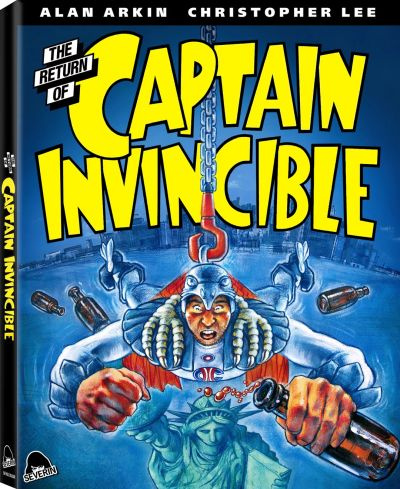
The Return of Captain Invincible ( Blu Ray/ CD) [Severin — 2023]
From the early 1980s, The Return of Captain Invincible is a wacky and charming superhero parody that aptly and largely evenly blends comedy, action, musical, and satire. The film features Alan Arkin as a gone-off-the-rails superhero, and Christopher Lee wonderfully hamming it up as evil mastermind Mr Midnight, with a good selection of Australian supporting cast. Here from the guys at Severin is a deluxe three-disc release of this lesser-seen/lesser-known superhero picture, with the set taking in two Blu-Rays featuring two cuts of the film/ host of extras, and a CD taking in the film's soundtrack
The Return of Captain Invincible ( aka Legend in Leotards) appeared in the year 1983 and was an Australian production. It was directed by Paris-born but moved/ settled in Melbourne, Australia Philippe Mora. In total, he has twenty-six feature films to his name- these go from the gritty, grimy and violent Ozzie western Mad Dog Morgan(1976), onto the southern gothic horror of The Beast Within (1982), the hamming ‘n’ camping-it-up werewolf sequel Howling II- Your Sister Is a Werewolf (1985), the alien abduction drama thriller Communion (1989), and the comedy thriller Art Deco Detective (1994).
The film kicks off with a series of flashbacks to the 1950’s America newsreel - as we see Captain Invincible (Arkin) doing all manner of heroic, if lightly comedic, superhero stuff. The final flashback clip shows the Cap on trial for being a possible communist- after this frustration/ disappointment, he leaves the country. We then flash forward into the 1980s, and we find he’s now down under and has turned into a boozing down-and-out. He gets noticed by blond policewoman Patty Patria ( Kate Fitzpatrick) throwing a car up in the air- and fairly soon big white-toothed US president(Michael Pate) has made his way to Sydney to try and convince the capt to come back, and help the country, as Mr Nightmare(Lee) is causing all manner of chaos with his plot to take over the US, then the world.
Alan Arkin is wonderful as the at-first bumbling drunk who tries to get the hang of his powers again- flying, powerful magnetism, and a computer brain. Lee, as you’d expect, is perfect as the master villain- and we even get a chance to hear his wonderfully deep baritone voice on a few of the musical numbers. Fitzpatrick is a good fit for the capt’s friend/ romantic interest. On the support side of things, we have a good cast- a few notable ones being recognisable Ozzie actor Bill Hunter as brash/no rubbish taken cop Tupper, and Pate as the all-smiles US president. The film, for a superhero film, doesn’t have a huge budget, but Mora manages to make it look good enough. We have amusing flying-through-the-air action, with Fitzpatrick sitting on him; there’s a wonderful, wacky vacuum cleaner shop come-to-life fight, a Jewish deli battle with a sausage cannon, and an explosion and cream cake final battle.
The film's musical element is never overdone, and the songs are often entertaining, amusing, and fairly memorable. The tracks go from showy gospel tunes, female-led upbeat ballads, upbeat country/ light rock, and showy pop-rock, which nods towards the type of thing in Rocky Horror Picture Show. All in all, I was very much taken by all The Return of Captain Invincible had to offer- as the blend of action, comedy, and musical is done in a good/ balanced manner, and the subtle touches of satire/send-up never feel overdone, or get too wacky for their own good.
Moving on to this new three-disc set- first, off we’ll talk about the two region-free Blu-rays and their contents. The first disc takes in the theatrical cut of the film (91 mins), and the following new extras/ new on-screen interviews: The Invincible Producer (20.38) with producer Andrew Gaty, An Eye For Ozploitation (8.59) with cinematographer Mike Molloy, Side Saddle Superhero Sidekick (8.36) with actress Kate Fitzpatrick, A Brit Playing A Frenchman In Australia (6.02) with actor Chris Haywood. Otherwise, on this disc we have Christopher Lee performing one of the tracks off the film "Name Your Poison" on German TV, an Alternate Opening Title Sequence: Legend In Leotards, and a trailer
Moving onto the second disc- and we find the Director's Cut (101 mins)- and this is the version I watched. The print looks very clear and crisp, with the only downside being some of the flying shots looking a little naff now- but in a way, this adds to the charm of the film. Moving on to the extras on this disc, and first up we get a commentary track with director Philippe Mora and Mark Hartley who helmed the 2008 doc Not Quite Hollywood: The Wild, Untold Story of Ozploitation!. And this is a chatty/most interesting track- they start off discussing the old newsreel footage, how it was created/ aged, and how it was inspired by the director's early doc work. They discuss how the impressive on the edge of a cliff shot was captured, and how they got the stuntman up there to roll around near its edge. They discuss the work of the film's cinematographer, Mike Molloy, Christopher Lee's on-screen ad-libs, and the amount of Australian acting talent in the film. They talk about the film's songs, how they came about, and that the director wanted each to be from a different genre. Later on, they discuss the staging of the songs, and that many of the dancers were local strippers. We get talk about the use of front projection, and how it’s used for the flying scenes. They chat about the film's creature effects, its effects in general, and the wonderful set design. Plus lots more- a most entertaining and informative track, which is well worth a play.
Otherwise, on this disc we get the following on-screen interviews: Creating Captain Invincible(23.44) with Philippe Mora And Screenwriter Steven E. de Souza. The Return Of The Return of Captain Invincible(41.39) with Philippe Mora And Beat The Geeks' Marc Edward Heuck.
Lastly, we get the CD- this features ten tracks, taking in both the film's songs and the orchestral score by Will Motzing. This comes with a colourful double-sided postcard- with a cartoon of the capt learning to fly again, and on its reverse the track listing. The release is finished off with a reversible sleeve, with the edition we were sent having a colourful slip sleeve, featuring more cartoon artwork of the capt, and glossy texts on the front.
Without a doubt, The Return of Captain Invincible is one of the great superhero parodies- with the right blend of action, laughs and entertaining songs. This Severin edition of the film is certainly most impressive- with great new prints of the film, a good selection of extras, and the wonderful packaging topping the whole thing off- so another all-around winner from the label.
Number 13:
Bahia Blanca (Blu-Ray) [Severin — 2020]
One of the great wonders and joys of being a fan of highly prolific Euro-exploration director Jess Franco is discovering rare or largely unseen films from his huge back catalogue- and Bahia Blanca is one such film.
It comes from his mid-80s period, and I must say it stands as one of the jewels of this decade. The film is set in a small Spanish fishing village and its nearby Islet, and is best described as a moody drama, with moments of humour & tragedy. Sure, we have the expected sleaze & female flesh, but it’s largely played down for some of the best acting I’ve seen in a Franco film, a picturesque & grand setting that’s scoped wonderfully, and a rewardingly-yet subtly twisting plot. Here from Severin- one of the key labels behind many of the rediscoveries/ reissuing of Franco films- is a Region-free Blu-ray reissue featuring a great 4 K print and some neat extras.
Bahia Blanca ( White Bay in English) was made in 1984, and it was one of ten films Franco helmed that year. The film appeared at a great time of professional upheaval in the director's career; he also self-financed the film too, so it must have been a very personal film. If you compare it to some of Franco’s trashier, and sleaze focused fare- this is extremely low-key, at times grand, with well-chosen actors who are allowed to show a range of emotions, with the characters feeling much more filled out. Yes, we have the expected female nudity & leering lens, but this doesn’t appear until around forty minutes into this one-hour-and-thirty-eight-minute film. The focus is on telling a (largely) well-filmed drama that’s full of passion, hope, tragedy & grief- where characters are largely not what they seemed at first sight.
The film moves between a small Spanish fishing village & its nearby Islet. We start the film on the small wooden dock of the Islet, as we get introduced to Alida (Eva León)- who runs a small bar on the island, and she is bemoaning the lack of ships/ trade passing by as the sun goes down on the dock, with Franco wonderfully capturing the deep layers of reds and Alida's silhouette. Next, we move to the village, where the coroner has been called in from the city to find out how a man whose washed-up on the beach has died- it turns out he has been shot. From here we meet the village's roughish & ramshackle Inspector Carlos Fernández- played by Spanish actor Antonio Mayans, who appeared in a handful of Franco’s mid-80s films. As the film moves on, we get a cameo from Franco himself- as the black leather cap-wearing El Miserias, who is seemingly the village crazy; he warns the Inspector & coroner of the Islet- saying it’s inhabited by a deadly temptress. The pair decide to set out & see for themselves, knocking rapidly on the bar's door as Alida dons a wig and starts strumming Spanish guitar & lulling singing along to it. It turns out both the Inspector & Alida know each other from their shady criminal past- and it’s at this point we meet María Alida’s nomenclature (deaf and dumb) sister- played wonderfully by Franco regular/ muse Lina Romay. Back in the village, we have a sub-plot of an innocent shopkeeper's daughter, who has become infatuated with the young son of the village's local gangster.
The film's plot nicely unfolds, along the way stopping for moments of wry humour, passion, and light gun action- along the way, Franco captures the beauty & grandeur of the location very well- sure we have the occasional Franco-like zoom, but largely the location & actors are captured with great skill. Later on some quite emotional, powerful & sad moments come into play. Mayans is great as the rough & ready inspector; Romay does some of the best acting of her career- really taking on the persona of the nomenclature María with such depth & emotion. León is good as the tough-but-sensual Alida, and pretty much all the supporting cast do a good to great job too. Bahia Blanca is one of Franco’s great films of the 1980s, and it’s such a pity it’s been so difficult to see for some many years.
Moving on to this new region free Blu Ray release- and the new 4K scan looks largely great, with a good definition of colours & the film's settings really selling themselves. The only issue with the print, is that, at points the subtitles are not as clear/ crisp as they could be, and at moments become almost unreadable when we get white subs on bright backdrops.
On the extras side, we get two featurettes- first there is the 4th part of the In The Land Of Franco series- this runs around seventeen minutes and finds Stephen Thrower & actor Antonio Mayans going around three shooting locations in Spain- two which Mayan’s acting in 1983’s Revenge In The House Of Usher, and 1974’s Night Of The Skull, which was the first film Mayans worked with Franco on. And a Franco spy film- along the way we get a few-minute interview with Myan- discussing his last few memories of Franco he has before he passed, which is nice to hear- all in all, another great part in this series. Next, Thrower returns for Bay Of Jess- this runs around the eighteen-minute mark and finds him discussing Bahia Blanca & it’s production. He opens by talking about the production company that put out the film Manacoa Films, which was set up by Franco in the ’70s. Next, he moves on to discuss the period the film was made, going on to talk in-depth about the film to hand- it’s actors & other Franco films they were in, the film's more character-driven tone, and his general thoughts on the film. Lastly, he talks about the films original Spanish VHS version of the film from the ’80s, that is largely unwatchable due to its transfer; he shows us clips of the VHS, and you can see what an amazing job Severin has done with this release of the film- so another very, very worthy featurette.
In finish, Bahia Blanca is certainly one of the more moody, dramatic & classy films that Franco ever made. Severin has once again done a stellar job on this release, and once more gives a great gold standard release of this film.
Number 12:
Blood & Flesh: The Reel Life & Ghastly Death of Al Adamson (Blu-ray) [Severin — 2020]
As the old phrase goes, ‘fact is stranger than fiction ’, and that’s very true for the story of Al Adamson- son of a cowboy actor- who went on to make some of weird, wacky, and (by grindhouse standards) popular films. During his run as a director of cult films, he had run-ins with Colonel Sanders, Charles Manson, and a host of ageing actors. Then sadly ended his life buried under a concrete floor- either at the hands of his dodgy builder friend, or by those wanting to cover up his discovery of Alien/ human crossbreed…see what I mean by the opening phase...here from Severin Films is the 2019 documentary about Mr. Adamson life- plus a good selection of extras including one of his more coherent & less hammy films.
Blood & Flesh: The Reel Life & Ghastly Death of Al Adamson was directed by David Gregory, who has helmed 200 plus featurette/ docs on various cult film releases since the early 2000s, including the critically acclaimed feature-length doc Lost Soul: The Doomed Journey of Richard Stanley's Island of Dr. Moreau, he was also behind the formation of the Severin Films label, so he has an extremely good grounding in cult/ B movie circles. And he certainly does a great job with the doc to hand; in total, it features interviews with forty friends, family, colleagues, and historians talking about Al, his films, all surrounding them & of course his rather sad ending in 1995 & those who were involved. There is also a good selection of interviews with Al himself that took place just before his death- all of these Gregory arranges into a nicely flowing, fascinating, and later rather sad & shocking documentary.
The film runs at the one hour & forty-minute mark, and begins with Al's origins, and discusses his silent cowboy acting father, Denver Dixon. Moving on to talk about how got bitten by the film bug- first, he acted, then decided he wanted to be behind the camera- and here we move into the crazy, title-changing, and footage-blending of his film work- which officially started with 1965’s Psycho a Go-Go and officially finished with 1989’s Lost-a family drama about a young girl lost in the wilds of Utah. Over his thirty plus films Al dipped in & out of every sub-genre of exploitation- going from biker pics( Satan Sadist & Hell's Bloody Devils), chessy gothic horror(Blood of Dracula's Castle & Dracula vs. Frankenstein), tacky monster pics(Horror of the Blood Monsters & Brain of Blood), Blacksploitation(Dynamite Brothers & Mean Mother), Cheeky soft-core(The Naughty Stewardesses), martial art action (Black Samurai)..along with bizarre exploitation crossbreeds, oh and two bizarre kids film- one of which featured a talking chimp & a mind-reading magician (Carnival Magic). Just before his death, he was involved in the making of a UFO doc, and this is where one of the really bizarre twists comes in his story- as he went into the project a nonbeliever in extraterrestrial life, but his mind was changed after he met what he believed was a human/ Alien crossbreed. In the docs last half-hour or so, we move into the true-crime part of the story- I won’t over-detail this, as it’s again fairly bizarre considering his background. Throughout Al is painted as a likeable & well-thought-after- sure like a lot of exploitation directors/ producers; he owed folks money, but even with these, they seem no issue. Also, there is a lot of frankness about his output, with many concluding that many of his films were far from masterpieces, and at times downright bad- but his heart was in the right place.
All in all, Blood & Flesh: The Reel Life & Ghastly Death of Al Adamson is a well put together, often charming & intriguing doc- I think you’ll to have at least some interest in cult/ B films- as in places it does focus/drag a touch on the film side of things, and less on the details of the murder case.
Moving onto the extras, first & biggest of these is The Female Bunch- a 1971 film, which is seen as one of his better productions. The film follows the plight of Sadie- who loses all her money and then her husband in Las Vegas. She hooks up with a dreadful & sleazy lounge singer who then dumps her…she tries to take her own life & is saved by go-go dancer/ waitress Libby- big-haired blond Regina Carrol who ended up marrying Adamson in real life. She takes Sadie to a desert ranch- the location was the infamous Spawn Ranch. At the ranch, she is introduced to an all-female gang- who are involved in drug trafficking from Mexico, rolling around half-naked on barroom floors, and generally terrorising any male they come across. We get a fair bit of fleeting female flesh, a bit of bright red gore, sleazy drug-taking, campy bitch-ness, plane-car chases, man branding, and more. It’s a very much sort of sub-Russ Meyer type affair with less nudity- and as campy & amusing 1970s exploitation, it’s a good enough cheesy romp.
Of the other extras, we get fifteen minutes of cut scenes from Blood & Flesh: The Reel Life & Ghastly Death of Al Adamson, a fifteen-minute interview with a few of the cast from The Female Bunch, poster gallery, and trailers for both films.
I’d only had fleeting knowledge Mr Adamson & his films before seeing Blood & Flesh: The Reel Life & Ghastly Death of Al Adamson- it's a great doc, really giving you a wonderful overview of his life & works. It’s a film that’ll make you chuckle, shake your head in disbelief, and feel more than a little sad- but also grateful that the world had characters like Adamson.
Number 11:
Danza Macabra Vol. Three: The Spanish Gothic Collection (Blu-ray Boxset) [Severin — 2024]
Here we have the third volume in Severin's euro gothic film boxset series Danza Macabra. It shifts the Italian focus of the first two sets to Spanish gothic horror- featuring four films spread over four Blu-rays, with new scans for each & a good selection of extras for each, including commentary tracks for each film. Many of these pictures are unknown/ rare, so this is a unique & fascinating boxset, presenting films that most European horror fans won’t have heard of, let alone seen before.
First up we have 1971 Necrophagus (aka Graveyard of Horror, Necromaniac), which is a 70s set gothic horror, with an odd/ lightly surreal flow/ feel to its unfolding, which regards something animalistic & ghoulish preying on an aristocratic family.
It was the first film directed & written by New Castile, Spain-born Miguel Madrid. He had two other directorial credits to his name Giallo/ slasher crossbreed The Killer of Dolls (1975), and the comedy-drama Bacanal En Directo- which regards a sex party going wrong. He also had eleven acting credits to his name.
The English dub version of the film kicks off in a wonderful disorientating/ weird manner- as we first get a close-up shot of a man manically shovelling out a grave, then we shift to a plot of freshly laid earth which seems to be groaning & moaning- as a sparse/ low fi electro glitching beat plays.
As we get into the film, we jump back & forth between two (possibly three) timescales- there’s one where our lead character Michael (Bill Curran) is returning to his family home castle to find out his pregnant wife has died somehow. And one/ two that look at the past/ near present/ present.
The film darts/shifts between uncovering the mystery of what happened to Michael's wife. The weird/ ghoulish going on of two gowned/ masked figures & the clawed/ growling figure under the earth. And off-kilter family soapiness bickering of Michael’s family. With extra oddness/ unexplained stuff thrown in for good measure- like a large middle-aged woman carrying a small bloody corpse in a suitcase on a train. With decidedly atmospheric snow/ sleet bond landscape shots from time to time
The film runs at near the one-and-a-half mark, and to be honest you’ll spend most of that time decidedly confused, as we jump back & forth in timelines, and characters disappear & reappear. It does all sort of make sense in the end, but we do get a rather rushed explanation.
The whole flow/ weird tone of the film makes it, and thankfully for most of the film's runtime we don’t see our monster full on- only its eyes, brows, and strange claws- as when it is finally revealed in the last few minutes it looks like a rather naff 1950s creature. All in all, Necrophagus is a fine strange start to the set.
On the extra side for this film, we have a commentary track from Andy Marshall-Roberts, Host Of The Nasty Pasty Podcast- this is a most informative & interesting track. He starts off by talking about how the film's working title was Body Trafficking, and he talks about the meaning of the film's used title- basically, animals feeding on carcasses. He touches on how the US version's opening credits differ from the one we have here. We find out the film premiered in Spain at the Sitges festival in May of 1971, going on to general Spanish release in October of 1972. He talks about the feeling of being ill at ease & discord. He touches on lead actor Bill Curran- who was born in Pennsylvania, only having a few credits, taking in a Euro-western & Kung Fu films. He discusses the use of subplots to increase the feeling of unease, and how most of these are never resolved like the rattling from inside a cardboard element. He talks about how it’s unclear where or when it’s meant to be set. He points out the director's cameo in the snow-bound graveyard and touches on his other two films. Later on, he discusses how all of the women in the film seem on edge & argumentative. He talks about the moments of disorienting editing & weird soundtrack moaning, and more. A track well worth a play.
Next, we have two interviews. Something You've Never Seen (8.06) with Ángel Sala, Head Of Programming At The Sitges Film Festival. He discusses the film to hand- talking about its mixing ‘n’ matching of subgenres. It’s a deconstruction of the horror genre and a decent enough overview of the film. The First Horror Film Festival In The World (11.02) finds Maria Pilar Rafáles, Daughter Of Sitges Film Festival Founder Antonio Rafáles, discussing the first festival. Lastly, we get a US and European trailer of the film.
Next, we have Cake Of Blood (aka Pastel De Sangre). This is a decidedly subtle and often surreal horror anthology from 1971. It features four stories in all- with a total runtime of one hour & thirty-three minutes. The film's tagline is ‘tales of terror throughout history’.
The film's first story is Tarota, which was directed by José María Vallés- this opens with a man manically running through a forest, stripped to the waist with balding, bedraggled hair & a wooden crutch. He makes his way to a river to be surrounded by a group of grown figures who bury him in the sand and set the man on fire. Next, we meet the story's lead- a knight riding his way through the countryside- we find out later the land has been plague-ravaged. Along his journey, he finds a seemingly dead woman lying in a ruined castle, a boy/ small person who has been living off honey, and a goose. It’s a very weird/ not completely sensible start to the collection.
Next is Victor Frankenstein, which was directed by Emilio Martínez-Lázaro. This is once again period-set, and we open by finding out that Victor has been away from his country house/ castle sometime in the city experimenting on making his monster. He returns home to find his mother is dying- though he clearly wants nothing to do with her. I can’t really give too much more away about this, but again it’s rather low-key, and odd.
Story three is Terror among Christians directed by Francesc Bellmunt. This is set during the time of the Roman Empire- when a gladiator and Christian have escaped into the woods from their captors. This one has a more formal layout, and it regards both parties being overwhelmed by something in the woods- it’s not bad at all.
Finally, we have The Dance, which was directed by Jaime Chávarri. It’s set in the 70s and concerns a bedraggled man watching a woman with a telescope out in the countryside. He’s approached by a rather pale & large eyebrowed man in a blue suit, suggesting he breaks into the woman's house. This is a slightly arty-touched home invasion story- with a neat ghoulish twist in its tail.
The sequence of the stories is rather bizarrely laid out- as the lower, subtler & odd ones are up first, and I’ll have to admit I had a few attempts getting through the first story- as it just felt more like a period drama, and the opening man running through the wood/ death by fire seems unconnected to the rest of the film. So, Cake Of Blood very much gets more engaging/ sensical as the film goes on.
On the extras side of the disc, we get a commentary track with Rod Barnett Of NaschyCast and The Bloody Pit, and Dr. Adrian Smith, Co-Author Of Norman J. Warren: Gentleman of Terror. This is a nice in-depth/well-researched track- as they discuss each story as they appear, giving bios of the directors, pointing out notable actors/ giving bios, as well as what the themes/ ideas are behind each story. Throughout, we get a general discussion about the film as a whole, touching on censorship of the time & how this limited what each director could show/ do with their story. The old third-generation fan-subtitled version of the film that went around the horror underground back in the day, and how much better this is. An excellent track which is easy to dip in & out of, as it splits down/ discusses each story.
Otherwise, we get a few interviews: My Generation (4.13) with actress Marisa Paredes from Victor Frankenstein. I Just Wanted To Have Fun (21.06) with Jaime Chávarri who helmed The Dance. To Whoever Wants To Watch (11.39) with actor José Lifante who acted in The Dance. An Arthouse UFO (11.00) Appreciation of the whole film by Ángel Sala
On to disc three in the set, and we have 1975’s The Devil’s Cross (aka La Cruz Del Diablo). This is a blend of gothic horror and murder mystery, with the whole thing being fairly entertaining/ engaging, but boy is the acting pretty terrible throughout- being largely decidedly flat & dead-eyed, though we do get a few moments of rewarding hamming it up.
The film was directed by London-born John Gilling; this was his final film. In total, he had thirty-six features to his name- with a fair few Hammer titles. These went from the Smuggling-based crime drama The Quiet Woman (1951), to horror Sci-fi The Gamma People (1956), which regards an evil dictator turning children into mutated henchmen. Moving into the 60’s he helmed The Flesh and the Fiends (1960) a historic horror film featuring Peter Cushing & Donald Pleasence, Cornish set horror The Plague Of Zombies (1966), and land-bound pirate flick The Pirates of Blood River (1962).
The period-set film opens with our introduction to our ‘hero’ English writer Alfred Dawson (Ramiro Oliveros). He’s just come round from a recurring nightmare- where he’s been called by a woman who is surrounded by ghoulish-faced Templer Knights on horseback, and he can’t figure out what it means.
We pretty quickly find out Alfred is somewhat of an upper-class stoner, smoking Kief (the most potent part of the cannabis plant) in his thin bamboo pipe. We also find out he’s often late for his deadlines, as his big-haired manager/ girlfriend Maria (Carmen Sevilla) turns up at his apartment to inform him if he’s late again, the present publication he works for will be giving him the boot.
In the day's post is a letter from his sister Justine- who lives near Madrid- it says she’s having real issues having lost her baby, and her older husband has been horrid to her. So, the pair pack up & leave Alfred’s London apartment, heading out to Spain.
On arriving at his sister's house, they are very surprised to find out his sister is dead- seemingly been killed by a strange man near the notorious Devil’s Cross- which is out in the middle of the woods and is said to have been built from the armour of the devil himself.
Brought into the mix is Justine’s gruff & blunt older husband Enrique Carrillo (Eduardo Fajardo). And his decidedly shifty/ neatly bearded friend Cesar del Rio (Adolfo Marsillach).
The film is a fairly talky affair- with an often vapid soapiness to these scenes. Though there are moments of creepiness/ eeriness, a few bits of light gore, and a fair bit of gothic horror campness.
It’s a film that throws a few things into the mix- we have the murder mystery element with a rather creepy/ hunched black balaclava figure watching on/ killing folk. There’s a Knights Templer element- with historic flashbacks. There’s a ghost element too. As I said earlier The Devil’s Cross it’s an entertaining enough ride, with the whole thing resolving in a fairly unexpected manner.
On the extras side for this disc, we have a commentary track from Kim Newman, Author Of Anno Dracula, And Barry Forshaw, Author Of Brit Noir- this as you’d hope is well well-researched/ observed track. They begin by discussing the career of director John Gilling- he started off writing quota quickies- impoverished crime films in the 1940s and 1950s, and of course, they talk about his move into film directing. We find out he was peppery/ difficult to get on with the director- who was known to walk off sets & hold grudges. They discuss how the film came about & how Spanish horror icon Paul Naschy had been originally connected with the project. We find out that when Gilling took over the film it took a year to get started due to the Spanish acting union, as they were known to dislike English directors. They talk about the drug element in the film, and how this is quite reserved. Later on, they discuss some of the film's more OTT acting, the start of Spanish horror with Jess Franco, and the film's downbeat ending.
Otherwise, we have Fascinated By Bécquer (11.26) Interview with Screenwriter Juan José Porto. The Real Templar Knights Movie (8.55) – Appreciation from Ángel Sala. Fantasy And Imagination: The Legacy Of Gustavo Adolfo Bécquer (12.53) a video essay By Xavier Aldana Reyes, Author Of Spanish Gothic: National Identity, Collaboration And Cultural Adaptation. He gives us a brief bio of Bécque the 18th-century writer/ poet who influenced the film's three legends- he finishes it by saying it’s a pity the finished film wasn’t better.
Finally, we have 1975’s The Night Of The Walking Dead (aka El Extraño Amor De Los Vampiros, Strange Love of the Vampires). This is set in the 19th century in a small Spanish village, finding a mix of vampire and living dead tropes- set in gothic melodrama, with touches of the darker side 60’s counterculture & innuendo-touched softcore. It’s certainly an interesting mix, which at points has rewardingly dizzying tonal shifts.
It was directed by Buenos Aires, Argentina-born León Klimovsky. Between the late 1940s and late 1970’s he has an impressive seventy feature-length credits to his name. These go from Crime drama The Marihuana Story (1950), to comedy western Torrejón City (1962). Through to the gothic-touched werewolf film The Werewolf Versus the Vampire Woman (1971), and grim & moody sci-fi horror The People Who Own the Dark (1976).
The film kicks in fine, jarring fashion with red & blue inverted credits of vampires as a loose and loud rock jam plays out. As we get into the film we get introduced to the village's main aristocratic family, taking in bearded and balding father Padre (Manuel Pereiro), and his two daughters Catherine (Emma Cohen), and Maria ( Vicky Lusson)….Maria has just recently passed, due to seemingly some life-sucking ailment.
In one of the film's early key scenes, we find the villages going to the aristocrat's house to stake Maria before she is buried. In their fold is a rational, balanced, and moustached local Dr- who says this lunacy to stake her, as she died of natural causes. But the villagers take no heed, with Maria being buried…. unfortunately, after this, and as the night falls a selection of living dead/ vampire thralls crawl & rise from their graves, pulling the stake from Maria, and she arises.
As the first half or so of the film unfolds, we get a blend of gothic-tinged melodrama and innuendo-touched softcore, with a few twists of lurking fear/ dread, with the living dead thralls trying to get into the aristocrat's house/ cause chaos in the village.
Then into the story steps Rudolph de Winberg (Carlos Ballesteros) who seemingly lives in the ruins of a castle just across the landscape from the village & aristocratic mansion. He is the leader/ head of the vampires, and he’s a suave grey-haired figure- dressed smartly with more than a sprinkling of 60’s/ early 70’s camp about him. He’s a fairly calm, collective, and philosophical vampire.
In the film's second half, the more horror side of things kicks in- as we see the villages start hammering nails in the heads of the living, the thralls attacking the villages, and a demented counter-culture-like party is held at the vampire castles where a victim is hung upside down, with their chest cut open and blood drunk from goblets.
The film soundtrack is a wonderfully varied affair- shifting from the loose ‘n’ loud rock jams, onto more formal if wonky soundtracking, through brooding bass plods & ghoulish atmospheric, and later rudimentary/ pulsing 70’s electronica.
All in all, I’d say this and Necrophagus are the highlights of the boxset- with The Night Of The Walking Dead feeling tonally unpredictable, and at points dangerously unpredictable.
Extras-wise, on this final disc we have the following: A commentary track from writer/ genre expert Kat Ellinger- and as we’ve come to expect from Ms Ellinger, we get a wonderful, researched & thoughtful, realised affair. She opens by discussing the different titles for the film. Moving on, she talks about where Spanish gothic horror stands within the wider genre- chatting about how it’s rather obscure, often having a quarter of the budget of similar Italian films and possessing a more earthy/ occult feel. She talks about how, at the time of the release of this film 1975, most of the worldwide horror genre had moved on from the gothic. Discusses how the film's use of the camera builds up tension/ unease, and that there is a feeling of low-key madness with this film. She comments on the amazing costumes, the feeling of sensuality about the film, and the elements of folk horror with its makeup. Later on, she talks about how the 1970s is her favourite period in vampire cinema- as things were changing/developing- quote the likes of Stephen King's Salems Lot, and Ann Rice’s Interview With The Vampire. She discusses the almost out-of-time setting of the film, moving from its Hammer-like first half, to the latter more modern elements like balloons & forms of 70's dress. Another excellent track from Ellinger I’ll certainly revisit.
Otherwise, on the extras front, we have the following: A Deadly Invitation To Another Dimension (10.03) an appreciation of the film by Ángel Sala. Leo's Signature (8.08): Interview with writer Juan José Porto. Dead Man Walking (18.32) Interview With Actor José Lifante. Spain's Cinematic Vampires – (24.39) a video essay By Xavier Aldana Reyes. Here he discusses the growth/development of the vampire within Spanish cinema, talks about notable/ important films, and the specific tropes the genre had in Spain- a most interesting featurette.
In finishing, Danza Macabra Vol. Three: The Spanish Gothic Collection is another excellent box set from Severin- severing up four lesser-known examples from the gothic horror genre. Each film has been given a wonderful clean & crisp scan, as well as an excellent selection of extras. I do hope this series returns to Spain again, as there is no doubt the country's additions to the gothic horror certainly have their own flavour & feel. If you’re a fan of 70s euro horror- this is most certainly a must-buy item!
Number 10:
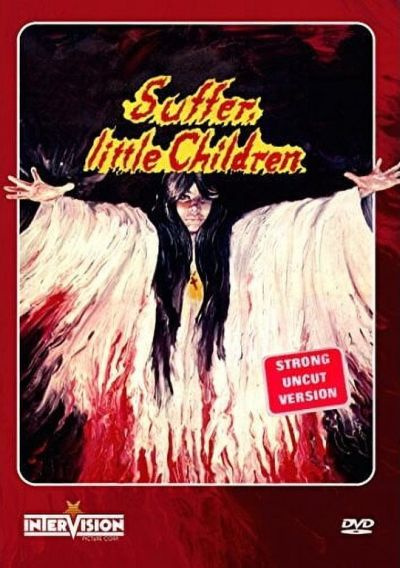
Suffer Little Children (DVD) [Intervision 2017]
Suffer Little Children is a head-scratching, jarringly cut, and at times gory slice of early 80s SOV madness from the UK. The film blends together elements of haphazard telekinesis, demonic possession, zombies, and murderous children- all to create an amusing, campy, and at times fairly disturbing ride back into the 1980’s.
This region-free DVD appears on the always worthy Intervision, which is the ultra-obscure & SOV sub-label of Severin Films. Over the last year, the label has uncovered some great SOV gems, such as Murderlust, Dreamstalker, and Death By Love. And Suffer Little Children is another great discovery, and I’d say it’s one of the best I’ve seen from Intervision thus far.
Made in 1983, it’s the one & only directorial credit of Alan Briggs, who had worked as a music promoter and at one time owned the well-known British music venue Brixton Academy. He made the film with his ex-wife Meg Shanks, who at the time was running a stage school, and the film features students & school children from the school. The film is set in a children’s home, one day, a mute child appears on the home's doorstep. And fairly soon items start flying about, people die, and ultimately the little girl starts to demonically take over the home's children.
The film takes typical SOV traits like jarring editing & overload music that blocks out dialogue- amping them up to a new, almost surreal level- and this adds an extra layer of unsettlement & puzzlement to the proceedings. The acting is, as one would expect, very mixed. Though there is some not-bad actors here; for example, the cardigan-wearing & stuffy owner of the homes owner is good, and the main mute child is quite effective too. But of course, we get some really uneven to truly bad acting from the kids, and the kitchen staff at the home, that have some unintentionally amusing banter.
But really both the SOV traits & the acting are just bonuses- as there is much here to be cherished & enjoyed for connoisseurs of bad films. We get a great wonky score that moves between wavering synth craft, lo-fi heavy meta chugging with tinny-yet ritual percussion, and a post-punk & grating theme song. Added to this, we get amusing deep demonic talking from the mute girl, items floating on strings & people clearly pushing tables. Frenzied & bloody knife attacks on adults by children, and a rather intense strobe-bound finale which features children chanting to Satan, lots of screaming, oh yes & Jesus in his thorn crown!. All to make this a completely one-off slice of video madness, even by normal SOV standards.
Extras-wise, we get two interviews, each around ten minutes & a newly commissioned trailer. The first interview is with the film's director, and this sees him discussing the film's making and its controversy- as at one point it was seized by Scotland Yard during the video nasty period in the UK. And the second interview is with John Martin- who's an expect of the video nasty period- his interview sees him discussing in more detail the film's controversy & its final release back in the 80s when it appeared in a cut form.
Suffer Little Children really is a true SOV gem- both in its almost arty haphazardness & wonderfully nonsensical editing. As well as its primal ‘n’ wonky soundtracking, and of course the moments of brutal gore, and what-the-hell moments. If you enjoy bad filmmaking, this really is a film you need to add to your collection.
Number 9:
Hot Spur (Blu-ray) [Severin — 2024]
Hot Spur is an extremely mean-spirited and nastily misogynistic late 1960’s US Western. It’s full to the brim with sleaze and abused female flesh, with more than a few touches of bloody ‘n’ whipping brutality. Here from the fine folks at Severin is the first-ever fully uncut release of this true blue & nasty western roughie. With a new 4k scan of the film, and a few bloodily juicy extras.
Hot Spur (aka Fiery Spur, The Longest Spur, The Naked Spur, Love Desperados) from 1968. It was directed by Globe, Arizona-born Lee Frost- who was a key figure in US exploitation in the 60’s and 70s. He had thirty-four full-lengths to his name- touching down in most types of exploitation, going from sexploitation horror mash-up House On Bare Mountain Hill (1962) to sex-slave roughie The Defilers (1965). On to a few Mondo’s Mondo Freudo (1966), Mondo Bizarre (1966), and Witchcraft '70 (1969). He made a Nazisploitation Love Camp 7(1969), a WIP film Chain Gang Women (1971), and a nasty blacksploitation The Black Gestapo (1975). Frost also co-wrote the film with Sarasota, Florida Bob Cresse- who also wrote/ produced a fair few exploitation films- like The Harem Bunch (1969), The Erotic Adventures of Zorro (1972), & Love Slaves ( 1976). So, a double barrel of exploitation is most certainly locked 'n' loaded, and Hot Spur doesn’t disappoint- if you're after sleazy nastiness.
From the off, there is an unpleasant and degrading air to proceedings- this deepens and widens over the film's runtime. We open with a pair of sweaty middle-aged cowboys turning up at a small nighttime bar/inn- they first belittle the younger Mexican stable hand Carlos (James Arena), and then turn their attention to the bars dancing barmaid- first roughly pawing at her, later ripping her top, exposing her breast & forcing her down. Carlos comes back in from tending the horses seeing what’s going on, and we get the first of a series of flashbacks- where we see a young Mexican woman being stripped, strung up, and abused. He starts attacking one of the men- but is stopped fairly quickly by their neatly side-burned boss Jason O’Hara (Joseph Mascolo).
As things unfold, Carlos gets a new job at the O’Hara ranch- again being belittled/ treated like an animal. We get a grimily sleazy bunkroom scene where the men are pushing & pulling at a pair of rapidly de-clothed women- before pouring liquor all over their bodies and going at them like animals. And we get to meet Jason’s blond-haired wife, Susan (Virgina Gordon)- who is flirting with all the cowboys but can’t give Jason the son he wants.
From here things start to unfold & turn nasty for young Carlos- so he decides to kidnap Susan. He at first seems not as sleazy as the other men, but clearly unbalanced. Fairly soon clothes are pulled off, and he’s just the same as the other men in the film. The rest of the film takes in rolling around abuse, bare-skin whippings, and a few blood deaths.
To be totally blunt and honest Hot Spur is roughie in a Western setting- nothing more and nothing else. The prime focus is on degrading women and roughing them up, with at points it getting rather unpleasant- things stay on the softcore side of things, though at points you do feel it could suddenly drop into nasty hardcore- such is the air & the tone of the film!. As roughies go it’s suitable impactful & shocking, and at points it feels like it’s pushing the envelope for the time- so it’s easy to see why this has landed up been so cut/ altered over the years.
Moving onto this recently released region-free Blu-ray, the new 4k scan looks good, with really bold/ bright colours. On the new extras side, we get an audio commentary with Vinegar Syndrome's Joe Rubin, Severin Films' Andrew Furtado, and Bob Cresse Friend/Former Something Weird General Manager Tim Lewis- most of the track is just Rubin & Furtado, with Lewis coming in at the hour & ten-minute mark. They start by talking about how the film is the most infamous Forst & Creese film the pair made. They point out actor Wes Bishop as he appears- as well as acting he also wrote scripts with Forst. They discuss how the roughie form came about and put it in context with the film hand. They chat about how Forst & Creese first got together, and we find out the film had a budget of $35’000. Later on, they talk about how sexploitation films were distributed, and how they got the print we have today. The track is very chatty, and loose- really only touching on the film it’s self from time to time. It improves when Lewis comes in, as we get some insight regarding Cresse. It’s an ok track, I guess, which is worth a play- though I can’t see myself revisiting it.
Otherwise, we get a recently discovered audio discussion On Frost/Cresse By David F. Friedman And Something Weird Founder Mike Vrane (1 hour and 10 mins)
We get two early shorts- first off; there’s Hollywood’s World Of Flesh- this is from 1963- it was directed by Lee Frost and produced by Bob Cresse- both of whom appear in one of the film's scenes. It lasts one hour and four minutes- it’s a very cheap, rough, and black-and-white Mondo picture. We move from adult bookshops, onto strip joints with hookers hanging about. We go to Asian bathhouses to peer at women bathing and have an interview with a hooker in a hotel. There’s a sexploitation audition, filming of a scene from the film- which tells of a Peeping Tom. The whole thing ends in a poolside party held by the producer of the film- with striping & longing about from rather skinny/rough-looking women. The film features a well-spoken, if at points sleazily creepy male voiceover. We get some topless & butt shots, but really, it’s a rather grim/ at points sleazily amusing affair- certainly not the best the Mondo genre has to offer!. Next, we have The Casting Director (6.17) which is in colour and directed by David F. Freidman. It features a cigar-chewing Creese, as he auditions a model, rolling his eyes & making comic faces as she strips. Lastly, we have a trailer for the film.
It's wonderful to see Severin reissuing this gritty & mean-spirited slice of cinematic roughness ‘n’ sleaze- with a vibrate/ bold print, and a nice selection of extras to(cowboy) boot.
Number 8:
The Strange Vice Of Mrs. Ward( Blu Ray & CD) [Severin — 2020]
In recent years, The Strange Vice Of Mrs. Ward has come to be seen as one of the top-tier Italian giallo films- up there with some of Argento & Fulci's classic additions to the genre- and it’s easy to see why. We have everything you need for a great example of the genre- a creepy ‘n’ sinister black-gloved killer, brutal-to-moodily jarring murders, lots of glamour & 70’s camp, a big dollop of kinky sleaze, and an effective enough twisting ‘n’ turning plot with some great suspenseful moments. Here from Severin is a recent Blu Ray/ CD release of the film- taking in a new scan of the picture, a new commentary track from giallo expert Kat Ellinger, some new meaty interviews with the film's key players, and a CD featuring the film's soundtrack.
Appearing in 1971 The Strange Vice Of Mrs. Ward ( aka Lo strano vizio della signora Wardh, or The Blade of The Ripper) was the second feature film directed by Italian journeyman Sergio Martino- who, over his forty-year career has dipped into horror, science-fiction, Western, & comedy genres- having sixty-six directorial credits. In all he directed eight gialli, and The Strange Vice Of Mrs. Ward was his first- which makes it even more impressive that he managed to brew up a near-perfect take on the genre.
The film focuses on Julie Ward- played by genre legend Edwige Fenech- the decidedly suave-yet-kinky wife of the straight-laced Italian ambassador; the pair live a glamorous life in Vienna. Recently, a sexually focused black glove killer has been killing women in & around the city- and Ms. Ward wonders if it could be her kinky & cruel ex Jean- Ivan Rassimov- who is seen in flashback first forcing himself on Ms. Ward in a rain-lashed forest, then later slashing her chest & showering her in glass- before the pair make love- the shards pressing into her. Also added into the mix, we have sleek-though-slightly sinister George Corro- played by another genre legend George Hilton- who is trying to bed Mrs. Ward too. The film unfolds at a good & entertaining pace- and along the way, we get lots of glamour & costume changes from Ms Fenech. Some well-staged & brutal straight razor murders- some take in nudity, while others are just manic attacks- with a park-near-dusk stalking building up eeriness & tension before the slashing attack. The plot, like many gialli, is a little silly in places, and the twist(s) before it’s all over do stretch believability- but hell, we’re not watching this type of thing for logic or sense- it’s all about the heady blend of glamour, violence, sleaze, mystery, and camp- and that is why this can justifiably be called a classic of the genre.
Moving onto this two-disc set- and first off let us talk about the Blu-ray- the print here looks great-really letting the 70’s tones flourish, though as often is the case the blood looks a tad too bright. Moving on to the extras- and first, up, we have a new commentary track from giallo expert & author of All The Colors of Sergio Martino- and as we come to expect from Ellinger, it’s a fact-packed, entertaining & wholly worthy track. She begins by talking about the films production history, moving on to discuss how Martino's giallo differs from other works in the genre. She goes on to talk about key cast members, and their other notable roles. Moving on to discuss scene set-ups & their impact, talking about the fairly improbable plot resolution, an overview of Martino’s other films in the genre, and much more- really, she is one of the best commentators in the business.
Next, we get a new forty-three-minute on-screen interview with director Sergio Martino- this sees him starting off talking about the film to hand, but he darts on to talk about his other giallo, and his career in general- before once again returning to Mrs. Ward. It’s an interesting & worthy interview, with some great insights, and he still seems to be passionate about the giallo genre. Next, we get an around twenty-minute on-screen interview with screenwriter Ernesto Gastaldi- he starts by talking about his true passion being sci-fi, and he wishes he’d got to write these types of scripts. Before he goes onto talk about Mrs. Ward, his part in it, and some classic iconic scenes like the ice cube under the door latch, that has gone on to be used in a few gialli. Lastly, of the new interviews, we get Vienna Vice- this runs around twenty minutes and features on-screen interviews with both actor George Hilton & Italian genre expert Antonio Bruschini. Hilton talks about his fellow cast, and working in Vienna- which at that time he felt was a city for older people. Bruschini talks about the film in general, and how it’ blended 60s suspenseful gialli with the more brutal, killer-focused 70s gialli. He goes on to talk about key scenes, actors, and the film's impact. Of the three interviews, I’d say this was the most balanced & focused, making it the most re-watchable of the lot. The last new extra we get on the disc is a short, few-minute film intro from Hilton, and we get an archive interview with Edwige Fenech, and a trailer- so a really extras-packed disc.
Lastly, we of course have the CD- this, like all of Severin’s Blu ray/ CD soundtrack releases, comes with a glossy double-sided inlay card- which on one side has the track listing, and on the other the poster artwork. The score is by female composer Nora Orlandi- who became the first woman to score films in Italian- during the ’60s/ 70’s she scored spaghetti westerns, gialli, and spy films. The edition we have here is the thirty-one track/fifty-three-minute version put out by Beat Records. The score's key theme is a rather rising & sensual blend of buzzing organ & female vocalising- it later got reused Tarantino’s Kill Bill Vol 2. The other tracks on the score are a blend of serviceable enough easy listening jazz work-outs, variations on the main theme, taking in pared-back piano, and percussion/ vocal variations. Wailing guitar & cluttering drums organ freak-outs, and slightly more angular/ dramatic cues.
Put simply, this is the ultimate edition of this giallo classic- as we have a great uncut print, the film's full soundtrack, and of course the marvellous new extras taking in Ellinger’s wonderful commentary track, and the most worthy new interviews, which in total amount to nearly an hour & a half of playtime. So, it’s a real unmissable release really- even if you have it in previous editions, as Severin has gone the extra mile with the new extras.
Number 7:
Threads (Blu-ray) [Severin Films — 2018]
Here from Severin, we have a much-deserved & long-needed reissue of the ultra-bleak, extremely harrowing, yet highly compelling British Docu-drama detailing the day(s) after the bomb drops. Originally released back in 1984, and broadcast on the BBC during the height of the Cold War. Treads stands as one of the most intense & disturbing things to ever appear on TV- and it still has so much bleak power & soul-shattering impact even after all these years, which I don’t think can be said about many films 30-plus years old.
The release comes in the form of an A,B,C region Blu-ray, and is the first time the film has been available in many years. I believe the last time it was in print was back in 2005. I first saw the film around ten years back as a bootleg, and this new version is much better quality, and really as good as you could expect for a TV film from the 1980’s. And added to this we get a nice batch of extras, which I’ll discuss later.
The film was a collaboration between director/producer Mick Jackson and writer Barry Hines. In 1982, Jackson had researched & made A Guide To The Armageddon- a documentary for the BBC about what would happen after the bomb dropped. And Hines had worked with socially critical & kitchen-sink drama-focused English film & play director Ken Loach, most notably on the highly acclaimed Kes. So Threads was the perfect blend of grim fact & science, with the realistic & believable drama.
The film is set in the British northern City of Sheffield, which at the time was the centre of the British steel industry, as well as having nearby a large Royal Air Force base. It focuses on the intertwined story of two families, and the build-up to the bombing- from TV news reports, military action, and the dropping of the bomb itself. The two lead characters we follow are Ruth (Karen Meagher) & her Boyfriend Jimmy (Reece Dinsdale)- Ruth becomes pregnant with Jimmy’s child as the run-up to annihilation ticks down. The film timeline follows the weeks before the bomb drop, the days, weeks, months & years after.
Threads blends together the drama elements, with documentary voice-over discussing the build-up & the after-effects. These are interspersed with bleak black-and-white stills of the aftermath & its effects on people, buildings & landscapes. And typing-on-the-screen texts; detailing the science & facts behind a nuclear bombing. This blend of elements really heightens the impact of the whole thing- making it both highly relatable & believable- giving one both the focus of caring about the characters' outcome, as well as the grim impact of facts/ science behind the reality of what it would be like if the bomb dropped. All making for a devastating, yet wholly watchable two-hour film.
Extras-wise, we get a good selection of new & exclusive content on the Blu-ray. We get a full-length commentary on the film, bringing together director/ producer Mick Jackson, Film Writer Kier-La Janisse- who wrote House of Psychotic Women, a study of female neurosis in horror and exploitation films, and Severin Films’ David Gregory. The track is rich with interesting facts about the filming, the research behind it’s writing, and the interaction between Hines & Jackson- though at times it comes across more as a separate discussion, as it often doesn’t sink in with the action on screen. Other extras include three separate ten-minute interviews with the cast & crew- we get one with actress Meagher discussing her role as Ruth, one with Director Of Photography Andrew Dunn, and one with Production Designer Christopher Robilliard. Next we get a half-an-hour featurette with the always informative & balanced Stephen Thrower, discussing the history behind the film, the Cold War in the 1980’s, the film's impact with the public, and his personal thoughts on the film- it’s another great piece of work from Mr Thrower, showing once again why he is one of the most respected names in genre film discussion & critique. We also get an original trailer and a new trailer for this release on the film.
Threads does a very rare thing- it manages to be both dramatically appealing, highly informative, yet constantly impactful & engrossing. It’s a film that crosses genre bounders effortless merging together elements of drama, horror, bleak fact, and the power of the human spirit. It’s a film everyone should see at least once, and this release is perfectly timed with the recent murmurings of nuclear war again- as it reminds us all that we should never let it happen, as really, if it did, it would be the crushing end of the world as we know it.
Number 6:
Cemetery Man (UHD & Blu-Ray) [Severin — 2024]
Cemetery Man is a heady and lightly surreal blend of horror, comedy, dark fantasy and ghoulish romance. The early 90s Euro cult film focuses on Francesco Dellamorte – played by British actor Rupert Everett- the guardian of a small, enchanted cemetery in northern Italy, where many of the dead come back to life in eight days after being buried.
The film was the fourth & final horror film by Italian director Michele Soavi (Stage Fight, The Church) it aptly balances/ mixes its genres in a largely appealing, charming, and wacky manner. Here from Severin, as part of their series of reissues of the director's work, is a two-disc UHD/Blu-Ray set, featuring a wonderful crystal clean 4k scan of the film, director commentary, and a total of around three hours’ worth of extras.
Cemetery Man (Dellamorte Dellamore, Of Death and Love) is from 1994- it was an Italian, French, and German joint production. It was of course, directed by Michele Soavi, and co-written by Tiziano Sclavi and Gianni Romoli. It was based on the 1991 Tiziano Sclav novel Dellamorte Dellamore, as well as the comic book series influenced by it- Dylan Dog.
The film runs at just over the one-hour and forty-six-minute mark, and largely manages to maintain its pull/ entertainment, and due to this I’d say it’s the most effective of Soavi’s horror films. Francesco Dellamorte ( Everett) lives in a run-down building on the cemetery site- so he can be ready to put back to death the rising dead- either by gunshot or by pushing something into the corpse's head. He’s helped by the tubby, animalistic, shaved-headed, and often drooling Gnaghi(François Hadji-Lazaro).
The pair seem to be managing their job well enough- then Francesco becomes enchanted by a woman who comes and visits her older husband's grave. Slowly, a chemistry develops between the two, and one thing leads to another: he starts making love to her on top of her husband's grave- he claws his way out of the grave, ripping out the shoulder of his large-breasted wife, she dies shortly after, and Francesco awaits to see if his beloved arises.
He's not the only one who has found love, Gnaghi meets an older teen girl he is rather taken with, and to show his appreciation he vomits all over her!…..she, a bunch of her biker mates, and a bus full of scouts are involved in a mass crash- with the graveyard getting very busy, who will raise & who will stay put?.
The design of the cemetery and the pair's home is very dark fantasy, which is edged with a lightly dreamy arthouse tone. We get shots looking up from the grave to lines of evergreen trees, corpses are covered with white see-through sheets as skull head sculptures drip water down on them. Mixed in with this we have touches of dark/ quirky humour, spluttery zombie killing, and touches of nudity.
Cemetery Man has its own tone & feel, and you can most certainly see why it is thought of as one of the last great European horror films of the 1990s.
Moving on to this two UHD/Blu-Ray set, the second disc is a locked region A. The UHD features the film and commentary track. With the film, commentary, and extras on the Blu-ray. The 4k scan is a thing of beauty- full of clarity and depth.
On the extras side, we get the following new things. First is a track with director Michele Soavi and screenwriter Gianni Romoli- this is in Italian with nicely clear yellow-coloured English subtitles. The track starts rather suddenly with no introduction- the pair start talking about the film's opening shot of a skull, and he talks about how he used an Innovision lens to shoot it. They discuss the introduction of the lead character, and how it effectively brings us into the strange dark fantasy. We find out Everett was very enthusiastic about the role. They talk about how it was difficult to write the film's script- as the novel it was based on had a very episodic feel and a less-than-consistent narrative. We find they used two cemeteries for the film- one for the daytime and one for the night-time. We find out they spent ten days filming in the locations. They talk about the rhythm of the editing- which resembles a comic book panel. They discuss how they wanted all the effects to be live, with only a few done digitally. Later on, they discuss when the film becomes more realistic/ set within reality. They talk about the film's romantic and comedy elements, pointing out bit part actors, and more. The track is most certainly worth a play.
Otherwise, on the new extra side, we get a selection of in-depth/ fairly lengthy interviews. At The Graves (35.49) with director Michele Soavi. Of Love And Death(20.37) with actor Rupert Everett. She (24.15) with actress Anna Falchi. With an archive making of (18.32).
Cemetery Man is a classy and highly distinctive slice of European horror, easily being one of the key horror films of the 1990s. This two-disc set from Severin serves up a lovely 4k scan, as well as a wonderful selection of worthy extras. If you have any interest in Euro horror or enjoy original blends of comedy, dark fantasy and ghoulish romance- this a must-have!
Number 5:
Night Killer (Blu-ray) [Severin Films — 2019]
Severin Films have a real talent for uncovering rare & lesser-known euro-horror that’s often highly cheesy, enjoyable bad and full of WTH moments- and with Night Killer they have hit a bad movie gold. This early 1990s sleazy and highly illogical murder mystery/ semi-Giallo, is full to the brim with highly suspect acting that goes from way over the top, to barely coherent, blended with scenes of rubbery gore, leering shots of female flesh, bizarre plotting, and a killer that wears a demon mask, has one long claw hand, and speaks in a silly gruff voice. Here we have a Blu-ray release of the film, featuring a nice bold & bright new print, and a few neat extras.
Night Killer ( aka Non aprite quella porta 3) appeared in 1990, was an Italian production, and was co-directed by Claudio Fragasso ( writer of the likes of Troll 2, Zombie 3 & 4, Rats: Night Of Terror, Monster Dog) & B-movie hack Bruno Mattei. And like a lot of trashy Italian genre films of the time, this is somewhat of a rip-off/ cash-in on more know/ popular- and that main focus is of course, Nightmare On Elm Street, as we have a clawed/ deformed masked killer, and the title suggests dream stalking- though oddly, hardly any of the film (stalking or otherwise) happens at night.
The film begins in great 80’s/ 90’s cheese fashion- with a group of dancers doing a work-out/ rehearsing in Lycra- one of the dancers turns up late, she is chastised by the show's director and rushes off to get change- cue blatantly & leering nudity. Then appears our lurching killer- who's dressed in black leather, has a bold-headed demon mask with big ruby teeth, and one long-nailed demon hand- he stabs her, then pushes his hand straight through her middle. The director comes looking for her, and gets slashed across the throat- then stagers back to the theatre, often forgetting to cover up her clearly uncut throat before badly fallen over the balcony- and so the gloriously badness of Night Killer begins. As we move into the film- we get big hair and dumb heroine, amusing meant to chilling phone calls, characters with silly dumb voice who can barely get their lines out, too close for comfort beret-wearing psychiatrist, truly wacky plotting- that often feels like it’s been made up as it goes along, sleazed-yet-silly tired to bed action, and a truly jaw-dropping ending. The films mystery/ edge is created by one of the killer's victim who he raped instead of craved-up, and she can’t recall his face. All in all it's really one hell of a lot of cheesy euro fun- which will keep bad film fans both amused and often aghast.
The new print looks very nice: clear, bright, and bold- really amping up the late 80’s/ early 90’s fashions & big hair- the sound also great too, pumping up the cheese-bound soundtrack that moves between big beat & dramatic synthscaping, smooth jazz, and the odd sailing 80’s guitar line. On the extras front we get two stand-alone on-camera interviews- the first is the longest coming in around twenty-four minute mark, and it’s with Claudio Fragasso- here he discusses his original intention to make a arty European thriller, the film's location in smalltown Virginia, Bruno Mattei filmed scenes & the arguments they caused, and the films two main leads who apparently hated each other- all in all it’s a fascinating, amusing & worthy interview. The second interview is with the film's screenwriter Rossella Drudin- which sees her discussing how she got involved in the project, and what facet of the film's script she was responsible for- this interview runs for around fourteen minutes. You also get the film's trailer, and you can choose to watch the film in either English or Italian.
If you enjoy so-bad-it’s-great film, then you really need to do yourself a favour & pick up Night Killer- as it stands as one of the more memorable, crazed, and unpredictable slices of euro trash I’ve seen in some time.
Number 4:
The Five Days ( UHD, Blu Ray & CD) [Severin — 2022]
Appearing in 1973, between two Giallo classics Four Flies On Grey Velvet (1971) and Profondo Rosso (1975). The Five Days was Dario Argento’s one and only departure from the thriller/ horror genres he’s most known for. It’s a period-based drama-comedy set in the final days of the Italian Revolution in 1848. And it’s well shot/ executed film that’s alive with moments of comedy- be it playful visuals, slapstick, lightly sleazy or very darkly hued, satire, and dabs of bloody red violence. Here from the fine folks at Severin is the truly definitive version of this lesser-known Argento film. The three-disc set features three discs a UHD, a Blu-ray, and CD. It features a wonderfully clean & defined 4k scan of the picture, a great selection of new extras, and a CD full of music.
The Five Days (aka Le Cinque Giornate, The Five Days of Milan) was released to big screens in Italian on the 20th of December 1973. It was filmed in both Milan and Pavia. The film was scripted by Argento, Enzo Ungari (The Last Emperor, Art Of Love) and Luigi Cozzi (Hercules, Starcrash and Contamination). And I must say it very competently executed period piece, with some great use of the camera- oh, and at points, it’s decidedly amusing- which is not something you normally expect from Mr Argento.
The film opens inside a prison cell in Milan. The date is 1884, and the country is in its final days of revolution- as the Italians finally want rid of the ruling Austrians. In the cell, with around ten or so other men, is Cainazzo (Adriano Celentano) a cocky/ thinking on his feet crook. And from his first appearance on screen, we get a feel of his personality/self-preservation- as while slumbering he kills a rat- thrown into the air, before it drops into the mouth of one of his cellmates. There is a fair bit of banter about the revolution, as we get a wonderful, smooth panning shot around the cell. Then all of a sudden, a cannonball smashes through the prison wall. Cainazzo is first to his feet, taking advantage of a downed old man to jump to freedom.
He quickly makes his way back to his gang's hideout, stripping more fancy shoes and threads from a dead man for himself. Fairly soon, the revolution is in full flow, and Cainazzo makes his way out into the city. While dodging bullets and explosions- he gets introduced to needy, naive, maybe slightly simple Romolo (Enzo Cerusico), who’s a baker who has recently returned to work in the city from Rome.
The film unfolds in a decidedly episodic manner- as the pair get involved with one situation after another. They stop to help a heavily pregnant woman & land up helping her to give birth. They help build a furniture & finery wall for a flirting aristocrat. They get shot at, while playfully darting back & forth through the city streets. They are forced to join the ragtag band of revelationist. Get their end away with a widow, and eat lots of food. But along with all the playful banter & action- we also get pitch-black lines of humour- like the pair being knocked out by the feet of a hanging man, and vigorous debates on a dying man’s last words. As well as brief dives into pathos & troubling death.
To begin with, Celentano as Cainazzo has a cocky swagger/ devil may care-bravado, and he rather reminds me of a young Steve Jones from The Sex Pistols. Whereas Cerusico as Romolo is a bumbling idiot who can’t even get his new buddy's name right. But as the film progresses and the pairs' trail/ tribulations wear on them both, we get two rewarding character arcs.
This release is my first ever taster of the film- and I must admit I was somewhat apprehensive, as period drama is not what you expect from Argento. And I’m not the biggest fan of straight-period drama, but I must say I was pleasantly surprised. As the just over two-hour film keeps you entertained, amused, thrilled, and at points thoughtfully troubling. So, I’d certainly say The Five Days is one of the big surprises of Argento’s filmography.
Moving on to this three-disc set. And the first disc in the set is the Ultra HD- which features a new 4k scan of the film, as well as a commentary track by genre experts/ track old hands Troy Howarth & Nathaniel Thompson. The second disc is the Blu-Ray (this is region A locked)- this once again features the new 4k scan of the film, the commentary and a good, hefty shove full of new extras. The final disc in the set is the CD- this takes twenty-seven tracks, and just over seventy-eight minutes of music- featuring the film soundtrack by Giorgio Gaslini, as well as seven bonus tracks from other projects the composer worked on with Argento at the time.
The new 4k print looks simply beautiful- with wonderfully defined colours & tones. The film features nice, clear and clean English subtitles in yellow. The audio balance between the dialogue and music is perfectly realised. Really, this is a true joy to watch.
Moving onto extras- and first off, we have the track from Messrs’s Howarth & Thompson- and as usual, this is a thoroughly researched, highly informative, and light banter-lined track- really, these guys are one of the gold standards in the commentary game. They begin by talking about the Sergio Leone-like credits & the opening stylish title card, which would be used heavily in the director's next film Profondo Rosso. They discuss the film's use of often vulgar humour, and how there are subtle touches/ undertones in all of the director's films aside from The Stendhal Syndrome. We find out that, aside from his most recent film Dark Glasses, this is the only film the director shot in Italian. They discuss where Argento's career was at this time, and that the film was originally going to be directed by Nanni Loy (The Four Days Of Naples). We find out the film had a ten-week shoot- and it was purely funded by Italian finance. They comment on bit-part actors & give bios. We find out that during this period the director was a communist- and point out subtle political undertones in some of his later films, though this was his only overtly political film. Later on, they comment on the film's new transfer, and how it’s really opened up the film, making it on par with the other respected Italian period films of the time- we also find out this is the first time it’s ever had English subtitles. They discuss the film's themes, and much, much more. This is most definitely a track I will return to!.
Otherwise, on the new extras side of things, we get a good pile of worthwhile/ interesting content. Talkin' 'Bout A Revolution (35.20), which is a very in-depth interview with Argento about the film, and how it came about. The Battle For Freedom (29.44) is another in-depth interview with screenwriter Luigi Cozzi- discusses the script, its historic groundings, etc. For The First Time (10.36) interview with Executive Producer Claudio Argento. An Italian Story (15.58) Interview with Actress Carla Tatò. Home Delivery (17.48) Interview with Actress Luisa De Santis who played the pregnant woman in the film. 174 Years Ago (27.41) another in-depth interview with production manager Angelo Iacono. Between Flies and Profondo (12.52), which finds respected critic/ Argento biographer Alan Jones talking about the film- and sadly he is none too positive about it, but I guess it’s nice to get another opinion on the film. Lastly, we get TV Spots and a trailer.
The CD is entitled Giorgio Gaslini For Dario Agento. It features all seventeen tracks from the score for The Five Days- these move from very grand and ornate orchestra cues featuring nice marching percussion & chanting voices. Onto brighter & buoyant string-led cues, through to Italian drinking songs. Onto more elegant & vibrate classical cues played on Synclavier synthesizer- these rather brought to mind the work on the 1984 Frank Zappa album Francesco Zappa.
After this, we get two tracks from La Porta Sul Buio (Door Into Darkness), which was a 70's Italian TV series Argento produced/ presented- he also directed one his own episodes, and that is where these tracks come from. The first track is a very bound & dramatic piano, and light string-led cue. And the second moves from demented harpsichord and piano-led, later going all bass-bound, snaking percussion, and weaving flute-bound. The disc is finished off with a selection of six tracks Gaslini composed for Profondo Rosso. So, overall, this CD is an excellent addition to this release, featuring a good chunk of music unheard by many.
With this release of The Five Days, Severin has well and truly gone to town to give us the definitive version of this lesser-seen & engaging deviation in Argento’s cinematic oeuvre. Featuring a truly gorgeous 4k print, a brimming selection of interesting extras, and of course the excellent CD to boot. Clearly a five out of five release.
Number 3:
Axe/Kidnapped Coed/Blood Brothers (Blu ray & CD) [Severin Films — 2015]
Frederick R. Friedel is one of the more noteworthy, creative & distinctive directors to come out of the 1970’s horror/ exploitation cinema. This excellent, wholly fascinating & truly extra-heavy Blu-ray & CD set brings together three of his films- Axe, Kidnapped Coed, & Blood Brothers. Plus, on the CD, soundtracks for both Axe & Kidnapped Coed
I first became aware of Mr Friedal work, and in particular his 1974 debut Axe (aka Lisa, Lisa) around ten or so years back. Like many horror film fans, I had become very curious to see all of the titles from the Video Nasty list ( of which Axe is)- so I checked out the film. It’s fair to say that the titles on the Video Nasty list are decidedly mixed ( to say the least)- going from truly bad, shocking yet campy, generally shocking & transgressive, and lastly great, creative, moody, and impactful examples of filmmaking. Axe is one of the few video nasties (along with the likes of The Witch Who Came from the Sea), that sits squarely in the last category- being a film that is both haunting, creatively conceived, and thought- provoking.
Axe's plot tells of three criminals on the run- Steel, Lomax, and Billy. After killing two people and terrorizing a third. The trio come across an isolated farmhouse, whose only occupants are a strange young woman and her paralyzed / wheelchair bound grandfather.
This just over hour-long film blends together a slow & moody pace, a few moments of sudden violence, eerier symbolism, and a generally haunting & bleak atmosphere. On the whole, the small cast is good, and well selected. The gang leader Steel, is played by Jack Canon with great smouldering intensity. His two sidekicks, Lomax (played by Ray Green) & Billy ( played by Friedel)- have a nice yin/yang thing going, with Green a brutish & brutal bully, and Friedel subdued, out-of-his- depth, & caring. The strange young women Lisa ( played by Leslie Lee) is she near mute, with-drawn, and troubled soul. Ms Lee ( in surprisingly her only film credit) plays the role in a perfectly understated, bleak & moody manner. Added to this, we get a distinctively eerier yet slightly off-kilter main soundtrack theme, which brings together melodic-yet-bleak piano work & swirling/ stretching synth. Axe is a film that manages to use both horror & gangster movie traits, to create a very stark, brooding & troubling experience that really is unlike anything else.
The second feature here is Friedel’s follow-up Kidnapped Coed ( aka Date With A Kidnapper)- it’s from 1976(though filmed a few months after Axe), and once again brings together exploitation/criminal themes, with arty filming, weird characters, and a often troubling/bleak atmosphere- all to create a highly distinctive bit of filmmaking. As the film’s title suggest it’s about a Coed( played by Leslie Rivers) who is kidnapped at gunpoint by small-time criminal Eddie Matlock(played by Jack Cannon). The film is a blend of thriller, character study, & road movie- with an arty & often thought-provoking edge to it. On the whole the atmosphere & vibe here varies more than Axe, going from taut & suddenly violent, onto dramatic-yet- slow, through to oddly tender & funny. Also, it has a slightly longer running time of near an hour & twenty minutes.
After working with Jack Cannon on Axe, Friedel wrote the part of Matlock for him, and he really shines in the lead, managing to portray an array of emotions throughout the film. Rivers is also very good as the Coed-blending together hurt, innocence, cunning, and pathos to create a well-rounded & believable victim. I won’t go into the plot much beyond above, as really this is a film you need to watch fairly blind, so you can appreciate the rewarding & often strange twists that happen on the pair's journey.
The third & final film on the Blu-ray is Blood Brothers, and this is somewhat of a Frankenstein monster of a film, blending together scenes from both Axe & Kidnapped Coed. The film was arranged & composed in 1999, utilizing selected scenes from both 1970 films. With the use of screen titles Friedel tell the story of two separate & never-met twin brothers, and each ones criminal activities- that are occurring( at times) just miles apart. It’s certainly an interesting concept for a film & using both films to create a third story is very clever. On the whole, I’d say the results are a little mixed, and one keeps thinking ‘this scene is from that film & that scene is from this film’. I think if the other two films weren’t so fresh in my mind, it would work better. So I think I’ll certainly return to this at a later date.
When I mentioned extra heavy in my intro, I wasn’t kidding, as this has to be one the most packed & interesting discs I’ve come across. You firstly get new commentaries on all three films- Axe & Kidnapped Coed with Friedel,Phil Smoot production director on both films, and Worth Keeter make-up artist on both films. And on Blood Brothers the always informative, passionate & dependable Steven Thrower. Also featured are two exclusive documentaries- one about the making of Axe & Kidnapped Coed, their histories, actors, etc. And one on George Newman Shaw & John Willhelm, who composed the soundtracks for both Axe & Kidnapped Coed, who both sadly died a year or so after the films came out. Both documentaries are just over or nearing an hour in length. Other extras include a stand-alone featurette with Thrower discussing Friedel’s work & themes, plus a selection of Trailers, TV Spots & Radio Spots.
The other big extra here is the CD, and this features the first-ever CD pressing of both soundtracks. The CD comes in at just over seventy-two minutes, and takes in not just both soundtracks, but also a selection of other unrelated tracks that George Newman Shaw & John Willhelm worked on. The Axe soundtrack brings together the haunting main-theme, along with a few variations on this that see things turn a bit more jazz bound with addition of some moody sax work & Rhodes piano. The Axe soundtrack also features a few more stripped, stark & gloomy sonic sketches, as well as a country rock parody.
Moving onto the Kidnapped Coed soundtrack, and we go from a dramatic & manic title theme that's jazz meets squelching & frying synth craft. Onto more country rock parody, though to melancholic–yet sweet blends of wandering rich paino & sax. Onto a version of "Blue Danube", recreated in simmer & wonky blend of 70’s electronics & live drumming. As with the Axe soundtrack the music cues are fairly short & sharpe, but the pair offer up a lot of variation & mood throughout.
The extra & unrelated tracks are a little more lengthy, lasting between three & seven minutes, and these once again show both the pair's versatility & musical prowess. We move jiving singer-songwriter meets jazz edges of "Celestial Air". Onto urgent & sleek electric piano meets blues jazz rock instrumental flavours of "Untitled instrumental". Then to the shifting pace of "Creeping Staircase", which goes from Goblin-like blends of up-front bass, electric piano & synth mood. Though to some nice guitar breakdowns/ jamming, warbling ‘n’ spacey synth sounds, and more pared back-yet taut jazzy piano runs.
As mentioned early on, the pair sadly died a few years after the making of Axe & Kidnapped Coed, and they were both only in their twenties- so this release is a fitting tribute to both of their talents, as both soundtrack writers & versatile musicians.
So, in finishing up, I unreservedly recommend picking up this release if you are a fan of 70’s horror/ exploitation cinema, or for that matter, are someone who enjoys creative & effective filmmaking in general. More people really need to see & appreciate Mr Friedel’s films, and add him to the list of directors that manage to create great & distinctive film, even on a shoestring budget.
Number 2:
Bloody Legend: The Complete Twemlow Collection [Intervision/ Severin — 2025]
Bloody Legend is a nine-Blu-ray/ single CD box set from the fab folks at InterVision/ Severin. It celebrates/brings together the work of one of the UK’s unlikeliest movie moguls- Cliff Twemlow, a Mancunian bouncer/ body builder, who went on to write/ star in/produce a series of low-budget/ largely SOV films in the early 80s to early 90s- these moved between action, thriller, sci-fi, and horror. His most notable/notorious film was 1983’s G.B.H., which landed on the video nasty list, though he was connected with another ten feature films, many of which have never seen a full/proper release until now. Along with the films, we get thirteen-plus hours of extras, plus a CD worth of Cliff’s music, as he was also a songwriter, oh and a pulp horror novelist too.
Before we get into the box's content, we must talk about the box- it is presented to look like a VHS. When you slip out the hard case disc booklet, on each page you get disc contents, stills/ poster art, small write-ups, short newspaper, and old VHS ads. It’s a really cool, retro 70’s/ 80’s looking present
On the first disc of the set, we have the 2023 documentary Mancunian Man: The Legendary Life of Cliff Twemlow. This was directed by Englishman Jake West, who since the mid-90s has helmed nearly one hundred credits- taking shorts, featurettes, documentaries, and films, such as vamp action film Razor Blade Kiss (1989), classic VHS doc Video Nasties: Moral Panic, Censorship & Videotape (2010), and S in horror anthology The ABCs of Death (2012).
The documentary runs at just over the two-hour mark, with the pace/ flow of the whole thing kept lively and interesting throughout, telling the stranger-than-fiction story of the larger-than-life Twemlow. It moves from discussing his childhood, how he was sent away as an evacuee, and how this shaped his personality to never be pushed around, have any limits on what he can do, and always get back on it after failure.
We find out he trained himself as a child to fight off bullies, which led to him being an amateur boxer. He was a self-taught and at points, fairly profitable songwriter with wide-ranging credits, which went from a track on the Dawn Of The Dead soundtrack, to the theme for the popular drama Crown Court. He became a respected bouncer in Manchester, which in turn saw him pen his popular bio The Tuxedo Warrior: Tales of a Mancunian Bouncer, which got made into a film in South Africa, and started his film career.
We get to hear about the successes, like the Video Nasty list hitting action crime film G.B.H. A selection of filmed projects that moved through action, sci-fi, and crime thriller. And the failures like The Pike, the almost-made creature feature based on his own pulp horror novel, which was going to star Joan Collins.
The film features interviews with his now grown-up son, his ex-wife, those who trained/ later acted in his films, C.P. Lee & Andy Willis, who wrote a book about him, and a selection of folk who either knew, worked with, or respected Cliff.
The documentary features quite rapid/ flashy graphics & text, which move smoothly from one part of his career to the next, accompanied by a great selection of archive clips from his films, news reports, and more.
Like the best/ most rewarding documentaries, Mancunian Man: The Legendary Life of Cliff Twemlow can be appreciated/watched by anyone, even if you have little or no interest in low-budget cult film, as Cliff was such a larger-than-life character- who managed to do so much in his lifetime.
Extras-wise, on this disc, we get a nice selection of things. Additional scenes( 57.25), Manchester Location tour (14.19), here we get to see Cliff’s old house, where he wrote and planned many of the films. We see where the editing officers were for his production. There’s a lengthy discussion/ look at where The Millionaire Club was, where he worked as a bouncer. And a few other locations, including The Zoo Club- which was the main location in G.B.H.. The Swedish Connection ( 13.13) this is with Jonathan Sisson, who is the son of one of Cliff's film investors. He shows us a rare tape of Mason's War- a TV pilot, lots of paperwork relating to the deal/ legal wranglings between Cliff & his Swedish investor. The Pike Rediscovered ( 19.35), which looks at the discovery of the huge mechanical Pike that was created for the film that never got made. It gets taken to a UK film con, to be interviewed. Manchester Premiere/ Q&A ( 46.22). London World Premiere/ Q&A (11.32). Glasgow Premiere/ Q&A (22.01). Trailer and image gallery.
On disc two, we have 1982’s Tuxedo Warrior, which is extremely loosely inspired by Cliff’s 1980s autobiography The Tuxedo Warrior: Tales of a Mancunian. The film is set in Zimbabwe, not Manchester, with a plot regarding diamond smuggling. The film is a very tonally unbalancing affair, shifting between ’80s soap drama, tough guy melodrama, slushy romance, and punchy action film. I wouldn’t say it’s a formally good film, but it’s entertaining as a so-good-it’s-bad affair- though there is no doubt Mr Twemlow has a good screen presence, and his fights are well enough choreographed/ tense, though he only has a minor part- oddly not even mentioned acting in the credits.
The film was directed/ co-written by Oxford-born Andrew Sinclair, who was a novelist, historian, biographer, and critic. Tuxedo Warrior was his 4th and final film- his other three feature films were The Breaking of Bumbo (1970), a comedy set in the world of Brigade of Guards during the Swinging Sixties. Comedy drama featuring Richard Burton, Elizabeth Taylor, and Peter O'Toole Under Milkwood (1971), and drama/ horror Blue Blood(1974) featuring Oliver Reed.
The film runs at just over the hour and a half mark- it begins with pre-credits that move from up-high waterfall footage, onto a darting/ dizzying collage of roulette wheel spinning, roulette chip placing, and a bespeckled guy typing on an old greenscreen PC. When the credits roll, they are rather soap/sitcom-bound- as each actor stands next to their name, smiling or looking moody.
As we get into the film itself, we meet our lead Cliff (John Wyman), the blond-haired, chiselled-featured, and white Tuxedo-wearing owner of The Omega Bar, which we’re led to believe sits somewhere near the earlier seen waterfall & plains of Zimbabwe.
Cliff is somewhat of a mean and moody fellow who likes to drink and will fist-fight/throw out customers at the drop of a hat. The film regards a love triangle between himself, a permed brunette, gutsy female American photographer Sally(Holly Palance), and English woman Lisa(Carol Royle), who broke his heart in the past
Revolving around this central focus, we have some stolen diamonds, lots of frozen cash, pushy military police, and a fair few fist fights. And a fair few romantic scenes, set to the backdrop of the waterfalls/ out in the bush
Cliff Twemlow has a small cameo role- appearing first as a money-collecting goon in the pre-credits, and then later as the newly employed bouncer for The Omega Bar. He gets a few lines, but most impressive/interesting is a lengthy bar-based fight- where he ends up ripping off his shirt, getting his face bloody, and there is no doubt he has real screen presence.
The rest of the main cast is mixed in their acting talents- Wyman shifts between being rather flat, mean & moody, and emotional- he’s rather hammy doing the last. Palance is full of quips/ suggestive comments, and Royle shifts between flirty & emotional
Tuxedo Warrior shifts between the cheesy, campy, and macho-bound postering. As mentioned earlier, in no way is this a formal good film, but more in the so-bad-it ’s-great territory.
On this disc, we have only a few short extras- Gag Reel (3.07), Outtakes ( 3.57), and a trailer.
Onto disc three, and we have 1983’s G.B.H., which was Cliff's most known/ notable film, due to its connection with the video nasty list. The film is a very low-budget crime drama regarding a bouncer ( Twemlow), who, after getting out of the slammer, returns to his old job, with encounters with a local gangster who wants to take over all the clubs in Manchester.
We get two versions of the film on the disc- there’s the original director's cut, which runs for one hour and twenty-six minutes, and the UK VHS G.B.H release, which runs at one hour and thirteen minutes. The difference between the two is that the shorter one is a little neater- in both, it’s mix of music & dialogue, and it’s more streamlined, with a few short extra scenes to make sense- but basically, they are fairly similar.
The film was directed by David Kent-Watson. He had seven features to his name aside G.B.H., taking five other Cliff staring titles: Target Eve Island (1983), The Blind Side of God ( 1987),Lethal Impact(1991), Firestar: First Contact (1991), and The Eye Of Satan(1992). Aside from these, we had Tropic Island Slasher Into Darkness (1986), and action thriller The Assassinator(1992).
So, G.B.H is centred around Steven Donvan ( Cliff), who has just got out of prison after a six-month stretch. He’s been given double his original wage, a big apartment, and a Rolls-Royce to return to his job as a bouncer at The Zoo club. Looking to take over this club, and all of the clubs in Manchester, is constant het-up gangster Keller(Jerry Harris).
The film is formally bad- the acting moves between ok and very flat, the direction and editing are very sloppy, and the music often badly mimics known songs/types of songs. But as ‘so-bad-it’s great’ is highly entertaining, and clearly Cliff and all involved are putting their all into the project.
We move from the great/ but corny macho moments- taking in stern-faced back-talking, several slowmo jogging scenes, and more than a few bloody punch-ups, featuring mouth noise-sounding punches.
We get a ton of great lines- like ‘So you're Dovan, you look very tough to me?’, ‘Who did you expect, Charles Bronson?’. ‘So you’re the big hard type?’, ‘I didn’t know I was showing’. And ‘When they put teeth in your mouth, they ruined a good arse’.
There are lots of leering & low shots of the dance floor, largely focusing on the ladies. We get awkward sex scenes, which will make your toes curl. We get cheap ’n’ cheerful gunned-up chases through the woods, with motorbikes brought into the fray. And of course, the fist fights, which are bloody and largely well done, with the most extreme moment here being a broken beer glass pushed into a man's hand.
Simply put, G.B.H. is bloody great, that is, if you enjoy ‘so-bad-it’s great’ macho-focused crime films.
On the extras side, we get a new commentary track from actor Brian Sterling-Vete and cult movie historian David Flint. They begin by talking about how accurately the film depicts the Manchester club scene. Actors/ friends are pointed out, with brief details of how they were connected to Cliff. Locations are pointed out, and we find out that Cliff's many aliases were based on his love of John Wayne. They discuss the reasoning for why it was shot on video, and how awkward the cameras were. They briefly touch on real-life Manchester gang The Quilty Street gang. Later on, they talk about some of the great lines in the film. They touch on the film's music and how Cliff was self-mocking at times. It’s not a bad track, though not purely focused on the film at hand, talking about his wider filmography.
Otherwise, there’s The Pike Special (10.56), which is a TV special from when Cliff was trying to make the said film. We get some great footage of the mechanical fish itself, which apparently cost a quarter of a million dollars to make. We get short interviews with actors Joan Collins, Jack Headly, and Linda Lou Allen. And of course, an interview with Cliff. There’s Mason’s War ( 5.33), which is basically an extended TV trailer- we see a woman being attacked/ raped in woodland, and it turns out it’s a relation of Cliff- who is ex SAS, he goes on a revenge rampage- with fighting, trucks blown up, etc- with more than a few familiar faces in the short. With alternate credits sequence, teaser trailer, & trailer
Moving onto the third disc in the set, we have two films from the early 80s, both of which sit in the action set aboard bracket. There’s Target Eve Island, and The Ibiza Connection.
So first off, we have 1983’s Target Eve Island ( aka Operation Urgent Fury)- it was once again directed by David Kent-Watson. With a script/ story by Cliff. The film starts off in the UK(Manchester area, I presume), moving onto Barbados and Grenada- in the latter, the US were invading the island, so real-life military footage appears towards the end of the film.
I guess you’d call Target Eve Island a mix of secret agent thriller and action film, with the basic plot regarding a female professor being kidnapped by the Russians. The lead/ main UK agent is William Grant( Brett Sinclair), who feels like a blend of David McCallum (The Man From U.N.C.L.E.) and Nigel Havers(Chariots of Fire).
The film, as already mentioned, starts off in the UK, and you’ll recognise the apartment location from G.B.H. In this part of the film, we have a neat junkyard punch-up, a dockside knife, and a few scenes of slamming desks & shouting office interactions.
As we make our way out to Barbados, we have some footage taken from an airline advert of a flight. When we touch down, we move from beside a hotel pool punch-up, sleek dating with a salmon colour dress suit, running through the sweaty street chase, and a martial arts fight on a dock of the bay
When we move to Grenda, we of course have the already mentioned real military footage- this is a fair brief, and cut in with the rest of the film's elements. Aside from this, we have a few boat racing/ vague gun flight shots, a fair bit of trudging through the jungle footage, and an on-the-beach/ in the sea punch-up.
Cast-wise, Sinclair is not too bad as our blond-haired Bond clone, with some cheesy/ tough-guy lines. Cliff has a fairly small/ not appearing until later role as Chaser- a non-speaking, straw trilby-wearing, and Cigarillo sucking tough guy- who has only a few fights. Otherwise, we have a moustached meant-to-be Russian bad guy & an eastern European brunette temptress- both of whose accents slip in & out. There’s Crazy Max(Max Beesley Snr), who I think is meant to be a take on Howling Mad Murdock from The A Team, though he’s, to be honest, he's rather naff/ annoying- as he constantly does truly awful impressions of both Humphrey Bogart and John Wayne.
Technically, the film is rather bumbling/ shabby in both the shot use, which is often through things, or not terribly clear. And the editing is very ham-fisted- jumping all over the place in a nonsensical/haven’t got to that part in the story. We get a voice-over element from Sinclair to try & tidy things up/ make sense, but this doesn’t always work.
Target Eve Island is passable enough, as low budget/ little rough around the/unintentionally amusing 80’s action fare- though it would have been nice if Cliff was given a bit more screentime.
Extras for Target Eve Island include a commentary track from Audio Commentary with actor Brian Sterling-Vete and executive producer Martin De Rooy. This starts off a little slow/ stilted, but fairly soon they get into their stride. They point out each other in the opening car chase, and Brian mentions he’s wearing one of Cliff’s old T-shirts- which he thinks was an attempt to get some sort of promotional deal. They comment on actors as they appear and mention in passing how many good actors the film has. We find out that the idea of giving the lead character the second name of Grant, was in the hope of getting sponsorship from a certain Scottish whiskey. They talk about how they flew the helicopter over a local airdrome without permission- this was quite common practice. We find out that at the time of filming, lead Brett Sinclair was rather popular on TV, and at one point during one commercial break, he appeared in three separate ads. De Rooy talks about how he first met Cliff at The Millionaire Club, and talks about how/ why he fully funded the film, which a budget of twenty-five thousand pounds. Later on, they discuss the phoney Russian accents in the film. The placement of a Captain Morgans Rum bottle in one scene, again with the hope of getting sponsorship. And the invasion that went on later in the film- we find out they had a constant security detail following them, to monitor where they were going.
Otherwise, For The Love Of Cliff(4.29), which is an outtake from the commentary, where they give their opinion about the film. We have Granada Tourism Promo (1.52), rushes (11.05), alternative credits, and two trailers.
Next is The Ibiza Connection- it’s from the year 1984, runs at one hour & thirty-three minutes, and it was filmed solely on Ibiza. This film is a mix of drama and action, with the latter increasing as things go along.
The film was the one and only feature-length film of Manchester-born Howard Arundel. He’s most known for his second unit/assistant director credits- between the mid-eighties and present day, he has forty-four credits to his name- these went between quirky comedy High Hopes (1985), comedy drama Bhaji on the Beach (1993), which regards a group of English women of Indian descent going to Blackpool, and most recently stop motion/ live action horror film Stopmotion (2023). The film to hand is competently enough scoped, with none of the dodgy editing of Target Eve Island - though the whole thing is very high with 80’s camp, and it features terrible post-film recording/voice acting
The film centres around the making of Thunderflash, which looks like it’s a James Bond rip-off, with a rocket-firing car called Stricker. Though you only get to see brief footage of the film within the film, and not really enough to gauge/ understand the plot.
Directing Thunderflash is cigar-chomping Wolf Sevenson (Cliff), and just as we open up, we see him firing off the two original leads for being flat/undynamic, as he goes through their scenes/ stunts to show how it should be done.
Next, Wolf is on the phone to his moustached and greased-back-haired gangster acquaintance Gino Veradi(Max Beesley Snr)-asking him to finance the film. But there’s one condition to getting Mr Veradi’s money- he choose his lead, which is his present girlfriend/ Wolf’s ex Jane(Fiona Fullerton).
Jane selects blond, tanned and leisure-suited Brett ( Brett Sinclair) as the male lead, and filming gets underway. Though at around the hour mark, seemingly ( off-screen/unseen), murder is brought into the mix.
It’s fair to say that The Ibiza Connection is extremely high in 80s camp and cheese. The first hour or so is dotted with a few punches up and multiple people getting thrown in the pool. We also get taken on holiday shots of the hotel and their animation team. But the most entertaining moments in the main body of the film are firstly, two or three extreme cheesy romantic montages- played over by ropy/ low rent euro pop balladry. And secondly, the mix of clipped macho dialogue, and the interaction between Verad/ his goons (including a must be over seven feet tall gent) and Wolf.
The last half an hour of the film is when we get more action, with smashing up a room fist fight, dodgy-looking boat-bound gun fights, a rope-looking meant to be large rocket, and the Stricker car launching its two rockets.
Acting-wise Cliff is fine, maybe not having as many amusing macho lines in the past, but I must say the further I get into the box set, the more I’m enjoying his ‘acting’, yes, he’s not terribly dynamic, his delivery is often clipped/monotone- but there is no doubt he had a screen presence. Otherwise, Fullerton isn’t as bad as our female lead, and she went on to be in the Bond film A View to A Kill. Sinclair is just really a handsome, tanned face, and not much more. Beesley Snr really hams it up as the gangster.
However, the most noticeable element of the whole thing is the post-dubbing; the dialogue is either clearly recorded in a normal room or the actors' voices sound ridiculous at times, almost cartoon-like. The worst dubbing is for the extremely clichéd gay character, who often sounds like either Chip or Dale recorded from the other end of a room.
The Ibiza Connection is another entertaining, if highly cheesy & camp 80’s ride- I guess there could have been more action in the main body of the film, but it was great to have a good and even dose of Mr Twemlow.
For The Ibiza Connection extras-wise, we get a commentary track from director Howard Arundel and cult movie historian David Flint- I’d say this is the most fascinating/ interesting of all the tracks, as Arundel was literally thrown into the job. They begin by talking about how he was rung up by Cliff, as he had been involved in a low-budget Manchester film called Gunpowder. He invites him to one of his parties, where he asked him to be his assistant on the film, but when they got to Ibiza, it was clear he was going to the director of the film, which had a six-week shoot schedule- he was twenty-five, and this was his first time directing anything. We find out he never saw a script for the film, and that the crew were all Spanish- he didn’t speak the language. They discuss what Ibiza was like in the early 80s, and apparently it wasn’t the party island it is now- though it was still fairly lively- with Arundel relating stories of near-nude women walking down the street, and a wrap party that didn’t end until 4 am. Later on, they talk about how they couldn’t make a film like this today, as they literally just set up & shot. They talk about how Cliff was a jack of all trades- though he spread himself too thinly, he was a terrible businessman, but he had the gift of the gab to convince people into doing films.
Otherwise, we have Brett Sinclair's home Video( one hour & six minutes) this starts at the airport with Brett and a few members of the cast & crew setting off. Before giving us a great blend of behind-the-scenes footage, and general clown about/ hang around.
Disc four features two films- The African Run, and Moonstalker. The African Run is from 1985, but really, it’s mostly from 1982- as it’s largely a re-cut version of Tuxedo Warrior- with a few new scenes, and unused scenes from Tuxedo Warrior. So basically, we get 80% of already released stuff, 15% of new, and 5% unused.
I’d say if I hadn’t seen Tuxedo Warrior, I would have enjoyed this more, as it definitely flows better, and we do get more Cliff, which is never a bad thing. So basically the new stuff consists of the opening scene, where a suited Cliff( who looks like a spit for younger Donald Trump here), speaks in a tough guy whisper and he has a magnum, so of course he’s very much aping the Dirty Harry character. There’s also a neat card game- where Cliff( and his tough guy whisperer) beats up his fellow players, and a few awkward/cringeworthy moments of talking with a woman in a bedroom.
I went into The African Run not knowing that it was basically re-cut/ added to Tuxedo Warrior- as you can imagine, I was more than a little surprised when I realised, but there’s no doubt it improves the original, with improvements done on the score, it’s editing, and of course the new/ unseen scenes.
For this film, we get the following extras. Scene Breakdowns (12.24) Compilation Of New Scenes With Detailed Production/Location Notes. Alternate Credits Sequence ( 4.53), which has a James Bond/ Tales Of The Unexpected quality to them. David Ball test(2.49)
Moonstalker ( aka Predator: The Quietus) is from 1988. And I guess you’d say it’s a blend of mystery, UK village comedy drama, and creature feature with touches of folk Horror and Action.
It was directed by Leslie McCarthy, who has only one credit to his name a twenty-nine-minute documentary, Knots Berry Farm (1984), which looked at the history of California theme park. The film screenplay was co-written by McCarthy and Twemlow.
The just over one and a half hour film is filmed, acted, and put together relatively well- aside from a few random scenes, which feel like they were stuck on to top up the runtime. Though I’m afraid to say, for the most part, the film is just rather flat/bland- stealing ideas from much better films, to regurgitate them in a largely uninspired manner.
In the film, Cliff plays Daniel Kane, a mean, moody, and doesn’t say much big game hunter. He travels from NYC with blond/ keen to get her story, journalist Kelly(Cordelia Roche), to Dartmoor in the UK, where several courting couples have been attacked/ killed by something large & clawed.
The pair touch down in Blighty, making their way to the countryside; here they meet not-eager-to-help cops, a mid-thirties woodland hermit, a pair of highly clichéd meant funny Irish drinking buddies, and a few others.
We open in the UK countryside at nighttime, where a young courting couple have pulled up to get it on…she pushes him away, insisting they go to the wishing tree. They make it to the old twisted tree- placing their hands on it, but all of a sudden, there is a beastly growl, human screams, and blood splattering lashes the tree.
As it unfolds from here, we get a fairly even mix of trying to find out what’s killing folks, mystery, comedy./drama, with action/horror appearing in its last half an hour. The former features a few punch-ups and some macho gunplay. The latter is largely seen off-screen, and when our monster appears, it does look decidedly crappy, looking like a very cheap take on Raw Head Rex. Cliff is just fine in the film, though he doesn’t get many lines- I’d say the most memorable scene is where Cliff is fighting with the beast, and how they are deliberately trying not to shoot the beast as they know it looks so bad.
In the end, Moonstalker is just a rather bland mystery/ light horror mix, with nothing really to make it stand out from a lot of other similar films, with not even the bad -there- great elements here to pull you in.
For Moonstalker, we have the following extras. We have a commentary track with actor Brian Sterling-Vete and cult movie historian David Flint. They begin by talking about the classic horror film opening scene, and comment on how well it was shot- we find out it was an early film shot by David Tattersall, the cinematographer who went on to work on the likes of The Green Mile & Die Another Day. We find out this film was shot on film, not video, like many of Cliff’s films. They discuss Manchester dressed up as NYC early scenes, and say these go on a tad too long. They touch on the Beast of Exmoor, which, during the time of filming, was often reported to have been sighted. We find out that Cliff was paranoid/ fearful of the Masons- always worrying they were trying to stop production. They comment on the film's location- none of course, which is anywhere near Exmoor. They touch on the Cliff horror films that never got made- The Beast Of Kane & The Pike. Later on, Sterling-Vete declares he worked on the film for a year- he never got to see a penny. And touch on the comedy characters- another interesting track.
Otherwise, we have: Alternate Credits Sequence ( 7.30), Trailer ( 2.42), The Blind Side Of God promo( 4.56), which was a never-completed revenge thriller, where Cliff, under the name of Johny Zero, tracks down a gang of paedophiles who kidnapped his daughter. Harrising Moments (5.49) this takes in a few sketches with actor/ comedian Jerry Harris- including Cliff in a few roles, as a sailor at a bar & man in nappies.
Disc five features another two films- The Hit Man and The Eye Of Satan- and both are directed by David Kent-Watson. The first, as its name might suggest, is an assassin action thriller, and the second is a horror action film.
So first up, we have The Hit Man (The Assassinator) from 1987, and I’d say it’s one of the more seriously toned films on this set- aside from some of the more wooden acting, and some of the misplaced/mood-unfitting cues.
The film focuses on Chris McCall- played by the moustached and tall John Saint Ryan, who appeared in G.B.H and Target Eve Island, as well as forty-plus roles in various TV and film roles. On the surface, he’s a family man working for the government, but in reality, he’s a Hit Man, getting paid by an organisation called The Office.
Early in the film, he does two different hits, one in London Chinatown ( with the brief but great footage of Soho), and in a car dealership with a poison dart fired from a car's exhaust. After these, he decides he’s going to call it a day, but the posh-yet-shadowy Mr Stuart, played by British bit-part actor Ronald Lacey, who I guess is best known as the Gasspo who gets his face melted off in Raiders Of The Lost Arc.
The film starts off in the UK, but in its last hour shifts to Malta- Cliff turns up in a few lines as a goon role, he also gets in a few fights. Ryan is pretty good as the hitman who wants to quit. Action-wise, we get the already mentioned assassinations, which are scoped/ set up well enough. A few fist fights, nighttime gunplay, and a few effective kill shots- both from guns and crossbows. The plot has some decent enough twists and turns. All in all, The Hit Man is an engaging/ well put together action thriller.
Extras-wise, for this film, we just get alternative credits( 4.08), and trailer (3.19)
Next is The Eye Of Satan- this has a decidedly pulp feel, with its mixing of arms dealers, gangsters, cops, and a glowing green-eyed mercenary.
The one-hour-nineteen-minute film kicks off with a bang- as the mulleted & all in black Kane (Twemlow) bursts into a funeral, knocks down the priest, then proceeds to shoot up the coffin. Directly after this, a man staggers into a frosty night- he’s babbling about the Eye Of Satan, we get a flashback to a voodoo ceremony with a naked black woman stretched out, and a glowing red jewel, which we presume is the eye of Satan, and all of this is in the first five minutes.
As we get into the film, we find out about an army's deal gone wrong, and folks end up dead with broken necks & arms courtesy of Kane. Investigating both are two cops: the blunt/ at times hot-tempered Chief Inspector Pete Chase (Max Beesley Sr.) and the more laid-back, eating junk food/ drinking on the job Sgt. Peters(Brett Sinclair). Added in the mix, we have love interest Christine(Ginette Gray) who ends up been protected by Kane in his mansion, which houses his pet Panther, a ceremonial room, and his pentagram embossed robes.
This film is a hell of a lot of fun, with its mixing of punch-ups, tough guy posing, glowing green-eyed horror tropes, and the rapid/ if at times erratically edited unfold. Unlike some of the films on this set, which look at the better shot/high-end of SOV, this one looks very cheap, and all the better for it. It may not be an all-out/ total horror film, but it’s the closest Cliff got to it, and it’s bloody brilliant.
For this film, extra wise we have deleted scenes ( 10.28), Bloopers ( 2.10), and trailer.
Disc six takes in two films from 1989- one feature-length, Firestar: First Contact, and Tokyo Sunset, which is twenty-plus minutes of footage of a part-made film.
Firestar: First Contact is once again directed by David Kent-Watson, with Cliff writing the script. It features two known names: Oliver Tobias as an unsmiling, gum-chewing starship captain, and Charles Grey as a rather pompous/ often uptight commodore. Though both have fairly brief roles, and the main cast is made up of Twemlow regulars.
I guess you say the film is somewhat of an Alien clone with belligerent/ladies' man security officer John D Tropper (Cliff), going on two separate spaceship trips- one where they gun down an attacking alien craft, and another where they go back to try & see what’s left of it.
A few notable/memorable elements come in the form of talking back/ mocking Cliff’s sexual prowess wardrobe computer. Mouth & teeth in hand alien- who carries out a few neat attacks, like a bloody bath attack, and a hand right through stomach attack.
Cliff is in fine form here, though somewhat misogynistic with bottom slappings and making crude comments to the female members of the crew. The first half tries to vary a bit from Alien’s plot structure, though in the second, it is always a beat-by-beat retake on Alien. The spaceship/ space effects look more like the late 70’s, than the late 80’s, but I guess you can’t expect more. Really, Firestar: First Contact is what you’d expect a Cliff sci-fi film/ alien rip-off to be.
The other film/ part of a film is Tokyo Sunset ( 22.27)- it opens with a short introduction with Brian Sterling-Vete, where he shows us the surviving rushes/script, and then we drop into the short/ part film, which has been given proper credits/ nicely edited together by the folks at Severin. It opens with a basement scene- where Cliff, named here Johny Zero is wearing shades and carrying a huge Rambo-like gun- he shoots four or so balky, squib-wrapped characters. After this, he’s given the job of looking after a rather stroppy model played by Ginette Gray, who had already appeared in a few of his films. He has to be her bodyguard in Japan, where she’s going to an advert for a new drink with narcotic properties called Tokyo Sunshine. All that was shot/ remains of the rest of the film is the pair bickering at a rolling green hills set safe house, a warehouse punch up, and an explosion-filled finale. Real pity it never got completed- as what is here is great, with lots of amusing macho banter, and cheesy/ but entertaining action elements.
There’s a making of ( 8.47) which features an interview with Ginette Gray, Brian Sterling-Vete, and few members of the crew. This was most interesting/ entertaining. There’s two short promos for the film, and out takes.
Disc seven takes in Cliff’s final feature-length film, 1991’s G.B.H. 2: Lethal Impact ( aka G.B.H. 2: Beyond Vengeance), which, as its title suggests, is a sequel to Cliff’s most well-known/ notable film G.B.H., and sees the return of tough-take-prisoners bouncer character Donovan. Plus, we get Cliff’s final short film, Bad Weekend
On the disc, we find two versions of the film: a pre-release ninety-nine-minute version, and a 110-minute special edition. Like a few of the films on this set, I’m not sure if it got a formal release- and if that’s the case, it’s a great pity, as it’s largely an entertaining/ engaging film, with some quite brutal violence along its length.
The film finds Donovan living in Malta, and when we first meet him, he’s clearly burning the candle at both ends, as he wakes up bleary-eyed & surrounded by bottles. He staggers out into the sun, and fairly soon, who should pop up- his arch-enemy from the first film, Keller(Jerry Harris), who informs him that his niece has been raped and murdered back in Manchester, where a gang are trawling the streets to pick up young girls to use in violent paedophilic porn.
From the off, the film features a nasty hand stabbing, and as we move on there are plenty of bloody punch-ups, hands & heads lopped off, and a few nasty gunshots to the head- so it’s easily the most violently extreme of the Cliff films.
It’s also great to see Cliff bringing back the Donovan character- who still seems as tough as ever, though we get to see a more emotional side of the big man in a few scenes that just stay on the right side of mawkish. One particular memorable/ cool scene is where we see him driving through nighttime Manchester, as he talks about the city being like hell, as the original score plays
Aside from Jerry Harris, there are a few other notable actors from past Cliff films- like Brett Sinclair, who returns as his bouncer buddy Chris. For the most part, the film's great, and we even get a few new faces in the mix- in particular, there’s a younger man with a blond mullet who does some great martial arts fighting, both in a white tuxedo and in a tracksuit.
I’d say the only real criticism is the overuse of flashbacks to the first film- these are done in monochrome over fixed scenes in the new film. It’s difficult to fully make out what is going on, and like all flashbacks, they last way too long.
I’ll have to admit I was rather sad when I came to the end of the film, this being Cliff's last film and all. But he went out on a high, with many of his friends around him. It’d be great/nice to see Severin release the first G.B.H. and this film as a stand-alone double bill.
The second film on this disc is Bad Weekend, which is from the year 1992. It runs at just over forty-one minutes, though the last five or so are bloopers/ the cast/ crew packing. In the film, Cliff’s character is called Hawk, and he leads a band of modern Robin Hoods/ serial killers who prey on anyone who comes into their woods. It’s fine, if maybe a little one-dimensional in its plotting/ structure- we get a lot of Cliff regulars turning up in the film. There’s bow & arrow kills, a rather dodgy/ if tame rapes of an underage girl scene, and a line of crude/ toilet humour.
The final Blu-ray discs take in Cliff’s final appearances. We have 1992’s Fitness For The Over Forties ( 55.06), which, as it suggests, is a get-fit doc- Cliff turns in a few scenes doing his stuff in the gym. All in all, it’s a one-watch/completists title- unless of course, you are over forty and want to get fit in the gym.
Then there’s Art Of Nude Massage (45.30), and again, it pretty much does what it says on the box. Cliff turns up as the first to be massaged/ then he massages a woman. Again, another one-watch/ completists title.
The final disc in the set is the CD- this features twenty-one tracks penned by Cliff, and it really highlights his scope/ ability as a songwriter. The disc is entitled The Peter Reno Tapes, which is named after one of cliff's pseudonyms. It features twenty-one tracks- fourteen are seemingly standard/non-film used songs he wrote, then the remaining seven tracks are from cues/ songs from films featured on this set. Sadly, there isn’t really any detail about the origin of the first batch of tracks, and scant information on the second batch- so that would be one small criticism of the set. Anyway, the first part of the CD moves from the wow-wow guitar, groovy flute piping, and general funky instrumental flow of “Hard Crust”. We have the dramatic/ brooding “The Bomb” with its orchestrated horn swoon, simmering guitar, and marching percussion. And there is the jiving-organ-led rock groove and wailing male vocals of “Heading Back To Memphis”. From film tracks, part of the CD, we move from the pulsing synth, dramatic guitar tones, and synth orchestration stab lined “Action 1”. Onto the cheesy & easy listening based soul-fullness/ sub James Bond theme song vibe of “Johny Zero Theme”. Through to the strut guitars, funky groove, pumping horns and powerful female vocals of “Mancunian Man Vocal”
In finishing Bloody Legend, is another gold standard box set from Severin/ InterVision. If you have any interest in low-budget action/ cult film, SOV, or micro-budget film production, this is a must.
Number 1:
Eloy de la Iglesia’s Quinqui Collection (Blu-ray) [Severin — 2021]
Here from Severin, we have a two-Blu-ray set bringing together three brutal and provocative quinqui (delinquent films) made by Basque writer/director Eloy de la Iglesia, who will be known to genre fans for his video nasty list-hitting film The Cannibal Man. The three films presented here are: Navajeros (1980), El Pico (1983), and El Pico 2 ( 1984)- and tackle subjects such as youth gangs, drugs, and general Spanish city life discord/ sleaze. The set is finished off with a great selection of interesting extras.
Eloy de la Iglesia was a Guipúscoa Spain born director/ writer -who was known for his provocative films that stabbed at the Spanish regime of the time, as it switched to democracy. In all he directed twenty-two films- with these going from fairy tale anthology film Fantasía... 3(1966), onto the claustrophobic romantic drama of lgo amargo en la boca(1969), serial killer exploitation meets slightly arty drama/ thriller The Cannibal Man(1972) early Spanish Giallo No One Heard the Scream (1973), brutal biker gang Sci-fi To Love, Perhaps To Die(1973), along with a host of delinquency/ social commentary films in the ’80s, three of which are featured here.
The two-disc set is laid out with one film (Navajeros) and set extras on disc one, then two films on disc two. So first up on disc one we have 1981’s Navajeros- and this focuses on devil may care/ cocky teen El Jaro (José Luis Manzano) who leads a gang of delinquents in Madrid who, when the film starts, are involved in petty crime- like stealing bikes, motorbikes, bag snatching, breaking into payphones, etc.
The film is gritty & provocative from the off, with both male and female full nudity, moments of violence, chaos, and later gory death. El Jaro is sixteen, though has been living on the streets and involved in petty crime since the age of ten- with many convictions/ arrests- and due to his age, he’s sent to detention centres, which he quickly escapes. A turning point occurs for both El Jaro, and his three teen gang- when he gets hold of a shotgun- and from here they start dipping their toes into more serious crime- breaking into and robbing a house party, stealing off drug dealers and pharmacies, etc. The only thing constant/ consistent in thing in El Jaro's, life aside from his gang, and getting arrested, is middle-aged prostitute Mercedes(Isela Vega) whom he sleeps with and trusts.
As the film goes on, it feels like El Jaro is like a very lucky cat, with many life’s- he gets through a brutal gay rape, he gets bad beatings, is shot at multiple times, with one of the shootings losing him a testicle. Towards the end of the film he almost looks like he might be settling down, as he makes drug-taking old teen Toni (Verónica Castro) pregnant. Also added into the mix we have a journalist working on an article about teen crime, whose keen to interview El Jaro, and give us facts/ figures about crime in Spain in the ’70s.
With his tight curly hair, fixed and defiant stare, and cocky attitude Manzano is great as the film's lead, Mexican actress Vega is effective as the tricky, jaded, but loves her toyboy hooker. With the supporting cast been largely well placed and believable too. On the whole, Navajeros is punchy, at points brutal and provocative 70’s drama focusing in the world of Spanish street gangs, and apparently, it’s all based on fact too.
On this first disc we get all the extras- and we get a very nice selection of content. First off we have José Sacristán on Eloy de la Iglesia- this is an eight-minute on-screen and subtitled Interview with Actor José Sacristán who played the journalist in Navajeros, as well as other work with the director- and this is an interesting interview. Next, we have Blood in The Streets: The Quinqui Film Phenomenon- this runs forty-four minutes and features Quinqui Historians Mery Cuesta and Tom Whittaker ( who has also written a book about the genre The Spanish Quinqui Film: Delinquency, Sound, Sensation). This is a great doc about the Quinqui genre- discussing how/ why it first came about, important/ key films, film themes, key actors- many who were no-actors/ gang members, and much more. In all, between 1977 and 1987, there were 30 films released in the genre, and this really is a wonderful summing up of all Quinqui was/ and its impact, and it’s certainly made me keen to track down other films in the genre.
Next, we get Queerness, Crime, And The Basque Conflict In The Quinqui Films Of Eloy de la Iglesia- this runs one hour and seven minutes. And it finds a skype discussion between film Scholars Alejandro Melero and Paul Julian Smith, moderated by Evan Purchell of Ask Any Buddy. This starts with the three discussing Iglesia early films before moving on to talk about Quinqui film and how homosexuality & homoerotic is dealt with in his films in the genre. This is also most worthy, and just like the doc remains informative/ interesting throughout, never becomes too highbrow scholarly.
Moving on to the second disc in the set, and we have 1983’s El Pico, and its 1984 sequel El Pico 2. So first up we have El Pico, which is a drug addiction drama focusing on two late-teen friends in the northern Spanish city of Bilbao who get wrapped up in drug dealing, then addiction.
The teens are Pacco- Navajeros’s José Luis Manzano- who is the son of Evaristo (José Manuel Cervino) the uptight disciplinarian commander of the Civil Guard, and Urko (Javier Garcia) who is the son of left-wing politician Aberzale (Luis Iriondo). The pair start off dealing hash to their buddies and keep their own light drug use unknown to their parents. In time, they meet and start hanging out more and more with young prostitute Betty (Lali Espinet)- who has a heroin habit but is seemingly managing to handle day to day life well. Through her, they get to know a middle-aged heroin drug dealer and his pregnant partner. Due to the teen's clean looks, the dealer is pleased with how well the two are doing- but instead of giving them a cash cut, he gives them a wrap of heroin instead.
They snort the drugs, boastfully saying they’ll remain unhooked- but then one night Betty offers to shoot them up, and from here both become hooked- and, as expected this very much affects both their family life and their own health.
Luis Manzano is once again very good in his role, really selling the seemingly fit doing well teen, whose father wants to go into military academic. Garcia is believable as his best friend, again playing well a seemingly fit/ well teen. Garcia is a perfect fit for the domineering father figure. Other worthy mentions include Enrique San Francisco, as a gay sculptor Pacco hangs out with, and Pedro Nieva Parola who plays Teniente Pacco's unwell mother.
On the whole, El Pico is less provocative and pacey than Navajeros- with a much more drama focus, though we still get full-frontal male and female nudity, at times disturbing drug use/ come down portrayal and bloody gunplay later in the film. The film runs at the one hour and forty-eight-minute mark, and largely remains a compelling, at times troubling drama set in Spain of the 1980s.
Finally, we of course, we have 1984’s El Pico 2- and this picks up a short time after the end of the first film, with father and son Evaristo and Pacco moving to Madrid, to initially live with Pacco’s servant grandmother. I won’t go any deeper into the plot, as it will start to spoil the resolve of the first film or spoil the surprises in this film. But on the whole, it’s a rewarding enough follow-up; it runs just over the two-hour mark- yes, in a few places it feels a tad baggy, and we also get a bit of flashback to the first film- which, after just watching El Pico is a little grating- though it’s in no way up to the level of something like Boogeyman II. This second film pushes the level of nudity, gruelling close-up drug use, and brutal violence, with some more thriller-like touches blended with the drama tropes.
In finishing Eloy de la Iglesia’s Quinqui Collection is a rather wonderful taking in these three key films from the notorious, gritty, and provocative quinqui genre. All of the prints look good, and there’s a great selection of extras too. Let’s hope Severin puts out some more films within the genre, and it would be great to see other key quinqui films getting the classy Severin treatment.
Most of the above titles can be purchased directly from Severin here https://severinfilms.com/