
Creative ‘n’ Inventive sleaze- The world of Roman Porno
Jasper Sharp interview
In the year 1971, Nikkatsu, the oldest/ at one point, the biggest film production company in Japan. Did something quite daring/ some would say crazy- they completely switched over their production to softcore adult films, which would become known as Roman Porno. Between 1971 and 1988, the company produced around 850 of these titles. The thing that made these films stand out from general softcore films is the often creative & inventive choices made- yes, the films primal focus is sleaze, but great examples of the genre are so much more than that. In the last year or so, there has been a spate of reissues of films in the genre from labels such as 88 Films, Third Window Films, and Klubb Super 8. One of the key figures/contributors behind these releases is Jasper Sharp- one of the world's experts on the genre, and the wider Pink genre it’s connected to. Jasper kindly agreed to give us an email interview discussing his history with the genre, his contributions to releases, and the new/updated edition of his book Behind The Pink Curtain: The Complete History of Japanese Sex Cinema on Fab Press.
M[m]: What was the first Roman porno film you saw? And what were your initial impressions of the genre?
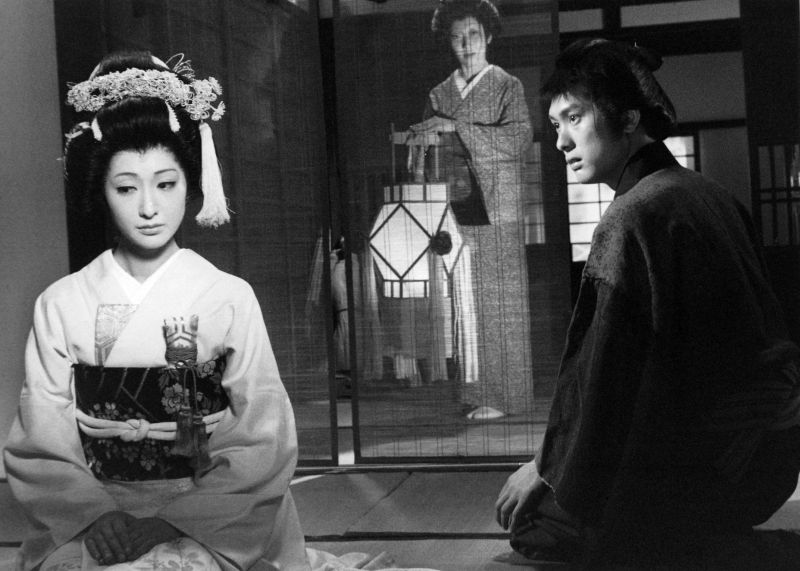
Jasper: This would be Hellish Love (1972), which was probably the first one to be released on VHS in the UK, and I saw it around 1999 or 2000. It’s a period ghost story, based on the classic Japanese supernatural tale The Peony Lantern, about a man who falls in love with a mysterious, beautiful woman only to find out she passed away of a disease years before and returns from the grave to lure him to the netherworld carrying the peony lantern of the title. It’s been filmed a few times, with the best-known version, Satsuo Yamamoto’s Bride from Hades released by Daiei in 1968. The Roman Porno version switched the first character of ‘Kaidan botandoro’, the Japanese title, for ‘sei’, meaning sex.
This was one of a couple of Roman Pornos released by a company then known as Pagan Films, founded by Pete Tombs, which has now become Mondo Macabro. And it was basically through Pete Tombs’ book Mondo Macabro, which covered exploitation films and genres from all around the world, that I learned more about Roman Porno. This was a massively eye-opening book for me, I should add and really inspired Tom Mes and I when we first started the Midnight Eye, the first website in the English language on Japanese cinema. Tombs was truly a pioneer.
To be honest, I didn’t even know such a thing as Roman Porno existed at this point, and for me though the film was marketed as a sex film, it didn’t come across as exploitation, just a beautifully haunting ghost story with perhaps more nude scenes than your average film, but not excessively so. What was really interesting at the time was that I had a Japanese friend involved in the theatre world who was on a cultural study scholarship in Amsterdam, where I was then living, and I mentioned the name of the director, Chusei Sone, and his eyes lit up and he started discussing what an artistic genius this filmmaker was considered in Japan. I realised that what we might think of as an exploitation film was treated very seriously in critical circles in Japan at the time.
Shortly after, I watched another of Pagan’s releases, Tatsumi Kumashiro’s Street of Joy (1974), which like Mizoguchi’s Street of Shame (1956), was a portrait of a group of prostitutes in the run-up to prostitution becoming illegal in Japan in 1958. It was very different in both style and subject matter, so basically, I realised that while these films were about sex, you couldn’t dismiss them just as sex films. It was through Pete Tombs’ Mondo Macabro book that I learned that Nikkatsu made literally hundreds of these films, so the question was, were they all as different and interesting as these?
One important thing to remember is that at this point, these films simply weren’t available outside of Japan, and there was no knowledge about them at all except for a cursory overview in a few books, of which Tombs’ one was by far the most thorough. The internet was not the hive of knowledge it is now, and very few people seemed to be aware of them. I’ve subsequently learned that while the Roman Porno genre is incredibly diverse and features some really interesting titles, there are quite a lot of them that don’t really have much going for them outside of the sex, although even the most basic do have some cultural and historical interest.

M[m]: One of the things I always find astonishing about the Roman Porno genre is that the films were released by a mainstream studio like Nikkatsu- with the company putting out 710 films between 1971 & 1988. Could you talk a little bit about how & why this happened?
Jasper: Well, I’m not so sure it is so surprising if one looks at the global situation around 1971. In Behind the Pink Curtain, I write about a British critic complaining about the massive deluge of sex films from all across Europe and the rest of the world at that year’s Cannes Film Festival. The seventies were when censorship really broke down, and this is what people in the pre-home video days were going to see at the cinema. You only have to look at Britain, when you had all those dreadful Confessions of a Window Cleaner type sex comedies in the mid-1970s, which were bankrolled by Columbia Pictures. The first thing you’ll notice about Roman Porno is that they are far better made, and there’s a lot more going on intellectually with them.
In a Japanese context, the really low-budget pink films, or eroductions, started appearing in the early 1960s, made independently on very low budgets, but they were very profitable, and this caused Japan’s major studios like Nikkatsu, Toei and Shochiku, first to start distributing some of these low-budget works, then to start sexing up their own productions. Japanese cinema audience numbers were in freefall throughout the 1960s, largely because everyone was getting TV sets, so the studio budgets were falling, and the companies involved had to be seen as selling something that audiences couldn’t get on TV, so getting a girl to undress in front of the camera was an obvious solution.
Nikkatsu had been making hundreds of films throughout the previous decade - basically crime, action and youth movies driven by their male stars, and at a rate of about 50-60 titles a year. These weren’t drawing in the crowds like they used to, so to avoid going bankrupt, as another studio Daiei did, they changed tack completely. And they had their highly skilled staff of directors, screenwriters, cinematographers, set designers etc, so just continued this conveyor belt-like production practice, but with a change in tack towards adult-oriented subject matter.
One of the interesting points that shouldn’t be overlooked is that the focus has now become on female leads, rather than male ones, and the new stories written to reflect that change. It was a big social phenomenon, because the other thing to remember is that Japanese audiences preferred to watch Japanese films than foreign ones. Japanese-produced films of whatever genre had over half the overall market share up until the mid-1970s, so Nikkatsu's switch to Roman Porno had quite a big social impact.
M[m]: As I know it’s a question that often comes up, could you clarify the differences between the pink genre and Roman Porno?
Jasper: The term pinku eiga was coined by the popular press to refer to a sizeable phenomenon of films produced outside of the studio system, by small independent production companies that thrived off making scandalous films for the adult market very cheaply. The people working in the field of pink film saw themselves as outsiders, and pink film evolved into an almost entirely sub-industry of its own, making up almost half of Japan’s overall film output, with a parallel exhibition network of adult film theatres that only showed this kind of material. Roman Porno was a brand name created by a major studio. The production practices, and the technical training, skills and ethos of the films’ makers was totally different, and Nikkatsu had its own chain of cinemas to show its work in.
However, Nikkatsu showed its films on triple bills, which changed on a fortnightly basis, similar to what they’d been doing with their crime and action films throughout the 1960s, but to make up their triple bills, the third title would be a lower-budget independent film commissioned from the pink sector. So, there were pink filmmakers who made films funded and exhibited by Nikkatsu, but they would certainly see pink and Roman Porno as two very different things. And of course, Roman Porno stopped in 1988, while the pink film still exists in some form to this day.
Funnily enough, I’d actually seen a number of pink films before I’d even seen my first Roman Porno, for various reasons – a late-night screening of Koji Wakamatsu’s Violated Angels (1967) at the Scala Cinema in London in the late 80s, for example. I didn’t know it was a pink film at the time, nor even what a pink film was.
M[m]: What is the origin of the Roman Porno name for the genre?. And did it ever have another name? As you know, some of the films under the genre tag have only a small amount of nudity/ sex in- so surely, it’s misleading?
Jasper: The two words are both foreign loan words, so they carry that air of exoticism about them. The basic explanation is they come from the French “roman pornographique”, a genre of French erotic literature – the term ‘roman’ has nothing to do with men in togas, but it has that kind of highbrow foreign cachet about it. “Porno” as well - it’s not really understood in the same sense in Japan as it is overseas, as something dark and dirty for the raincoat brigade. It’s not so direct. But in relation to film, it was first used by Toei to market films like Shogun’s Joys of Torture (1968), and other titles that promised a bit more bare flesh.
As I mentioned, it was really just a brand name for Nikkatsu, and they produced a lot of films under this banner that were not necessarily just sex films that adhered to a formula of a sex or nude scene every ten minutes, but could really be about anything that explored adult themes. I can think of quite a few that barely have any sex in them at all and you’d hardly label them as sex films.
M[m]: Last year, you did commentary tracks for a series of Roman Porno films for 88 Films. Where do you think the interest in these titles comes from today?. And can you say if there are any new releases planned from 88?
Jasper: Well, more than that. I approached 88 Films and asked if they were interested in releasing these films – not just the Roman Porno releases, but the entire Japanarchy line is my selection - and I produced all of the extras for the discs. Basically, my job at the moment is as a disc producer for a number of home entertainment companies, not just for these kinds of films – I did stuff like Barbarella and the Fassbinder boxsets for Arrow for example. My background is as a film critic, festival programmer and occasional documentary maker, and I do also do a lot of booklet essays, commentaries etc for other releases I’m not producing. In terms of my own interest, I have always had a broad fascination with cinema in general, then Japanese cinema specifically over the past few decades, of all eras and genres, and have published several books on the subject, but pink film in particular caught my attention as when I first moved to Japan, I was surprised to see there were still sex cinemas quite prominently placed in Tokyo and that people were still making films on 35mm film for these kinds of specialist venues, which had long disappeared from European cities, and it has to be said, no longer exist in the same number in Japan nowadays.
As for a more general interest from others, I guess porn is pretty ubiquitous nowadays because of the internet, but mainstream cinema seems to have gone completely the other way. Mainstream culture has become quite prudish and conservative on the one hand, whereas on the other side of things, if you want to watch something to get off on, it’s become so reductive and explicit, it doesn’t leave much to the imagination. I think there’s an appeal in the idea of softer erotic films with genuine performances, high production values, and stories that have interesting provocative ideas in them. There’s clearly an audience for it, and that audience is more diverse in terms of gender identity and sexuality than the assumed target audience these films were made for at the time.
I think there’s also a historical and cultural angle to the films too. I, for example, really find the street scenes of areas in Tokyo I know well, like Shinjuku, in Night of the Felines and Playful White Fingers, really fascinating. And then there’s the case that a lot of the cast and crew of these films also worked in other areas in cinema or television, so you cannot divide Japanese cinema into sex films and mainstream films, because there is so much crossover.
As for the final part of your question, I know of and am working on various projects for different companies, both in terms of Roman Porno and pink films – for example, I have been heavily involved in Vinegar Syndrome’s Hisayasu Sato releases. As for 88 Films, let’s just say “Watch this space!”
M[m]: Please select five of your favourite Roman Porno, outlining the reason for each choice?.
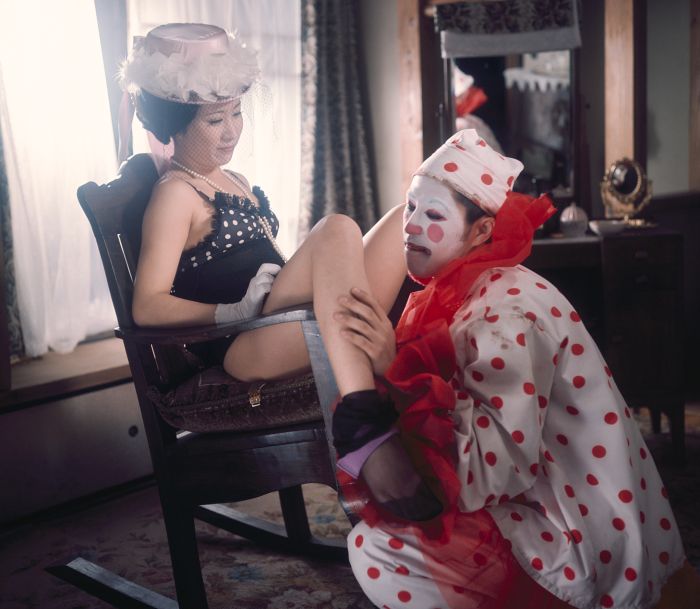
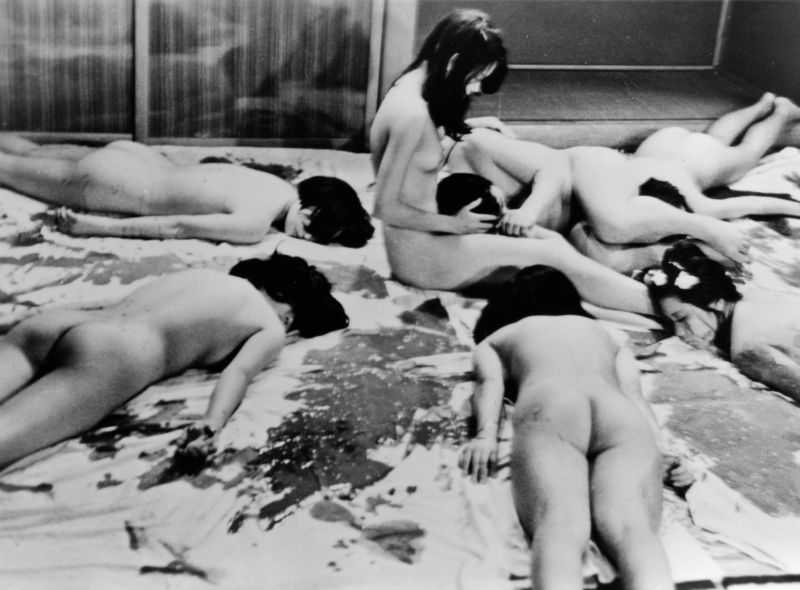
Jasper: A slightly tricky question, in that I selected the titles that 88 Films released, and the aim here was to try and show as diverse a sample of Roman Porno as possible within a limited number of titles. So, there are some established critical classics, some curios, and some I personally like. From the first batch, I love the more macabre gothic stuff like Watcher in the Attic, Woods are Wet and Yumeno Kyusaku’s Girl Hell, but as for other titles, well, they might well come up in the next batch of releases….
M[m]: One of the more curious turns in the Roman Porno genre was that in the early 70’s Nikkatsu went to Sweden to make six films with a Swedish cast. These films have recently all been reissued by Klubb Super 8- as either a box set or as a standalone Blu-rays, with you supplying commentary tracks for said films. Could you talk a little bit about how/ why this occurred, and how these films were received by both Japanese and Swedish audiences of the time?
Jasper: When originally writing my book, when I lived in Japan, I came across one of these titles through looking at the filmography of one of the directors I was researching on a Japanese movie database. I noticed the label ‘Sweden Porno’ and that all of the cast were clearly non-Japanese European names, spelt out in the katakana phonetic script. It turns out there were six of these films, so I asked someone I knew at Nikkatsu about it, and they didn’t seem familiar with them. They didn’t have screeners, and they’d been out of circulation since their original release, but they did provide me with a poster and some stills for my book.
Years later, Rickard Gramfors of Klubb Super 8 found some of the posters elsewhere when researching his book ‘Do You Believe in Swedish Sin? Swedish Exploitation Film Posters, 1951-1984’, while in the meantime, a Swedish academic I know based in Japan, Johan Nordström, was intrigued by them, having read about them in my book, so did some more legwork liaising with Nikkatsu, and Rickard then organised new HD transfers with Nikkatsu, which then got released to home video in Japan.
So basically, these titles were sort of forgotten both in Japan and in Sweden until Rickard and Johan started doing some really intense research on them - Johann looking through the official production and release documentation Nikkatsu still had, and Rickard doing more on the Swedish side, trying to track down the original cast members there. It’s all a fascinating story. Effectively, the first four are pink films, because they were made by an independent production unit hired by Nikkatsu for some early titles in the Roman Porno line. It was basically a tiny Japanese crew who went out to Sweden, put an ad in a newspaper for wannabe actors, then made these films under the idea they’d never be shown in Sweden. Well, 50 years later, here we are…
The second two Swedish productions were made as Roman Porno, and had bigger budgets, meatier stories and were pretty substantial films – both totally different, with one a sort of home invasion exploitation movie, the other a more arty attempt to channel Bergman. But they are all really fascinating, because they are obviously fantasy scenarios based on how the Japanese imagined sexually liberated Swedes acted in the early 70s. They don’t really feel like European sexploitation films made at the time, nor do they obviously look like how you’d imagine Roman Porno. But to think, if it wasn’t for Rickard, Johan and I, these curios would be lost to history…
M[m]: When playing your commentary tracks for the recent release Angle Guts set( On Third Window Films), which collects together five Roman Porno’s based on the infamous manga. I noted you touched on the film's soundtracks on a few occasions- these feature both formal groove/ moody scoring, to even early J-pop tunes. Has there ever been a compilation made of Roman Porno’s music, or any of the scores formally released? And what are some of your personal favourite soundtracks from the genre?
Jasper: There was a company putting out compilation discs of the soundtracks to various Nikkatsu youth movies, Roman Porno and Toei Violence films- I think they were released in a series called ‘Hotwax Trax’, but not sure how easy they are to get hold of. I really like the soundtracks to these films. They really put them in their era. There were some surprising collaborations between Nikkatsu and some fairly big artists of their time with the Roman Porno. I got quite into the prog/psych rock band Cosmos Factory, who scored Girl Hell, among other things. I think in general, the soundtracks were often as boundary-breaking as the films themselves.
M[m]: Fab Press has recently reissued your book on Pink and the Roman Porno genre- Behind The Pink Curtain: The Complete History of Japanese Sex Cinema. Please talk a little bit about this reissue, and what has been added to/ updated?
Jasper: It’s crazy, really, because writing a book on a topic like this – and there weren’t many other books like this around when I was writing it circa 2005-2008 – you have no idea what kind of readership you are writing for. The first edition sold out quite quickly, and bizarrely, there were Polish and Korean translations of it. Then there was a second edition around 2012, I think it was, and then it went out of print for ages, and you couldn’t get hold of it except for the silliest of prices online. But quite a few people contacted me to ask how to get hold of a copy, then FAB Press said they wanted to do a new one, a hardcover-only limited edition, which itself has now almost sold out.
I think there’s much more knowledge and appreciation for Japanese films in general now, because compared with even ten years ago, much more stuff is available. I was really reliant on watching a lot of these films without subtitles, either in pink cinemas or on rental video, during the three years I lived in Japan, but now almost anyone can get hold of a lot of them. And literally a whole generation of viewers has grown up since the book was first published, who are discovering these films for themselves for the first time and want to know more about their background.
I decided not to change anything in the main text itself, because it would have been far too much hard work to revisit it, but also, I wanted to retain that kind of context of when I wrote the book. However, I have added a final chapter, because even though I predicted that the pink genre might be coming to an end at the time I wrote it, that end has come a lot slower than anticipated and has been steered by various other events I’d not anticipated, things such as changing exhibition practices and the #MeToo movement. But really, this whole area of pink and Roman Porno is so vast, the main aim of the book had to remain as a guide, basically for further exploration of the subject. There’s so much still to talk about these films, and I hope it serves as a springboard for other people to do the talking.
M[m]: What are you working on next?
Jasper: I’m always busy in terms of the day-to-day work of Blu-ray production. Outside of that, I tend not to like talking about my own personal projects like books or movies, just in case you jinx them. I’ve known loads of people who’ve announced publicly they’re writing a book, then it never happens! However, I think I’m far enough down the line with a book I’m currently writing to slightly spill the beans. It’s not about Japanese cinema, but in line with my interests outside of the world of film, it’s about mushrooms, toadstools and other fungi.
Big Thanks to Jasper for his time and effort with this interview.
Here’s the link to the ten titles released (to date) Nikkatsu Roman Porno titles on 88 Films https://88-films.myshopify.com/collections/nikkatsu-roman-porno.
Here’s the link to Third Window Films’ Angle Guts boxset https://thirdwindowfilms.com/films/the-angel-guts-collection/
Here’s the link to the Klubb Super 8 Swedish Roman Porno of https://klubbsuper8.com/en/super-8/bluray/nikkatsu-sweden-poruno-box-blu-ray-box.html.
Here’s a link to Jasper’s book Behind The Pink Curtain: The Complete History of Japanese Sex Cinema
https://www.fabpress.com/books/behind-the-pink-curtain-hardback.html
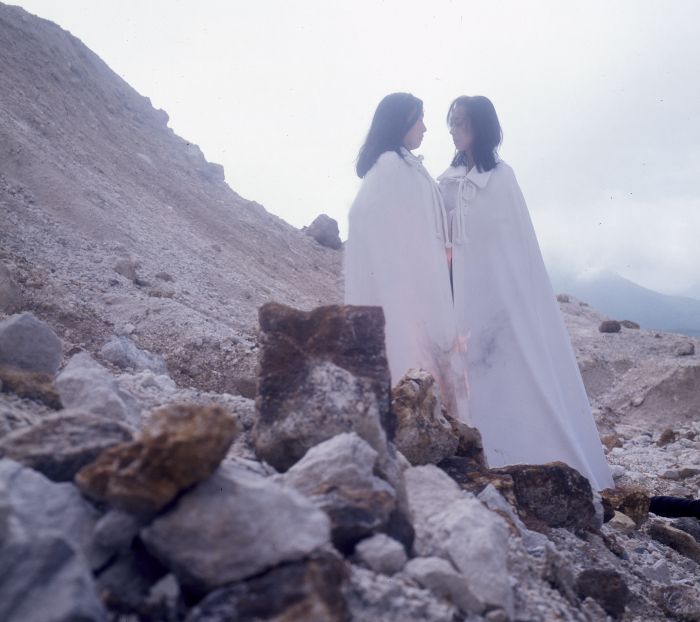
Picture credits( stills from Jasper's collection): First picture from 1976's Watcher In The Attic, which was released as part of 88 Films Nikkatsu Roman Porno series- the film is very highly recommended!. Second picture of Jasper Sharp. Third is from Yumeno Kyusaku's Girl Hell, also released by 88 Films. The fourth pic is from 1967's Violated Angels. The fifth picture is from 1972's Hellish Love