
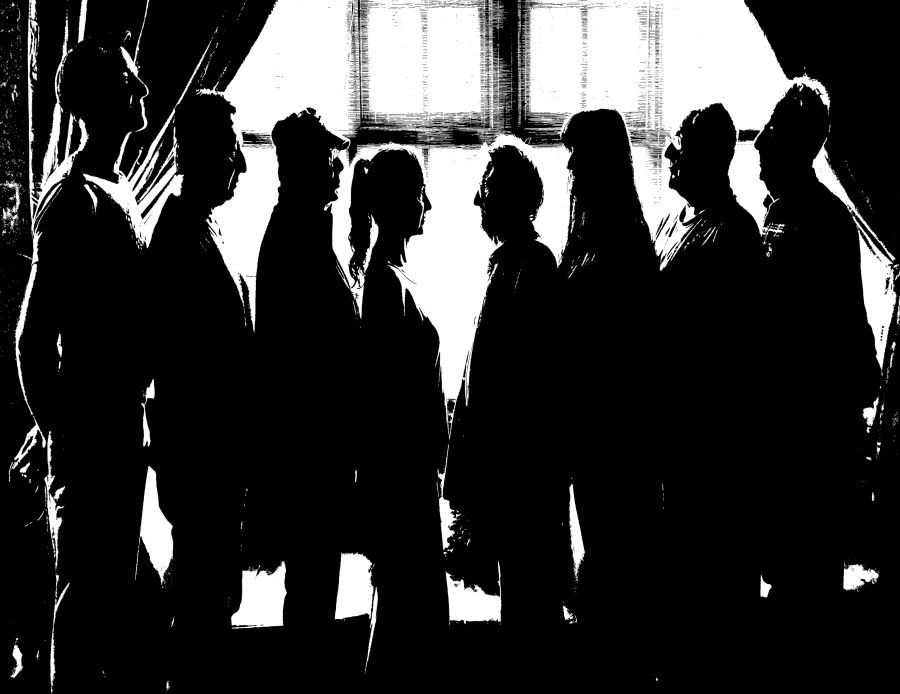
A True Progressive Band
Orchestra Of The Upper Atmosphere Interview
Early this year, the band released their most recent album Theta 7, on Discus Music-which is sadly to be their last. Band leader Martin Archer kindly agreed to give us an email interview, discussing the project's history & why they’ve decided to call it a day.
M[m]: Please talk a little bit about how & when Orchestra Of The Upper Atmosphere formed?
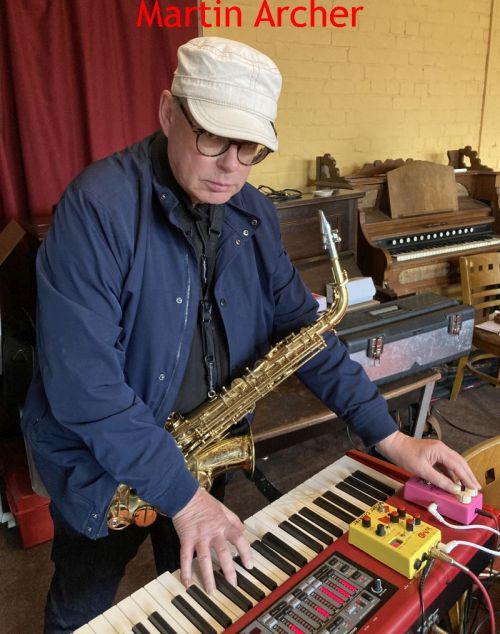
Martin: Around 2009/10, I started to get the notion that I’d like to have a group that encompassed everything I was interested in, and it would also be a challenge to put together in the studio. I wanted it to be large and difficult – rhythm, strings, voices, horns. In fact, the large group of voices was an important idea. The Juxtavoices project was formed initially to be specifically the vocal group for what became OUA. When I started to talk about doing this, the touchstones were Sun Ra, Terry Riley, Magma, Alice Coltrane. The idea was to improvise with repetition rather than playing elaborate solos. And it’s important to stress that IMPROVISATION was always at the core of OUA. It took 2 years to make the first album, which subsequently became known as Theta 1. Despite the large-scale structure, it wasn’t a group as such. It was really just me with Chris Bywater, and as we built the album up around our own keys and electronics, we gradually asked folks to come along to the studio and add to the tracks. We knew we were onto something.
It was only when we started to make Theta 2 onwards that we began to think of OUA as a band with fixed personnel.
M[m]: What inspired the project's name, and what did you see as the band's initial mission statement? - And has this changed since you started?
Martin: Well, I thought of the name, but I can’t recall what the inspiration was. It seemed to match the scale of the idea though. I might have had The Orchestra Of The Age Of Enlightenment in my mind at the time. We printed a kind of mission statement on the sleeve of Theta 1.
“It is the job of the progressive artist to propose an alternative reality, and preferably one in which all notions of common sense have been completely eradicated”
That was kind of tongue-in-cheek, but obviously to create such a large-scale project really does make absolutely no sense – commercially, logistically, financially. Only musically does it make sense, and the music supersedes all those practical considerations. I think once we got on the path – and remember that wasn’t a path where there was a group of people meeting and playing all the time; in reality we simply got together every couple of years to make the next album – I think we stuck to the initial idea pretty closely. Though from Theta 2 onward it did start to sound more like a band than a studio construct.
M[m]: The project is an eight-piece affair- has it been the same players from the start? And has the number of players changed?
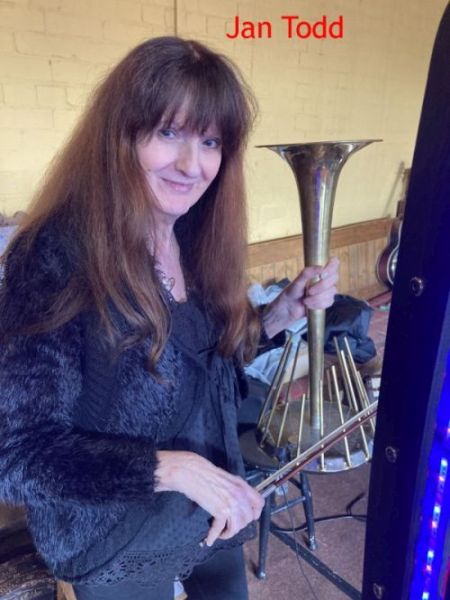
Martin: The last three albums – Theta 5 through 7 – were made with the same 8 players. Only Theta 1 featured so many extra players. Chris Bywater left after Theta 3. That was the most significant change; it was after that when singer and multi-instrumentalist Jan Todd (frostlake) started to take a leading role, which opened up new avenues for the group.
M[m]: Please talk a little bit about how you compose/ write work? For example, how did the epic/ near twelve-minute track Under The Azure from your recent album Theta 7 come about?
Martin: Well, the easiest way to describe this is to talk about the final three albums, which were all made in a very similar way. Before that, there were various approaches. Theta 1 was a collage; 2 and 3 were basically improvisations in the studio with some additional orchestration added afterwards, and 4 was kind of transitional – made completely via overdubbing one player at a time. But we really hit on our favoured method for the last three albums.
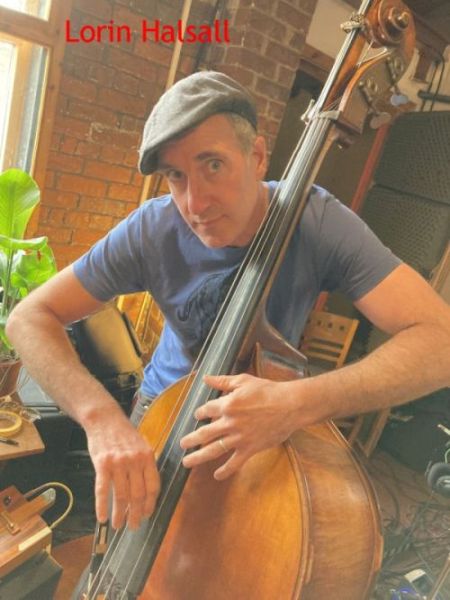
The initial recordings were always done very quickly, just over a couple of days, with the whole band in the studio. Terry Todd would have prepared the bass lines which underpin most of the pieces, and we’d have the whole band improvise with those bass lines, without any particular discussion as to structure. Just playing and trying out a few things on the hoof. After these were recorded, we did the thing that most bands simply can’t do. We would make several long, rhythm-less free improvisations again with the whole band using the whole range of our instrumentation. So – creating all this raw material would take a couple of days in the studio.
All the music would then be set up in my own studio where I’d create the flow of the whole album from start to finish by editing the rhythm tracks into their final sequence. Then – and here’s what gives the band a lot of its individuality – I’d simply overlay the free improvisations onto the rhythm tracks. Then I’d go through the whole thing keeping the interactions which worked, getting rid of the ones which didn’t, maybe moving things round a bit, creating a few loops. I really let chance procedures play a big part here; there are lots of happy accidents on those last three records.
After I’d done that initial structural work on my own, I’d be joined by Jan, and we’d decide what melody lines for horns, voices and other instruments we’d create to finish the pieces and give them a focal point. We’d draw up a plan, me working on overdubs at my studio and Jan creating her parts at her own studio. All of this arrangement music would of course be tied in closely to the music already recorded.
Once all these were in place, Jan, Terry and I would have a final review of everything and ask other band members to come back in for any final fixes and overdubs. On these last three albums, the process would be quite quick – 6 months or so from start to finish.
M[m]: Please talk a little bit about the Theta naming of your albums, and what is the thought behind the busy/ abstract quality of the art used on your releases?
Martin: It came about by chance really. Our friend Johnny Drury created the logo, which, if you look closely, is made up of the letters O U A combined into the shape of the Greek letter Theta. It was only when we started to make the second album that I had the idea of naming each album in the Theta series. Our percussionist Walt Shaw is a fine artist, so after the first album we simply adopted a convention of always using his work on the covers.
M[m]: Since starting in 2013, you’ve released seven albums- do you have a favourite among these? And if so, please explain why?
Martin: Well, I personally have a special fondness for the first one – but collectively I think we all feel that 5 through 7 are our best work.
M[m]: Has the band ever played on stage? And if so, do you have any favourite shows?
Martin: We played live a few times in the early days, but essentially OUA albums are not performable – so we stopped.
M[m]: So, in the live shows you attempted to recreate the album material? Not doing new/ exclusive material?
Martin: In the handful of live gigs we ever did, we simply improvised - remember all group members are experienced improvising musicians - so every note we ever played live was new and exclusive. But the complexity of the album arrangements was not possible live. So - we just played.
M[m]: Are there any audio recordings/ videos of the live performances?
Martin: A total of 1 minute and 8 seconds here :-)
https://www.youtube.com/watch?v=AJHZke4f8Bs
There may be more in folks' personal archives, but if there are, I've never listened to them. I like this one though.
M[m]: In the last album's liner notes it’s mentioned that the band is splitting- are you able to talk about the reasons for the split?
Martin: We don’t think the last three albums can be bettered. We’ve perfected the process of making them, so anything more would simply be doing the same thing again for the sake of it. Most bands don’t know when it’s time to stop, but we did. Everyone in OUA also has their own music outside the group. We have a horror of repeating ourselves. Plus, half the group is now over 70!
M[m]: What do you see the band’s legacy as?
Martin: We actually played progressive music, unlike the slightly wonky pop music which passes for modern prog. We actually knew how to use a sophisticated improvisational language within progressive music, as opposed to muso diddling along. There's no other music quite like OUA.
M[m]: Are there any unreleased tracks in the archive you could release down the line?
Martin: Yes, there are outtake rhythm improvisations from each of Theta 5, 6 and 7 - in fact almost a whole album's worth from the Theta 7 sessions - but nothing of note that would tempt me to complete them. But really, all the good stuff has been released.
M[m]: What can we expect from you and the label in the next few months?
Martin: New albums from Das Rad and Inclusion Principle are the focus of my interest right now. Das Rad is very much where my head is at right now. I’m also working on a solo record and on a very abstract blues project which will be like The Necks decided to be a blues band.
M[m]: In the last year or so, what has made an impact on you, be it music/sound/ art/ books/ films?
Martin: I’m a voracious listener, and in the last year I’ve been listening to loads of Duke Ellington and Lee Konitz. What I listen to rarely has much to do with the music I make. Star Trek Next Generation continues to be a perennial joy.
Thanks to Martin for his time and efforts with the interview. Theta 7 is available on Martin’s own label Discus Music here: https://discusmusic.bandcamp.com/album/theta-seven-206cd-2026-2
All photos by Kathy Dinsdale